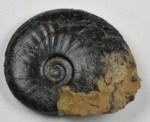
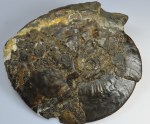
The holotype or A good replica is better than a 100 pictures

Some ammonites, you may never find. Some ammonites may have only been found once, ever. With some ammonites, when trying to safely identify them, you´ll have to compare to the one specimen, that was used to describe the species – the holotype (http://en.wikipedia.org/wiki/Holotype).
Descriptions, drawings, pictures can only be a poor substitute for being able to touch the specimen yourself, hold it against the light, turn it around, look at it from a different angle, shine a light at it from a different angle, handle it in it´s glorious true 3D self.
The only problem is : Holotypes are usually stored in museums. Go to Whitby museum and with deep reverence take in the view of the many holotypes displayed there.
But lamentably, museums like Whitby museum belong to a “dying breed” of museums, not many display their classical invertebrates anymore, but instead have fallen victim to the flashy dinosaur. With most museums, the holotypes are not on display, but stored away somewhere in a vault.
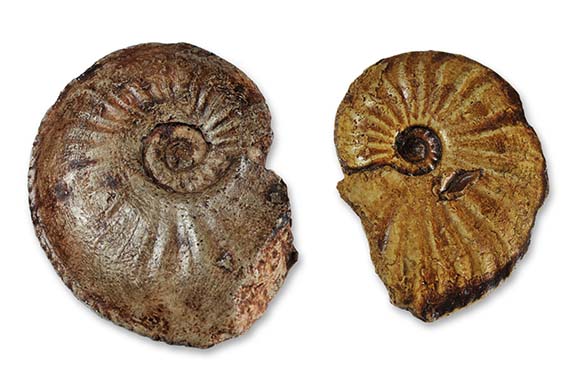
Amaltheus laevigatus (left) and Amaltheus reticularis (right)

Amaltheus laevigatus (left) and Amaltheus reticularis (right)

Enter the guys from GeoEd (http://www.geoed.co.uk) who make fossil replicas from anything between a humble Dac and an Archeopteryx lithographica (even different ones !!!) for education and museums. And they do have a heart for invertebrates (counted at time of writing) : 136 bivalves, 77 brachiopods, 34 corals, 62 crinoids, 22 crustaceans, 36 gastropods, 109 sea urchins, 4 starfish, 73 trace fossils (!). I stumbled across them when I was looking for a picture of a rare Amaltheus species on the internet. Amongst other results from google, they were listed with the species I was looking for in their catalog (Amaltheus laevigatus) , along with 454 (!) other ammonite species from all ages. Now when I ordered the ammonite together with a few others, for a comparably low sum of money,  it was somewhat of a leap of faith because  only very few were listed with a picture then (they´ve greatly improved now, I´ve only found very few gaps now), but a quick cross check with some holotype descriptions made it highly likely that these were indeed the holotypes : same find locations were given !
A couple of weeks later they arrived at my home and I was not in the least disappointed : real 3D replicas, beautifully detailed.
Probably not completely colour matched to the originals, but you can´t have everything…
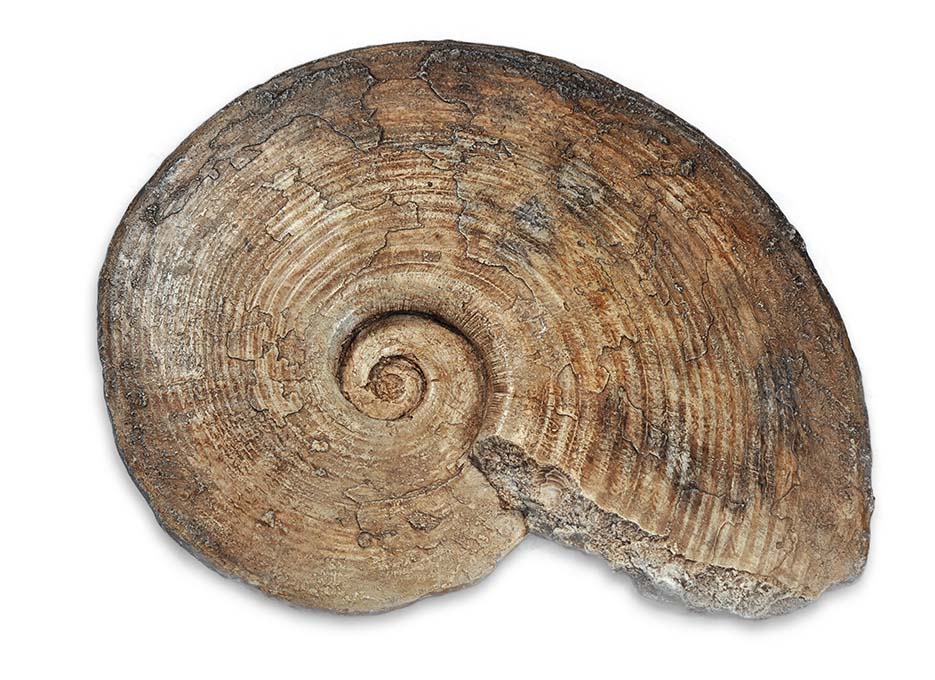
Amaltheus (Pseudoamaltheus) engelhardti, 20 cm, replica

Amaltheus (Pseudoamaltheus) engelhardti, 20 cm, replica

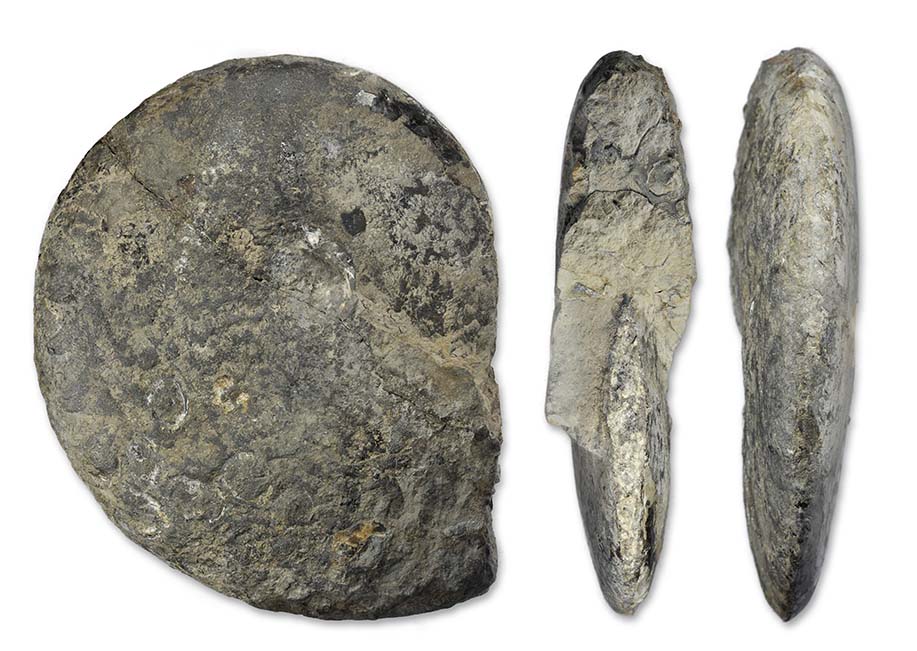
So now I can have my very own Pleuroceras apyrenum, 81 mm in diameter (!), as if freshly sprung from DEAN, DONOVAN and HOWARTH´s
“The Liassic Ammonite Zones and Subzones of the North-West European Province”, plate 71, figure 5, from Eston Ironstone mines, Yorkshire,
with (reproduced) prep marks at the back so “fresh”, they make me itch to start-up the air pen…
Pleuroceras apyrenum, replica of the holotype , 81 mm
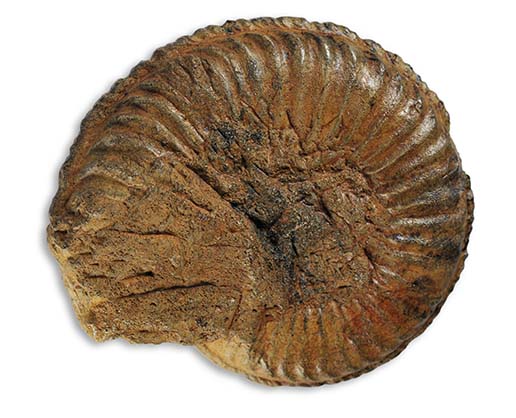
Pleuroceras apyrenum, replica of the holotype , 81 mm

Pleuroceras apyrenum, replica of the holotype , 81 mm, reverse side

Pleuroceras apyrenum, replica of the holotype , 81 mm, reverse side

Incidentally, I did achieve what I intended when buying the replica ammonites :
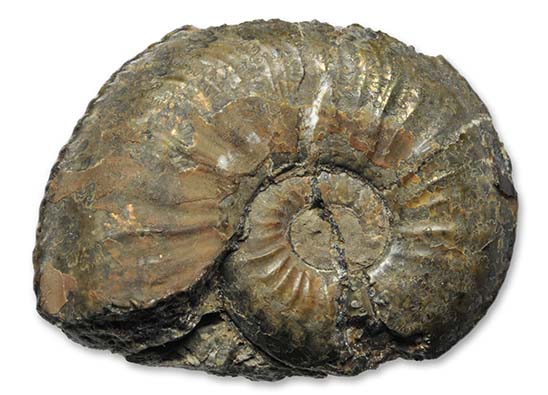
Amaltheus laevigatus, 2.5 cm, not a replicate !

Amaltheus laevigatus, 2.5 cm, not a replicate !

I´m quite sure now that this real ammonite is indeed an Amaltheus laevigatus !

AndyS
A visit from my friend Klaus

My good friend Klaus and his wife came to visit the other weekend. We know each other for almost 40 years now and since he shares the same hobby (I think we discovered that the first day we met in secondary school !), we´ve been collecting together many times. Ahead of his visit, I asked him to bring some of his ammonites that he knows would be perfect for the book.

This is what he brought:
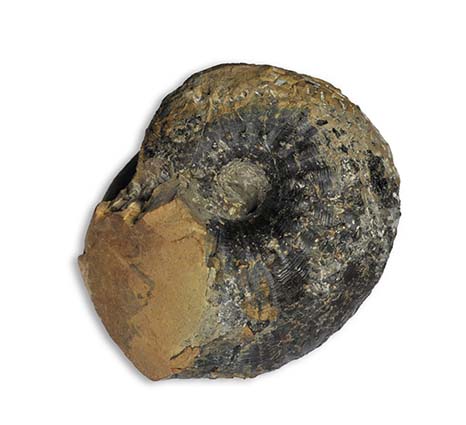
Liparoceras cheltiense, 5 cm / 2 "

Liparoceras cheltiense, 5 cm / 2 “

This one is a 5 cm / 2 ” Liparoceras cheltiense. It´s not especially large (and while photographing it I noticed it could need a little more TLC, Klaus is just building his new prep shop and I believe he´s going for an air abrader as well), but it´s special since it´s almost uncrushed (very uncommon) and retains most of its original shell, so there is great potential for uncovering more of this beautiful structure during air abrading.  It´s from the luridum Subzone (more on that later) but Klaus found it while walking along the glacial drift deposits in Bay and could simply pluck it from the clay – that does not happen every day !
Radstockiceras buvignieri, 20 cm / 8 "

Radstockiceras buvignieri, 20 cm / 8 “

The other one is a rather large Radstockiceras buvignieri, a lovely 20 cm / 8 ” in diameter, actually in preservation very close to the one pictured in HOWARTH´s “The Lower Lias of Robin Hoods Bay, and the work of Leslie Bairstow”. As far as I remember, this find required quite a lot more work than the other one, being stuck in the middle of a large block, with only part of the venter being exposed. I do have a much smaller Radstockiceras in my collection, differently preserved (this species can be found in 3 subzones), and something to show in another post as well.
Both ammonites are quite rare in Bay, and they´re a perfect addition to the book. Thankyou, Klaus, for bringing them along !
AndyS

Standing on the shoulders of giants or Ammonite literature

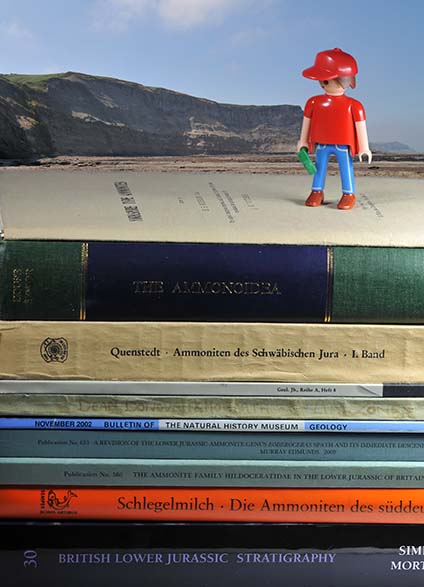
Standing on the shoulders of giants

Just a small selection of ammonite literature I´m using to write this book

When you start collecting ammonites seriously, you want to know what you have found. Most collectors early in their collecting life begin by picking up everything that looks like a fossil (just as I did) . Only later, when your drawers start to overflow up or simply because you are interested in one type of fossil more than in others, specialization will happen.
Chances are that for identifying your finds you´ve had one or more of the more general fossil books which cover everything from foraminifera to dinosaurs and mammals. For every fossil group these naturally can only show the most common representatives of that group – when you specialize, you will very soon get to the limits of these books, even for a fossil group such as ammonites, with a lot of very common representatives.

Now palaeontology is a science with hundreds of years of history and many palaeontologists specialized on ammonites and published their works about them.
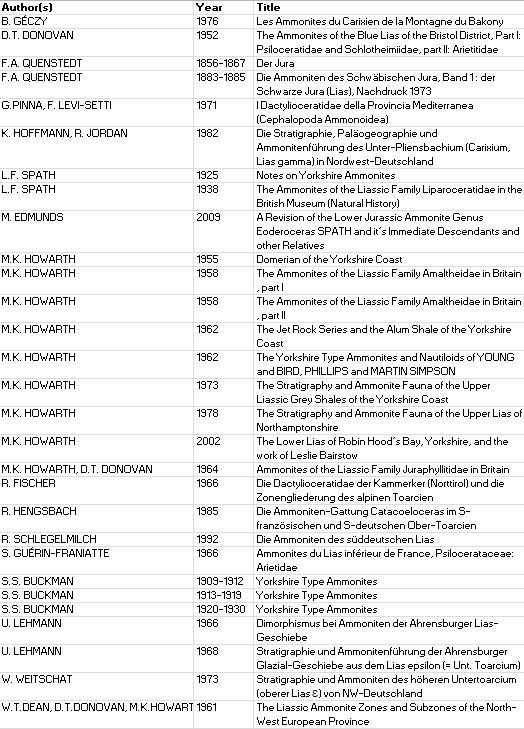
A brief snip from my literature index, in my view with particular importance to the liassic ammonites in Yorkshire, Britain and elsewhere :
Ammonite literature

A brief snip from my ammonite literature index, spanning approximately 6000 pages

This constitutes an estimated 6000 pages of some rather specialized books and papers.
I have them all in my library and have read through many, but not all of them, some are just ad-hoc reference. But this is something only somebody as crazy as I am will do. You will have trouble getting access to many of these books and papers since many are out of print for a long time or in a pay-per-view internet library. For some you will have to pay collector´s prizes if you wanted a printed book, like the very popular Lias SCHLEGELMILCH that sometimes costs more on eBay now than what you had to pay after it was freshly published.
I think this is in the process of change at the moment as Open Access (see http://en.wikipedia.org/wiki/Open_access ) gradually becomes more accepted and more and more journals open up their back volumes to public access in the form of pdf files. Some scientists even publish a pdf copy of every paper they can scan on their own server – though there still may be copyright issues with newer publications on there (that´s why I won´t put the link on here).

As you can see in some of the titles, these monographs tend to be very specialized as well, only covering e.g. one family of ammonites, one specific stratigraphy, one location. These are publications that have been made with the scientist in mind, everything is as reproducible as possible, and in many cases statistical studies have been made to verify population boundaries as for example in HOWARTH´s Hildoceratidae monograph – I´m deeply awed by these works and not always completely without regrets of having chosen another profession. But this is not for everyone…
All this taken together amounts to one of the reasons I´m writing this book : I get a feeling that something “in between” is needed, something bridging the gap
between the specialist paper and the amateur collector that allows to get a decent overview of the Yorkshire ammonites without reading tons of papers.
And who knows how this project might turn out : Nowadays it´s just a difference of a few mouse clicks (OK a bit more)  and you publish your paper as a real paper book, an e-book  or an open access pdf file… although I must admit a real paper book is my absolute favourite option of these.
AndyS

Side by side or Vive la différence !

Somebody recently asked me about the difference between Aegoceras(Androgynoceras) and Gagaticeras, two ammonite species frequently found around Robin Hoods Bay.
This is what I´ve come up with :

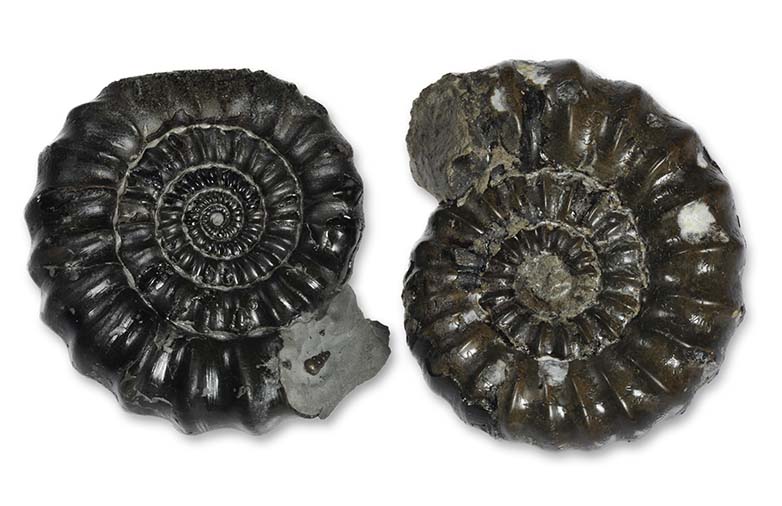
Gagaticeras (left) and Aegoceras(Androgynoceras) (right) side by side

 The ammonites shown are approximately same sized, about 3.5 cm in diameter.
  • Whorl growth more rapid on A.(Androgynoceras), fewer whorls for same size
  • While their whorl section is similar in small sizes (round) , due to more rapid growth in whorl height,  the A.(Androgynoceras) has a more rectangular whorl section at greater sizes.
  • Maximum size for Gagaticeras is about 2″ / 5 cm; A.(Androgynoceras) can grow to more than double the size
  • With most species of Gagaticeras you have at least the hint of a keel, A.(Androgynoceras) has none
  • In terms of preservation, the black shell of Gagaticeras(Gagat is the german name for jet, hence the name ?) is a giveaway, as are small associated gastropods like shown in
    the aperture of the Gagaticeras.
  • Gagaticeras occurs in nodules in softer dark silty shale, sometimes as pyritized outer whorls but very rarely as flattened 2D shells
  • A.(Androgynoceras) occurs in grey nodules with a higher limestone content, but can be found flattened in the shales as well, where nodule buildup did not occur
This is where a photo of them side by side really makes a difference : You can clearly see some of the characteristics that are described in words above (apart from the keel and aperture views.)
And this is where I hope the book will shine : In showing the differences !
AndyS

Opportunity of a lifetime or My wife thinks that was seriously embarrassing…

Collecting fossils on the Yorkshire coast is not like collecting fossils in a quarry that is still being worked  : You cannot rely on the progress of the quarrying so usually you have to make do with what erosion provides and collect from the debris or in the shingle on the beach. In many areas you can since many years no longer dig in situ, because many exposures are protected as an SSSI (Site of Specific Scientific Interest) by British law (for more information please see http://www.sssi.naturalengland.org.uk  ).

Now that in no way makes collecting dull or seriously lowers your chances of success : There is still enough rock naturally crumbling away from the cliffs  (although we fossil collectors always moan about mild winters, lack of north-easterly storms of the truly ferocious sort etc).
But when the opportunity arises to benefit from somebody legally digging in the cliff or reef, you better be there…

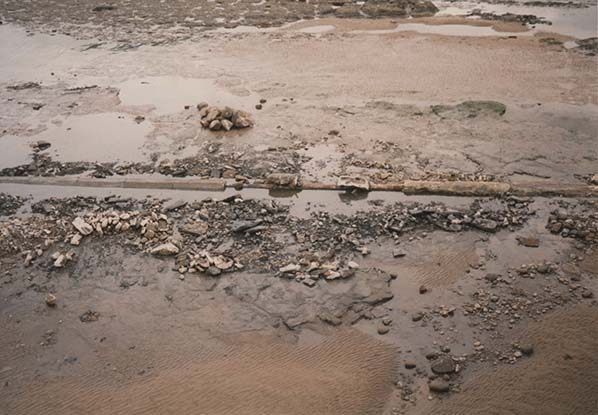
A trench for a new sewage pipe gets dug

This was in April, 1996. A new (err) sewage pipe (yes they still did this then, nowadays all the sewage is being pumped away to a sewage treatment facility) was built out to sea through beds in Robin Hoods Bay. We (2 other friends and myself) just happened to be there (really, I swear, it was just coincidence !).  As we surveyed the rock being dug up, we soon found large, well-preserved examples of Paltechioceras, Eteoderoceras  and other ammonites that we hitherto had never found or never in this size or quality !And now comes the bit that my wife thinks was really, really embarrassing : In our excitement, (she says) we jumped on the freshly dug up rock, like vultures (she says), almost before the digger had dumped it . Well, what can I say, we had a terrific time 🙂

Beds dug up around the trench

Fossil collectors swarm around the digger

I don´t really think that´s us, anyway, the picture is conveniently unsharp…
See one result,  a particularly nice 4″ Paltechioceras tardecrescens complete with mouth border here :
Paltechioceras tardecrescens, 10 cm

Paltechioceras tardecrescens, 10 cm

We visited the new trench in the reef again and again during the following days before it was cast with concrete.
Over the years (more than 15 since then), I have found Paltechioceras again, but never as large or complete as this one – it was the opportunity of a lifetime !
AndyS

Ammonite photography or Views of a Fossil

For the book I´m of course looking for some of the best Yorkshire lias ammonite specimen there are !
Of the approximately 220+ species known (and this is still somewhat of a moving target, i.e. I´m still finding new ones  in literature that I have not considered yet, but I might also have to get rid of some from my list since they’re only synonyms)  I boldly (actually, that´s pretty much verified) estimate that I have about 50 % in my collection (and this in itself is a moving target as well : as I´m looking through my collection and researching the species I regularly find species I never knew I had !) . Now some of these are close to perfect specimen that probably need no other one to complement them for the book. Others are just fragments, badly preserved, too small, too large, you name it,  where I´m looking for other collectors to possibly fill the gap and allow me to photograph their prized specimen.
But this might not always be possible, for example when you don´t trust me to give your ammonite back after borrowing, you might fear it gets lost on the way, you´re living too far away (or I for that matter…), our schedules are impossible to get to overlap, you´re not eager to show me your whole breathtaking collection, you want serious money for allowing me to photograph your specimen or whatever other reason you can think of – but you might yourself be very capable of photographing an ammonite and willing to e-mail me the results.
So what I´m I looking for in terms of photos ?
  •  They should be tack sharp and normally exposed
  •  As many mega pixels as possible, minimum 6
  •  The ammonite should almost fill the frame
  •  Please use a light (preferably white) solid neutral background, no patterns in the background  please
  •  Use smooth even lighting, preferably one light from upper left, another one from lower right to lighten up the shadows
  •  Do not use flash unless with a soft box
  •  Do not use sunlight unless you use a reflector to lighten up the shadows
  • Do not use any software to modify, e.g. filter, sharpen etc the picture, I will do this for you.
  •  I can work with jpeg, tiff, dng, nikon raw (nef) picture formats
  • Do let me know what type of light you used, and which camera/lens combination you used
  • Please do not use anything like ammonium chloride to whiten your fossils, I´m looking for the “natural” look.
What I will do with the picture is this :
  •  Correct any potential color cast, lens distortion
  •  Slightly sharpen the picture
  •  Modify contrast, tone, color as necessary
  •  Isolate the ammonite from the background
  •  Give it a dropshadow to avoid the “cut out” look
What views am I looking for ?
A picture says more than a thousand words, so here it is :
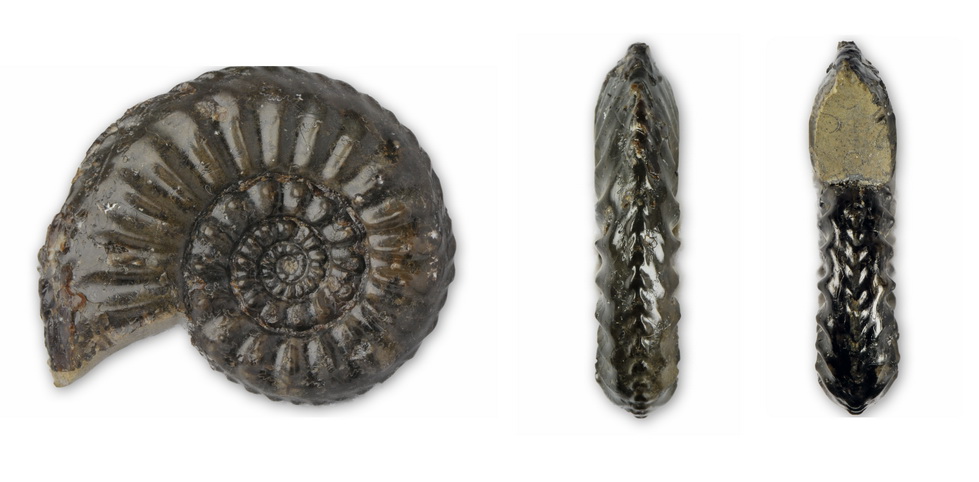
Amaltheus subnodosus : Side view, keel view, aperture view (from left)

Amaltheus subnodosus : Side view, keel view, aperture view (from left)

I realize that depending on how the ammonite is prepped, an aperture view might not always be possible.
Side view and keel view are nevertheless essential : You cannot safely identify an ammonite if you only see the side view.
Other rules ?
  • Yorkshire ammonites only
  • I will accept Holderness coast and Cleveland 🙂
What will you get for your efforts ?
  • If I do use the picture of your ammonite in the book (regardless if I photographed it or you did) you will get a sincere “thankyou” and – of course – your very own copy of the book, with or without my autograph 🙂
  • In the description I will of course mention the collection the ammonite comes from, or not if you prefer.
AndyS

A as in Amauroceras or A hopeless case ?

You have to start somewhere so why not begin with A ?

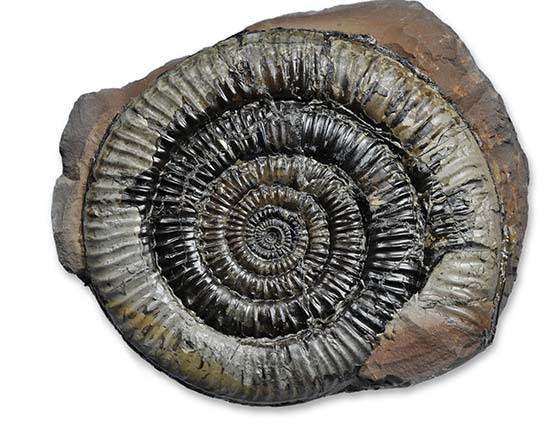
This middle lias (spinatum zone) nodule was found in the shingle on July 17, 2011 around Castle Chamber. The nodule was split in the middle and revealed the typical mix for such a nodule: Plenty of bivalves, a fragmentary, larger Pleuroceras, a smaller Pleuroceras (possibly apyrenum ?) and – looking at it again – a larger Amauroceras, broken straight down the middle, a relatively clean break as well. Larger Amauroceras aren´t all that common, so the nodule was bagged.

I did not look at it again until after May 2012, since it was neither amongst the perceived “highlights” of that holidays´collecting nor did it look easy to prep with the large complex surfaces of the nodule halves that would have to be glued together to make it safe to prep. I did not want to risk damaging the whorls while prepping around it with a pen and I do not have a large stonesaw available. A hopeless case, doomed to end up on the eternal prep backlog ?

So when I looked at it again in May 2012, I put the two halves of the nodule back again to see how they fit – and found they fit so well that I could not break them apart again ! Making a virtue out of necessity, I closed the remaining gap a bit further by gently hammering the two halves together with a hammer and letting a lot of low viscosity super glue run into the crack…

About a week later, I started to prep the ammonite and could soon expose the outer whorl of that 6 cm / 2.5″ Amauroceras lenticulare. I was amazed that you almost have to know where the crack was to see it…

Amauroceras belong to the Amaltheidae family of middle liassic ammonites. There are 2 species to be found on the Yorkshire coast :

  • Amauroceras ferrugineum, a smaller, relatively common species and
  • Amauroceras lenticulare, a larger species.

Apart from the obvious difference in size they differ in …. well I don’t really know that !
Anyone having broken apart a large, well-preserved A. lenticulare to see what the inner whorl looks like ? I haven´t !!!
Looking at the sutures of A. ferrugineum and A lenticulare at approximately same size on page 83 of the Lias SCHLEGELMILCH, they do look different in that A. ferrugineum has a more complex one, while A. lenticulare´s suture is more simple, less “fractal”. But still, you would need to break up your A. lenticulare specimen to find out, those sutures were taken at 7.5 to 8 mm ! In a way, the suture of A. ferrugineum does look more “adult” at this small stage, could this be a sign for a “dwarf” variation ?

The large Amauroceras lenticulare is rarely found in a condition appealing to the collector; the larger shells apparently were quite fragile
and often are only preserved as partials or badly crushed. Furthermore, their thin discus shaped shells are hard to recognize, this may lead to a certain
collection bias so that the smaller Amauroceras ferrugineum appears to be much less rare – not sure if they really are.

AndyS

The journey begins here…

Actually, it began in 1989 when we first visited the Yorkshire coast in the UK to collect fossils. We´ve been back every year at least once since. The collection has grown, mostly ammonites but also crinoids, starfish, bivalves, brachiopods and even some marine reptile bone material.  As of today, it contains roughly 2500 specimen ranging from the lowest to the highest Lias (a time in the Earth´s Jurassic period about 200-175 million years old).

But this blog is mostly about the ammonites and the idea to build a documentation about finding, preparing and identifying them with the clear goal to publish this in book form at some point…
This idea started some years ago amongst members of the UKFOSSILS forum (discussfossils.com), kindly provided by the UKGE Geologists Equipment store (http://www.ukge.co.uk/).
An early expression of this idea can be seen in the members identification database, which was meant to provide a mechanism to “crowd source” pictures and identifications from various collections. While this worked fine in the beginning, the “crowd sourcing” aspect slowly got lost, with various members leaving the forum for different reasons and my identifications for liassic ammonites being the only ones left…

For personal reasons I had to abandon execution of this project for a while, mostly due to lack of time, but now the time seems right to restart it, this time with myself in complete control of all aspects of the project.

This blog will provide a diary of this project,  from finding ammonites, preparing them, identifying them and the process of documentation & writing the book…

AndyS