
This find is, like so many, a find I did not expect but one that likely has a link to a previous find.
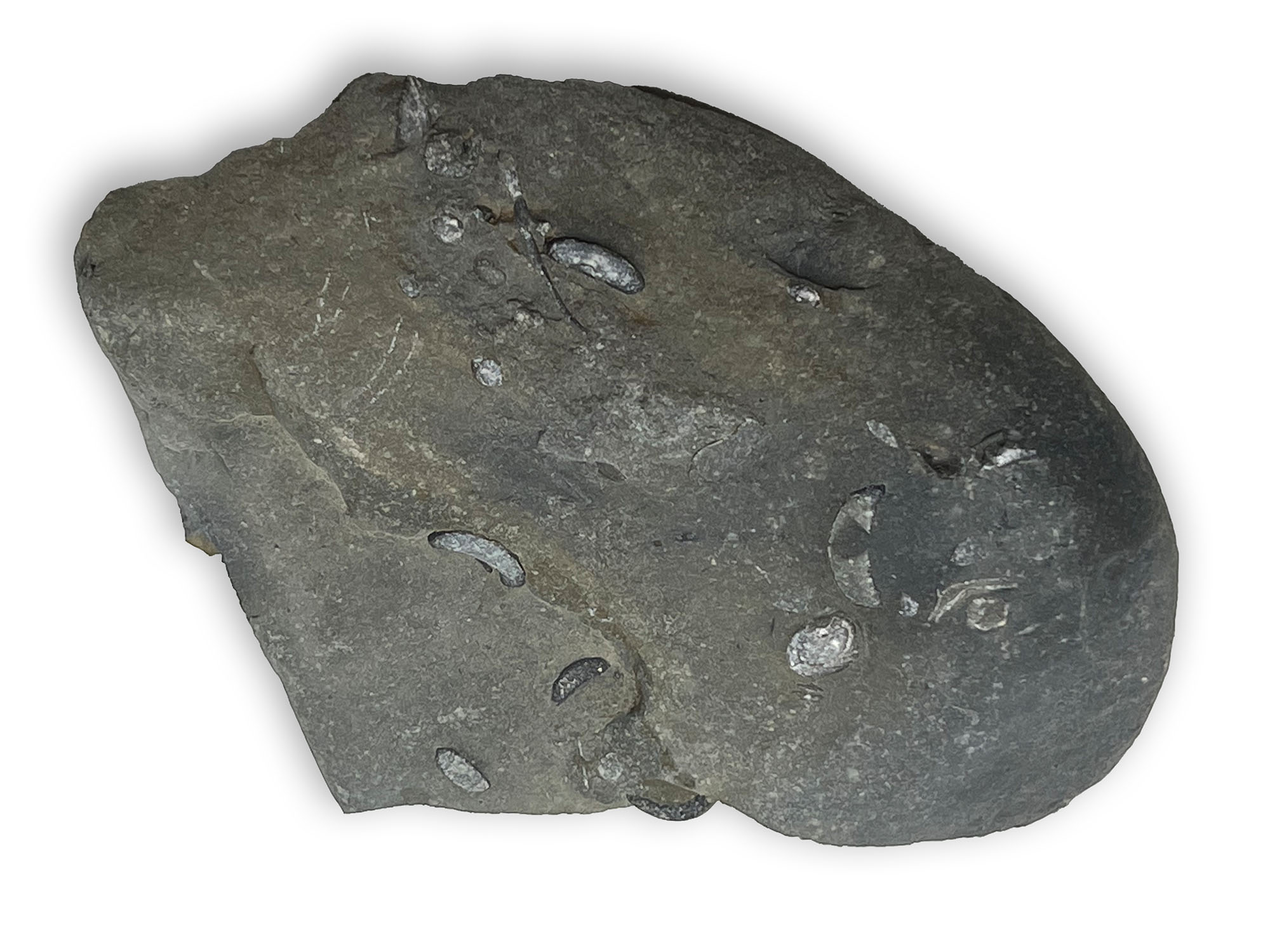
As is my usual habit, I do a quick photograph of all the finds on a daily basis,
this one was found at Stoupe Beck Sands on June 12, 2023.
I had been out collecting with Neil the previous day on this stretch of the coast and wanted to check up on a crinoid slab that Neil had got a small crinoid off on that occasion. The crinoid slab proved to hard to find again after it had been mostly sanded over by the previous tide, but also ultimately free of other fossils.
I continued checking for any new fossiliferous rocks in the area and found this small 15 cm wide flat nodule ex situ with small unidentifiable ammonite sections showing on the top. I gave it a tap with the hammer on the side to see if there would be any more inside, but stopped there when the venter of one of the ammonites was exposed, and bagged the nodule.
If you look closely at the picture above, I had at the time of photographing the specimen already done a „scratch test“ with my fingernail to see if that specimen would be abrade-able, and it looked like it.
Back at home, I put that assumption to the test and quickly got hooked abrading the fossils in this small piece of rock.
This picture shows why :
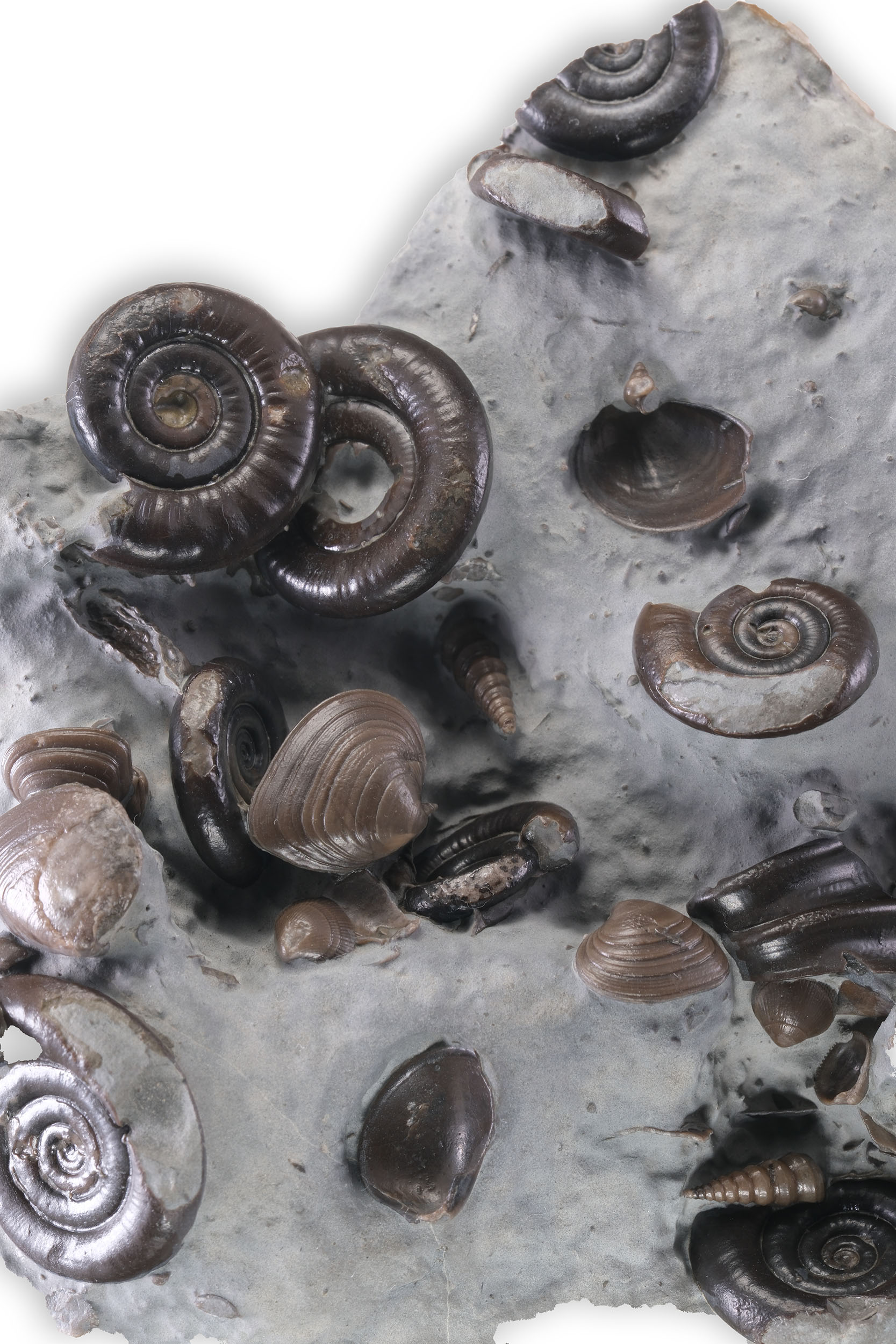
About 10 hours prep time, mostly abrading with soft iron powder
Preservation is quite wonderful, luckily there were more ammonites than initially showed on the surface, but also a few well preserved double sided Cardinia and other bivalves, and also some beautiful gastropods that showed in the course of the preparation.
The question then of course was : What genus/species are these ammonites ?
With small ammonites (and the largest of these is just under 2 cm or 3/4 of an inch in diameter) that is always difficult, as characteristics may not be fully developed.
These are mostly smooth, with very fine growth lines on the shell, and a faint keel on the venter that shows developing side furrows on one of the ammonites.
The same ammonite is also the only one that shows the beginning of some wavy ribbing on the last whorl.
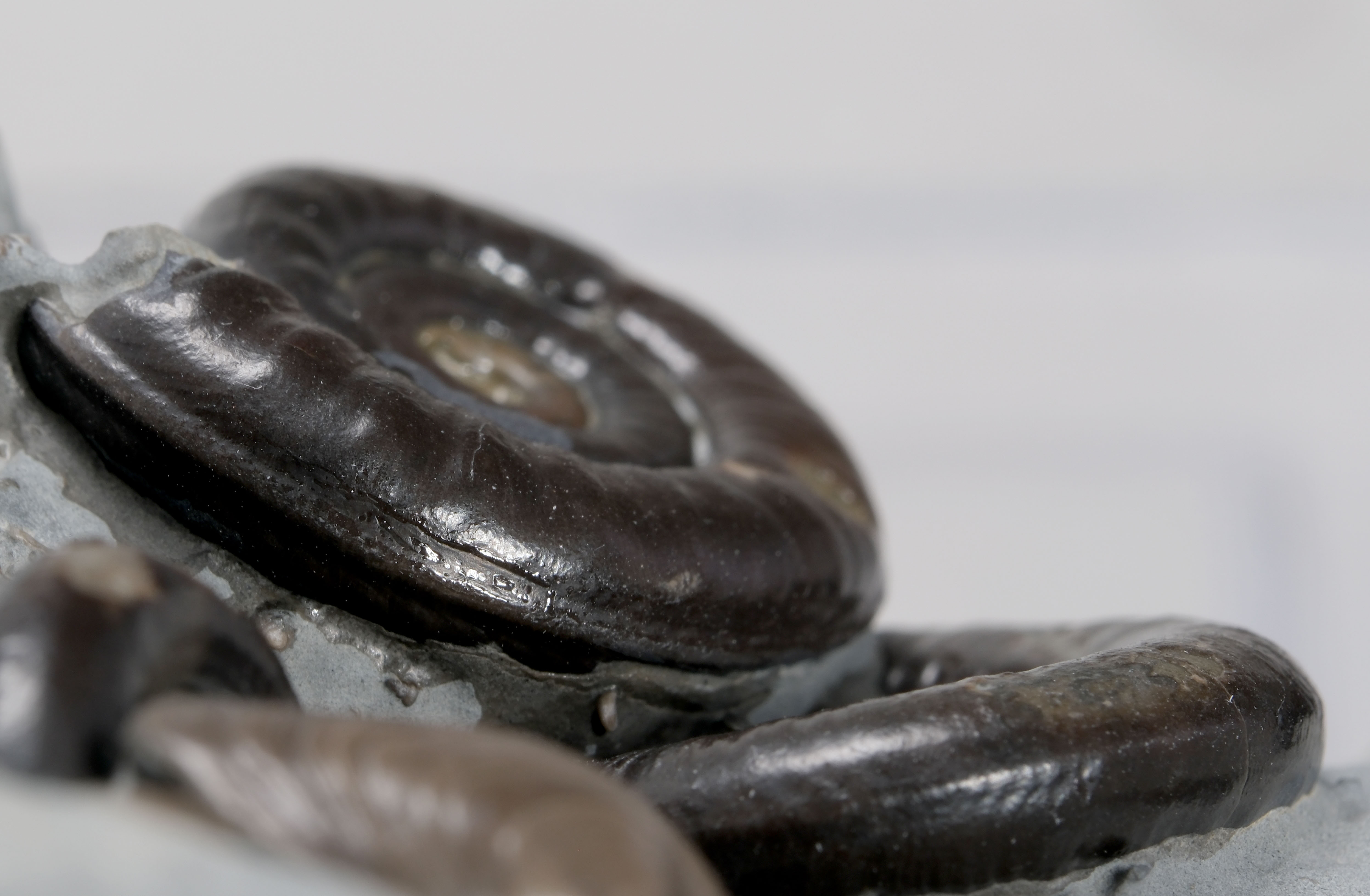
As all of the ammonites are mostly preserved with shell, no sutures are visible, so no help there. I’d be tempted to carefully polish away a bit of shell to get to them though…
There is one very small fragment of a larger ammonite as well :
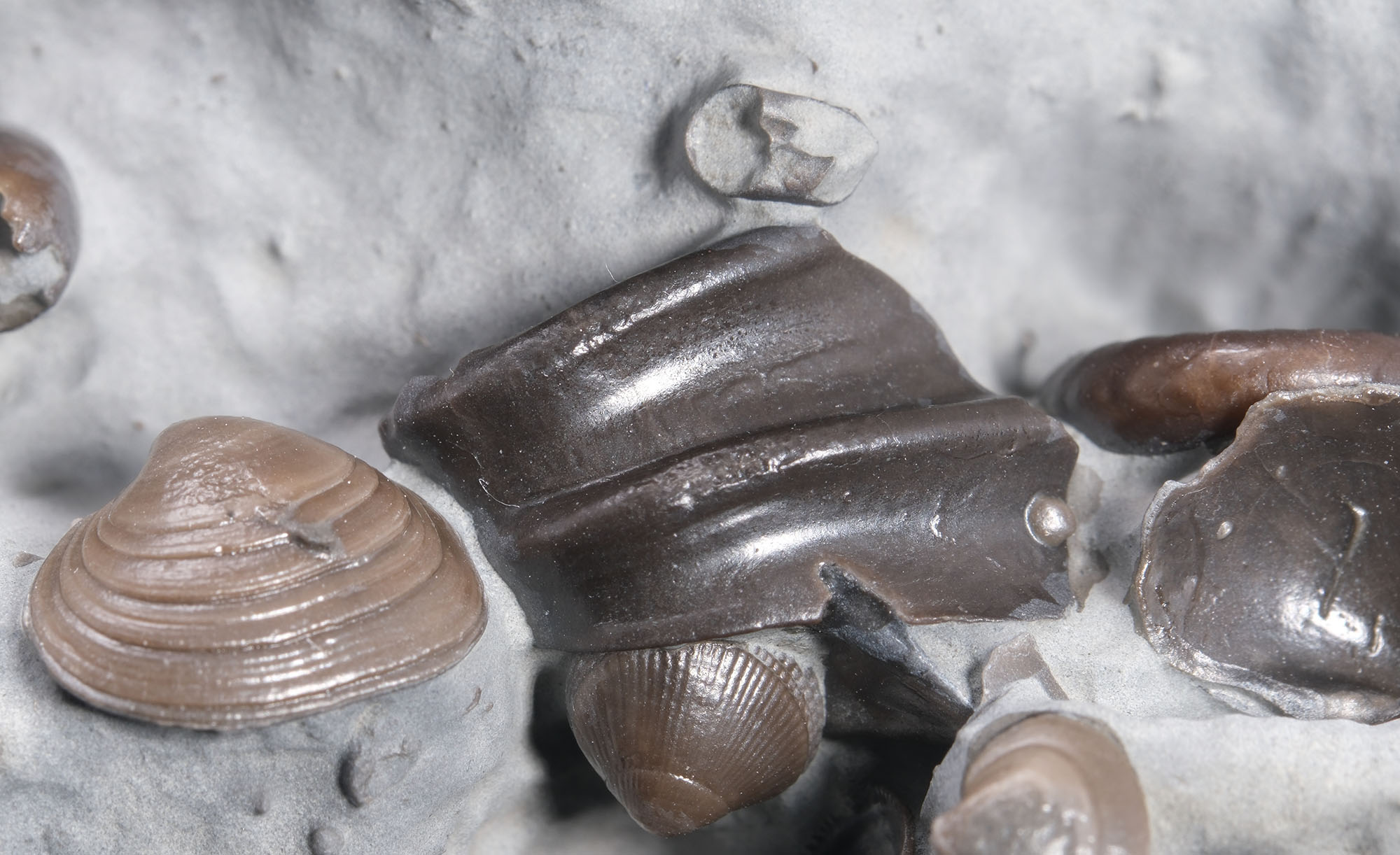
Since it is so small, really just 2 ribs, less than 1 cm width, and shows no other characteristics, no real help there either. It is good to know though, that larger ammonites co-existed with these smaller ones.
From the locality, stratigraphy and lithology we can assume this is lower lias, most likely sinemurian. Bivalves are only rarely useful for indicating stratigraphy, we know that for example the Cardinia genus commonly occurs throughout the hettangian and sinemurian.
Lithologically, the nodule seems to be a bit closer to nodules I have found with Caenisites, being a bit harder and in parts slightly pyritized, you can guess that from the first picture by the slight yellowish-green tinge of parts of the nodule.
The ammonites look very much like an Arnioceras miserabile I have posted before :
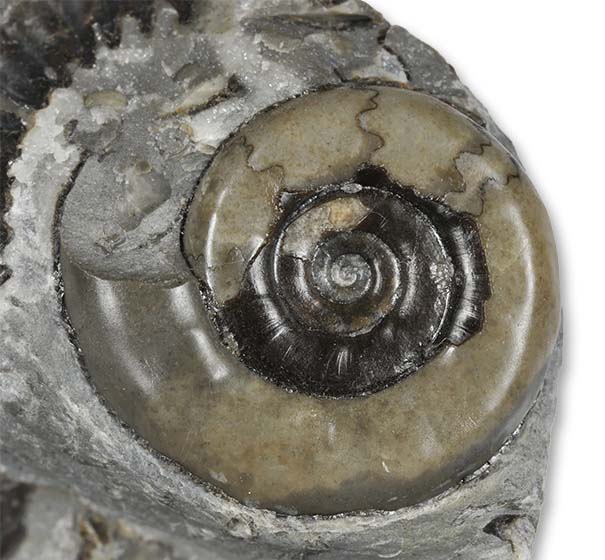
Given the lithology of the rock I would think it would be higher than semicostatum zone that the above A. miserabile comes from, but I have posted about an Arnioceras cf. hartmanni from the brooki subzone before, and looking at the inner whorls of that ammonite it seems we could have a match :
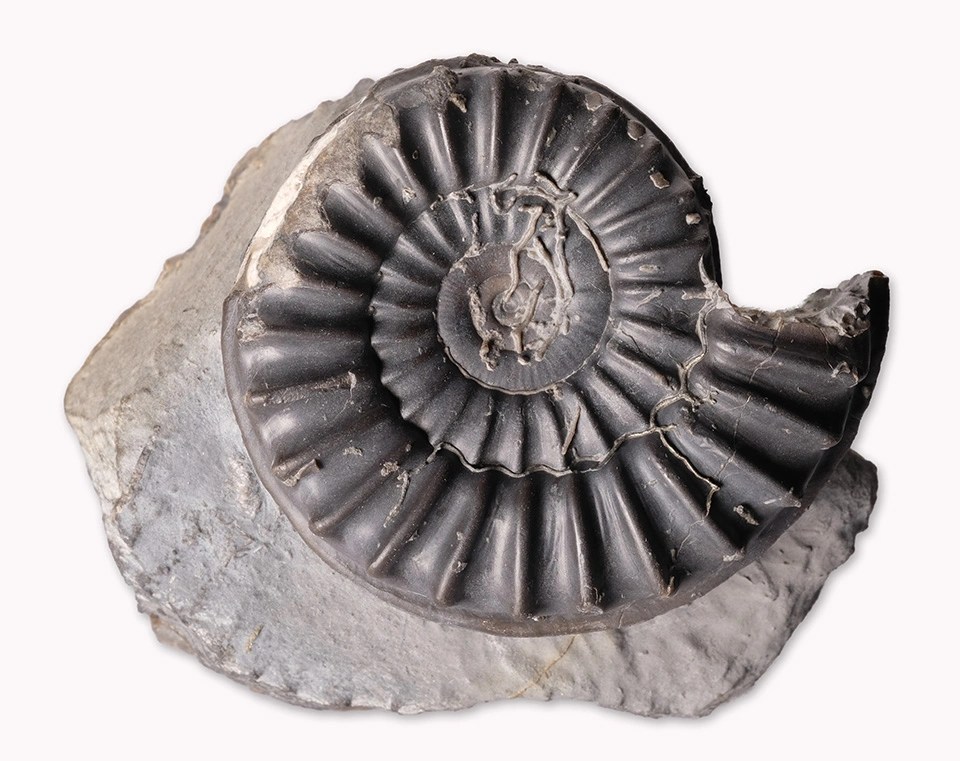
So, still not proof that these occur together with Caenisites, but we’re getting closer…
As for the smaller bivalves apart from the Cardinia, here are my tentative Identifications :
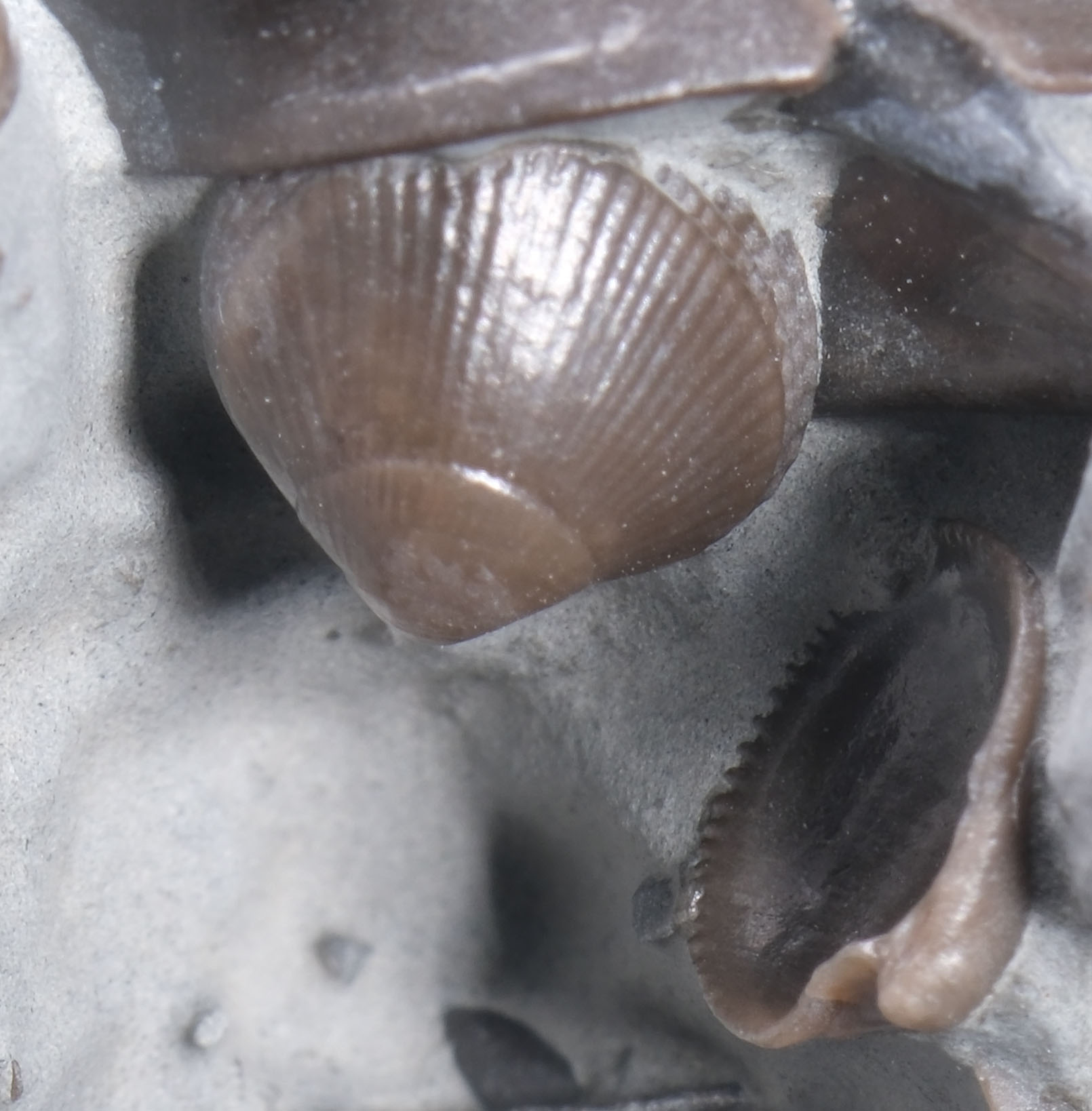
Tutcheria sp.
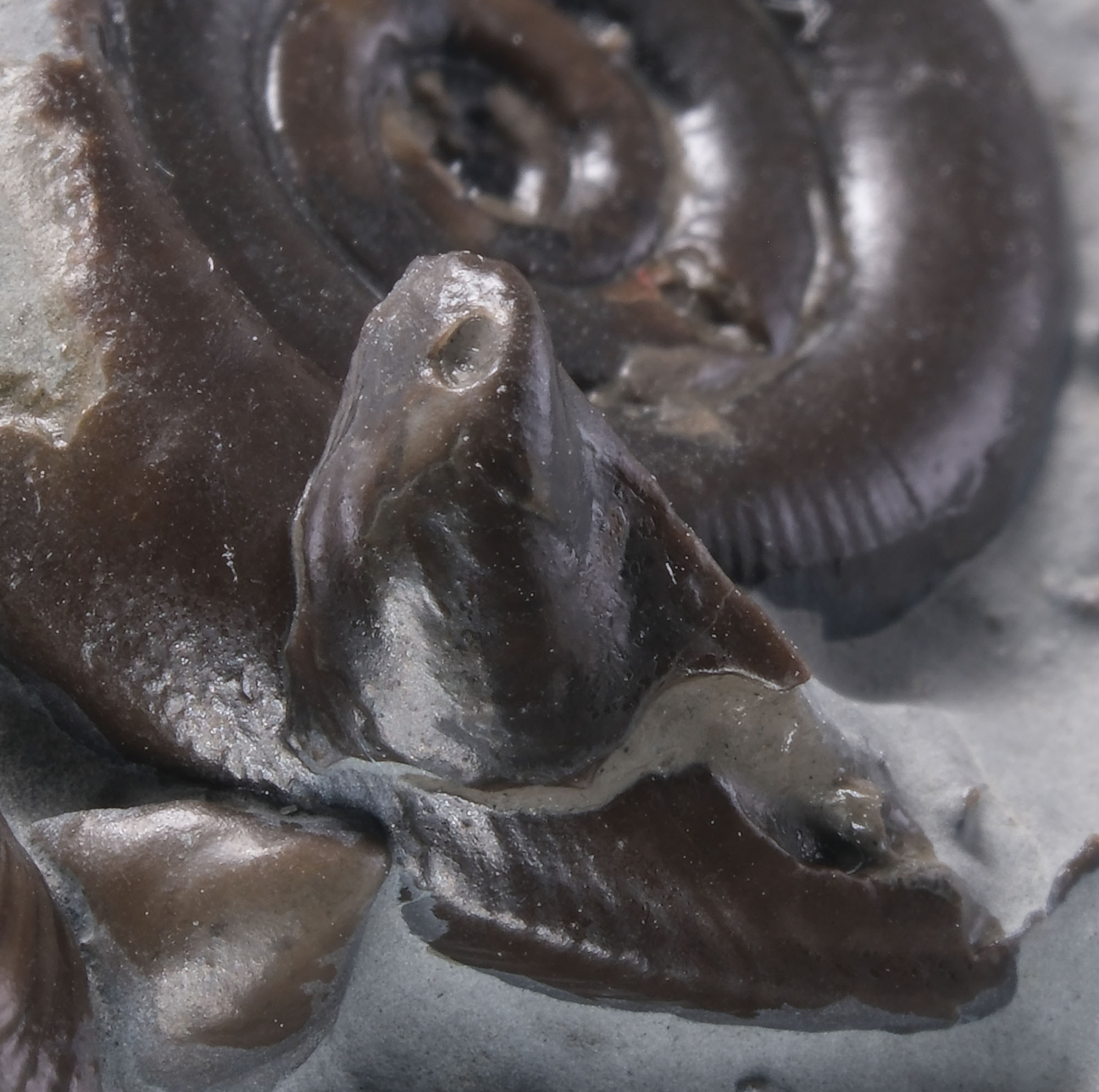
Pteria sp.
For the two beautifully preserved gastropods I would suggest Promathilda sp.
as an Id, if anyone has a better idea, please let me know !
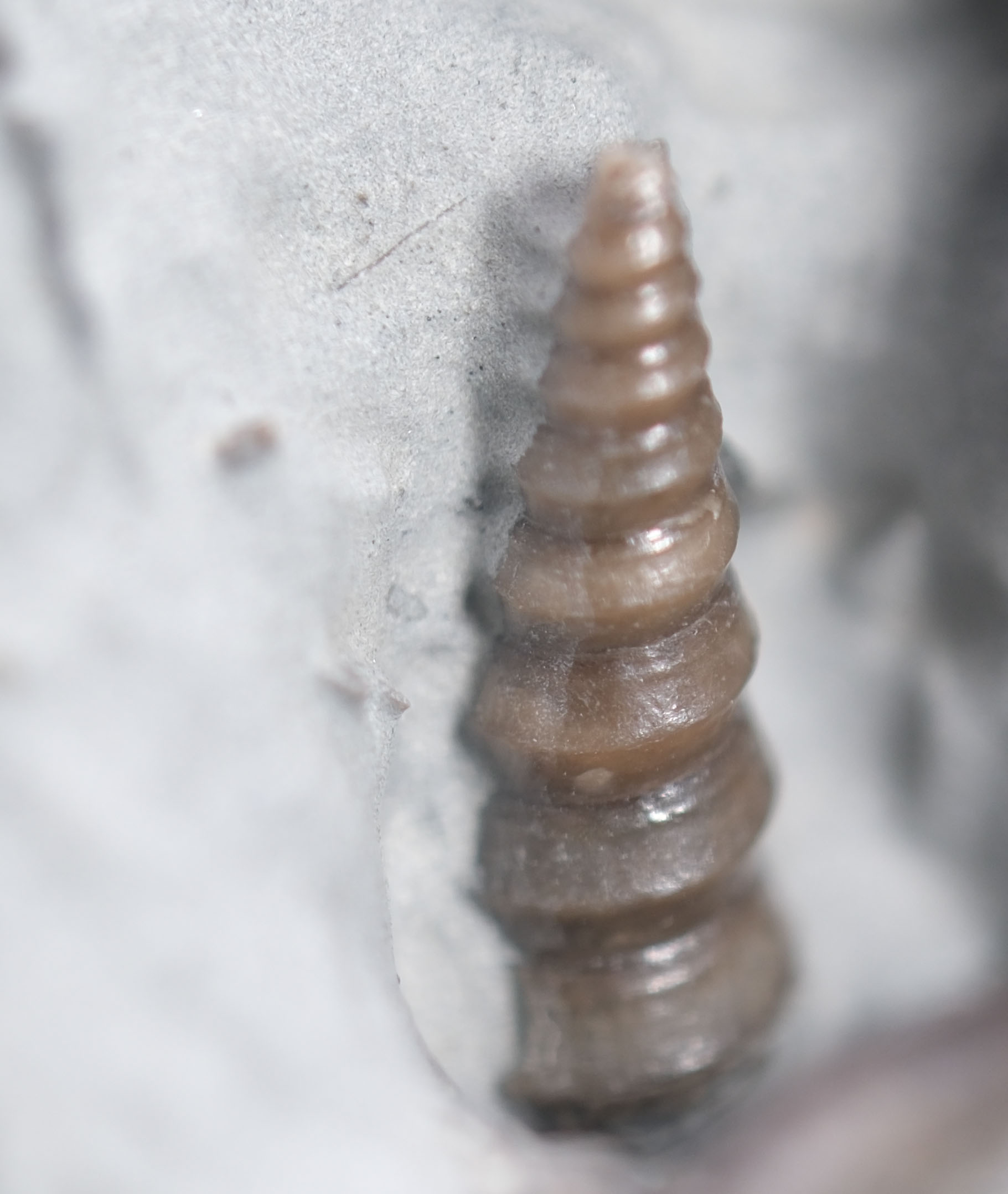
Promathilda sp.
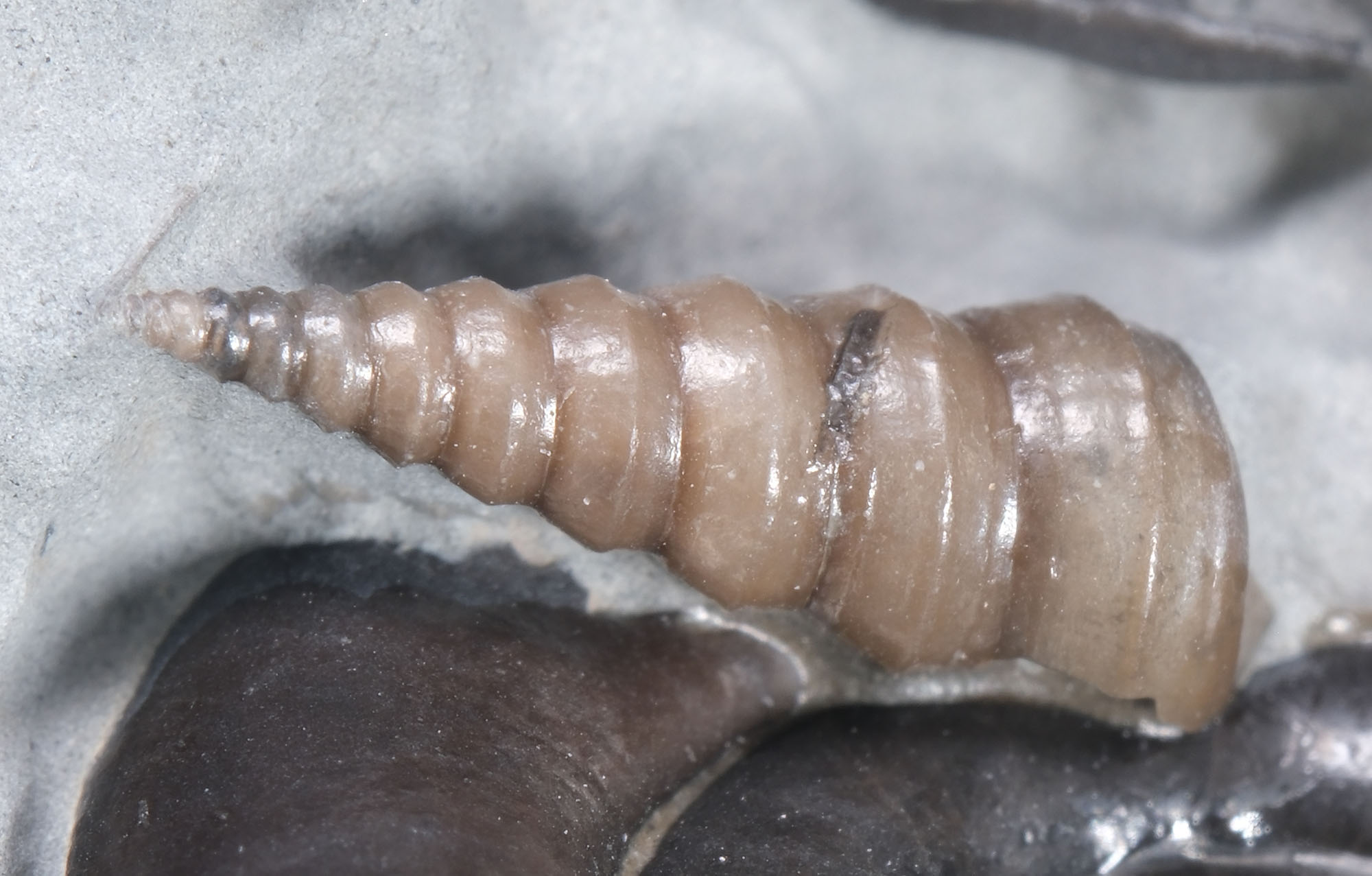
Promathilda sp.
14 ammonites including partials, 4 gastropods, about 15 various bivalves and 1 tubeworm – not a bad result for this small piece of rock !
AndyS
 Yorkshire Ammonites (and other fossils ) revisited