No new species this time or Ammonite pathologies

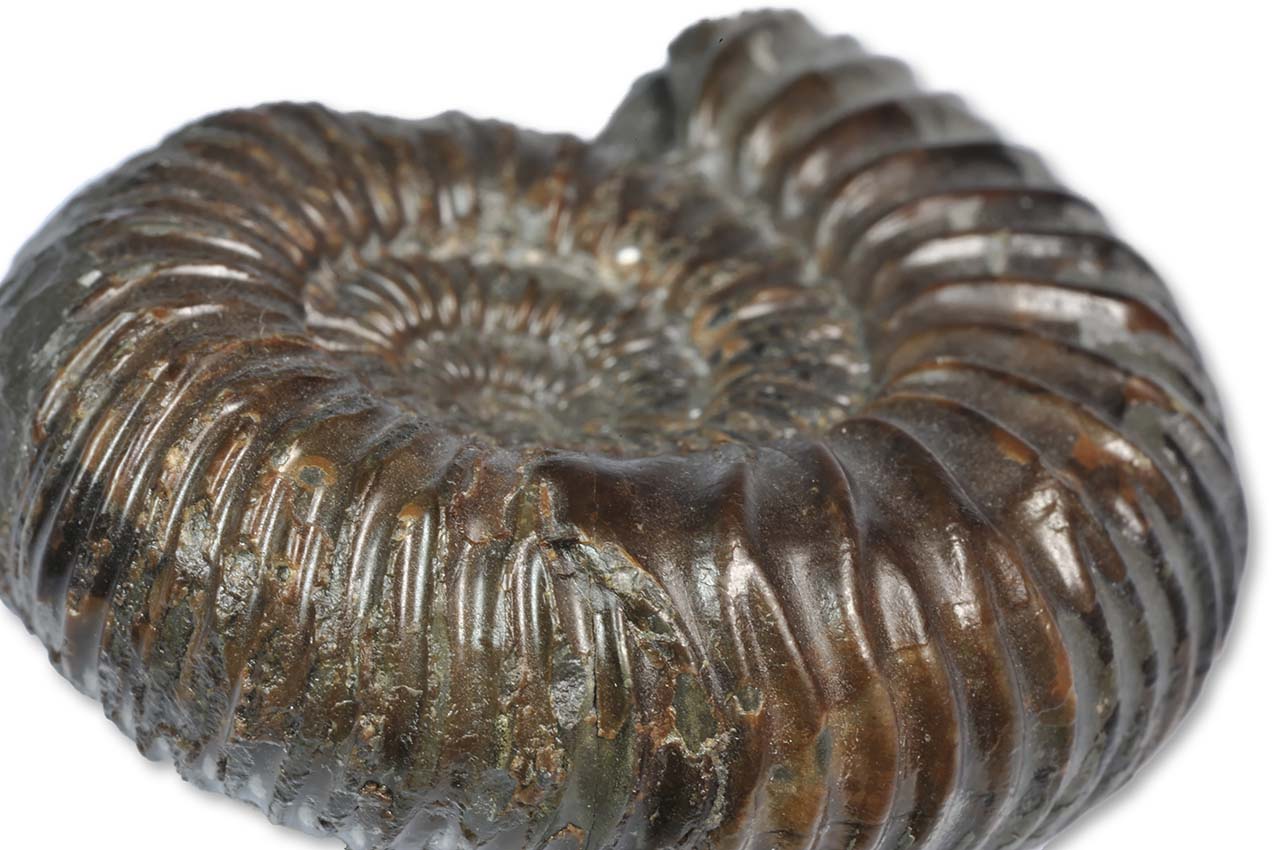
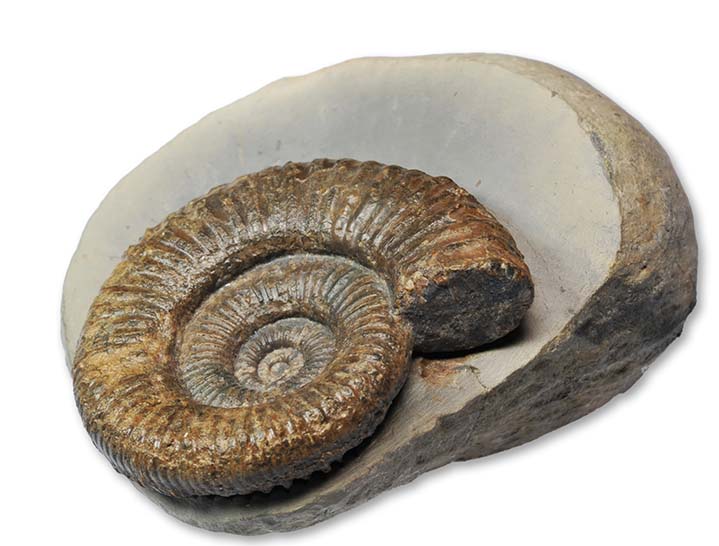
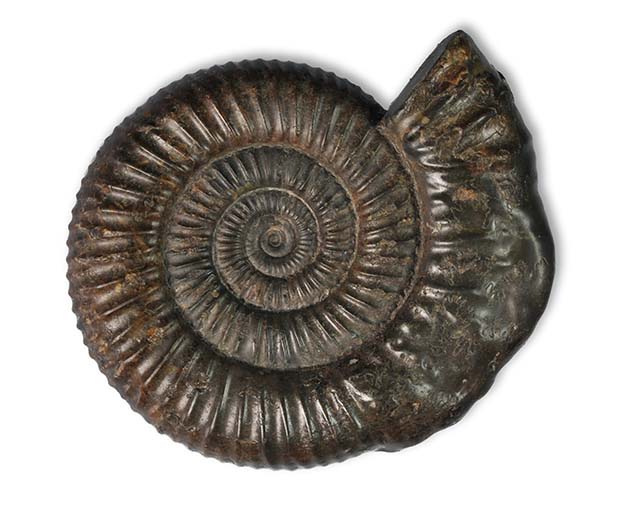
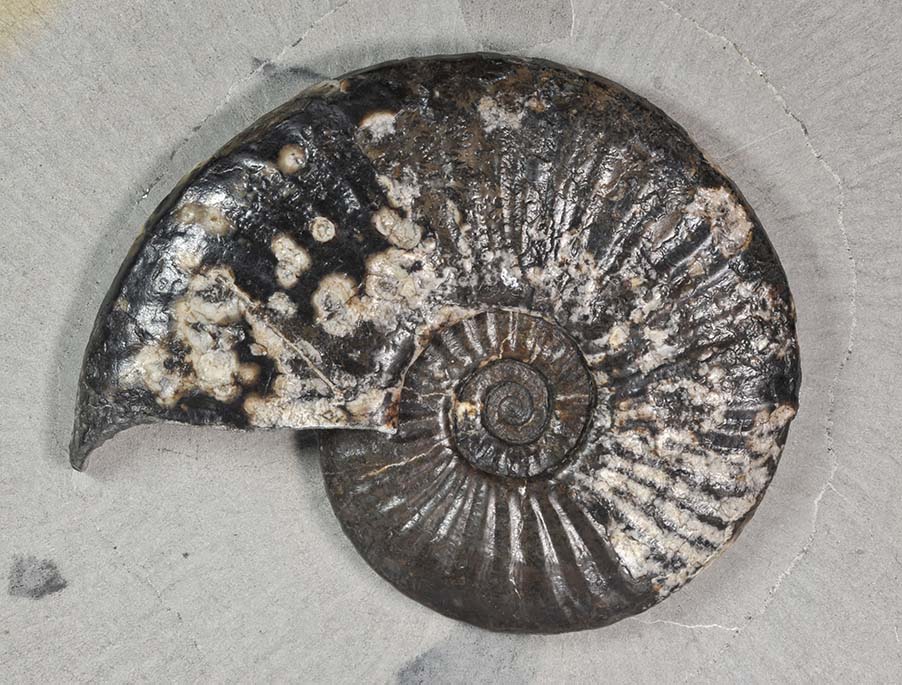
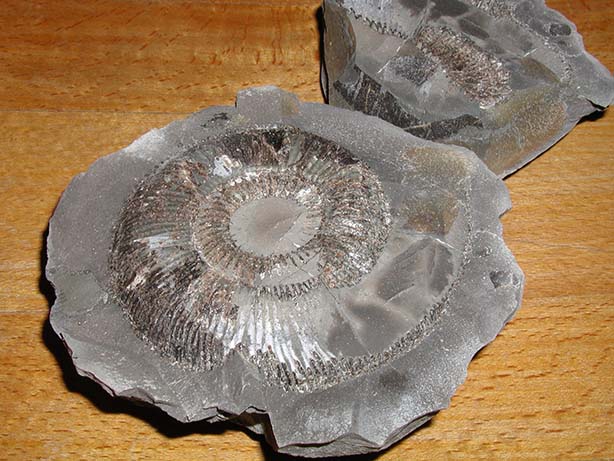
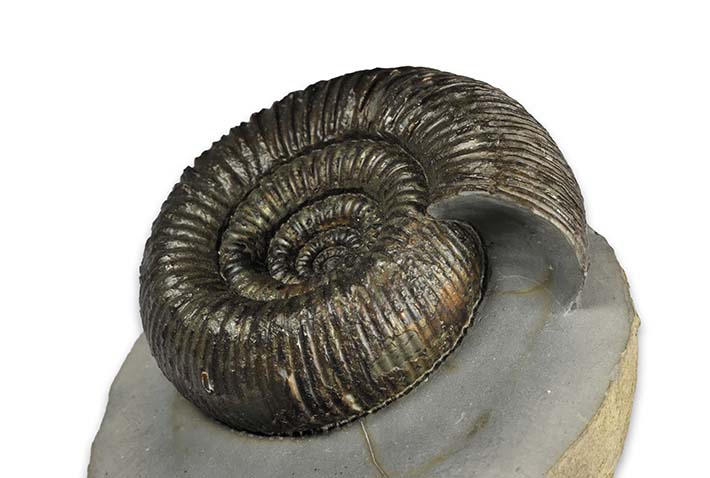
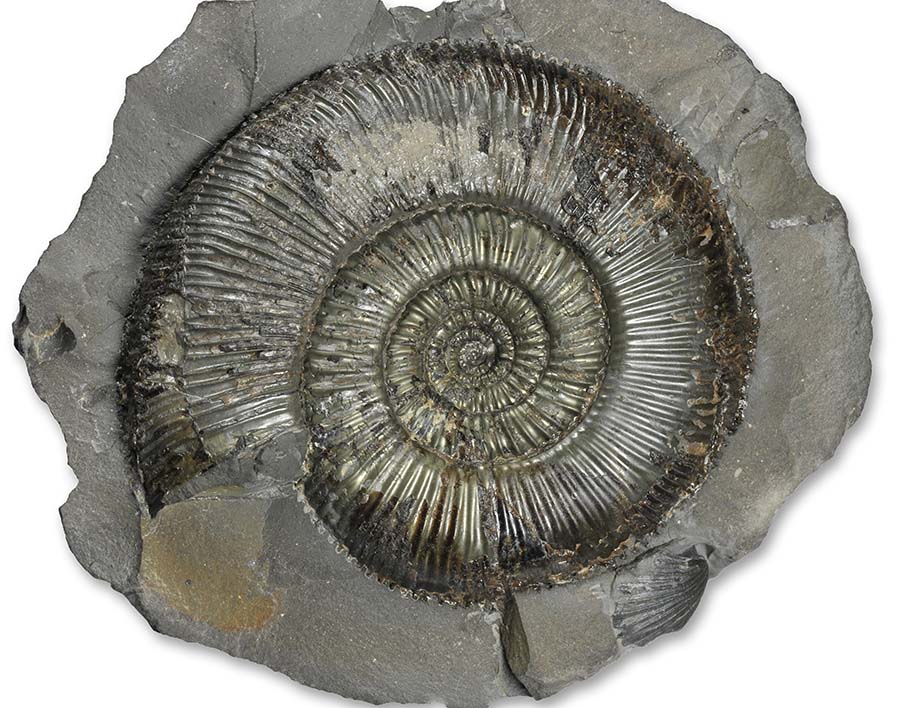
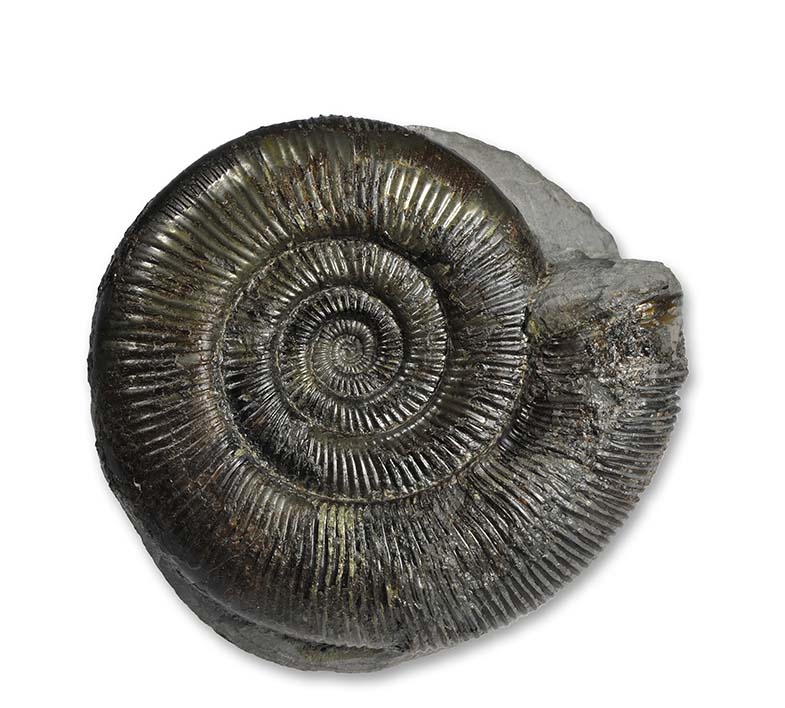
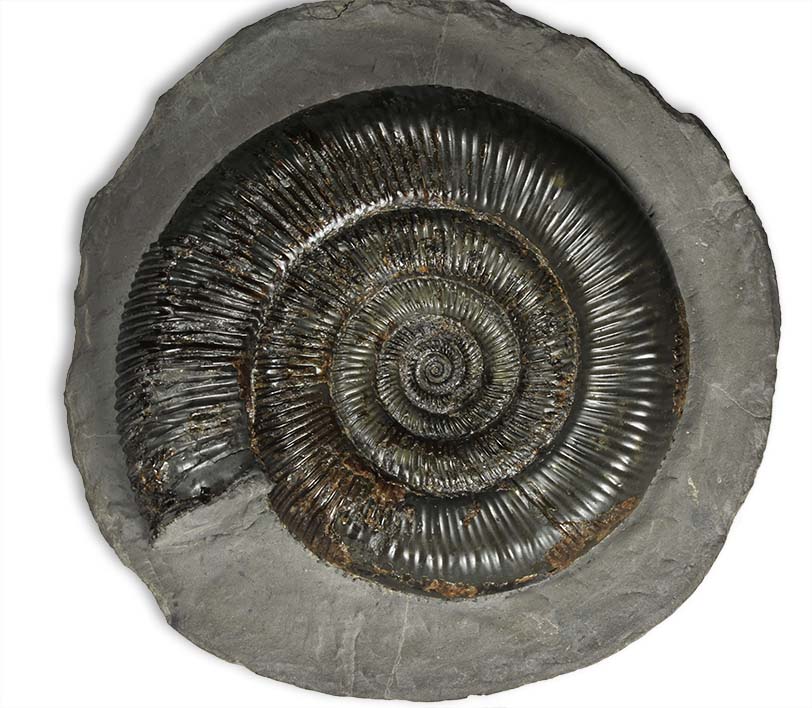
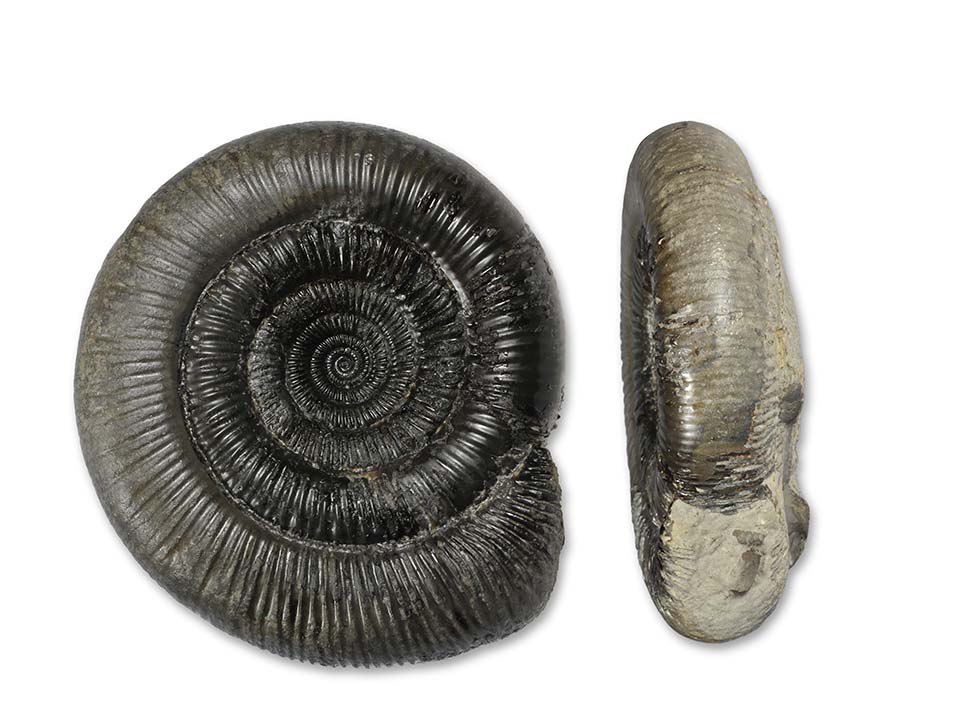
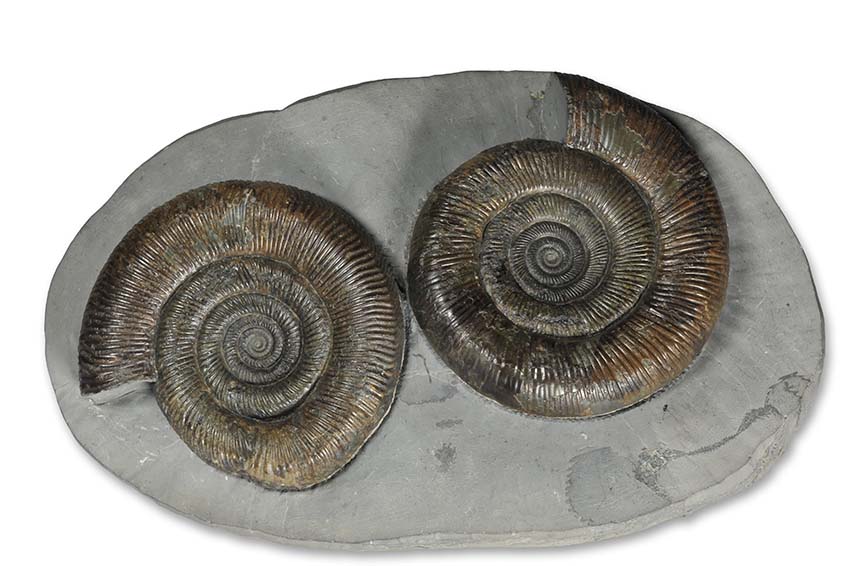
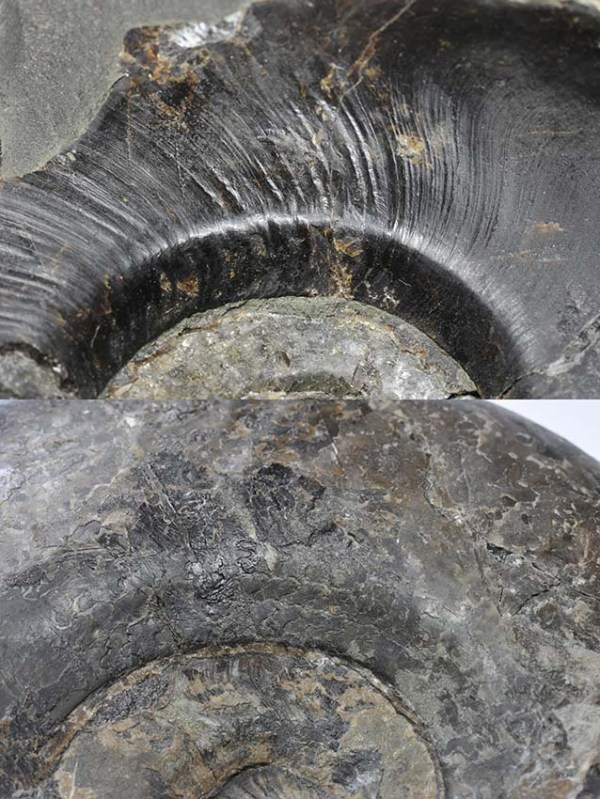
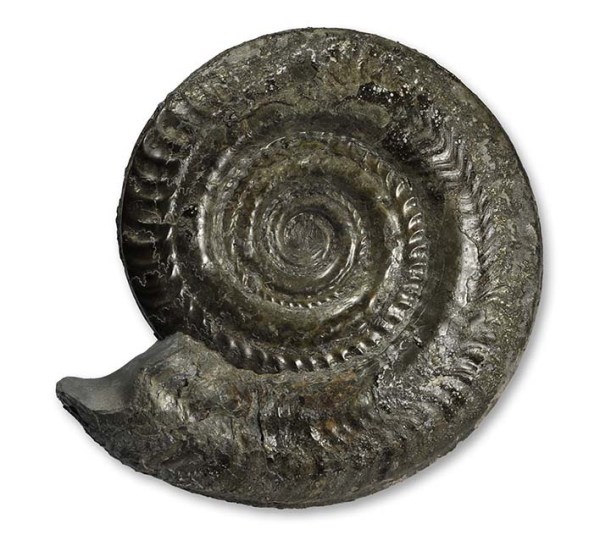
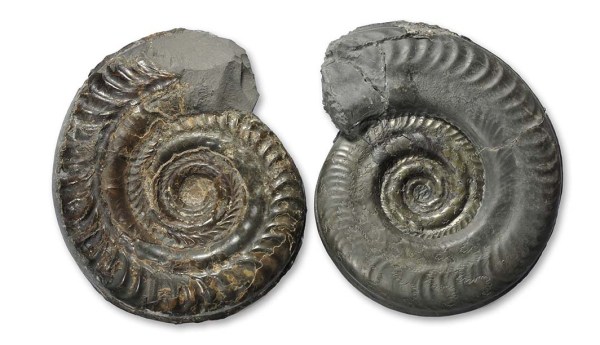
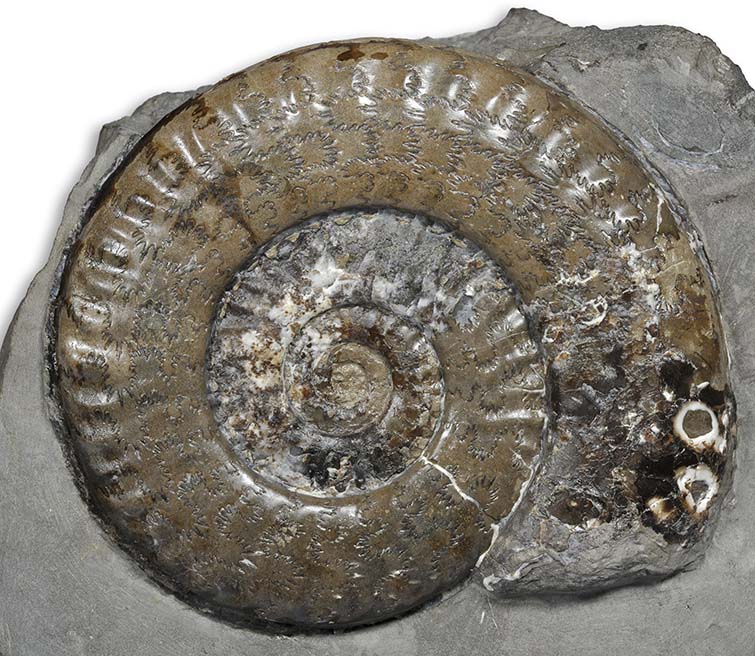
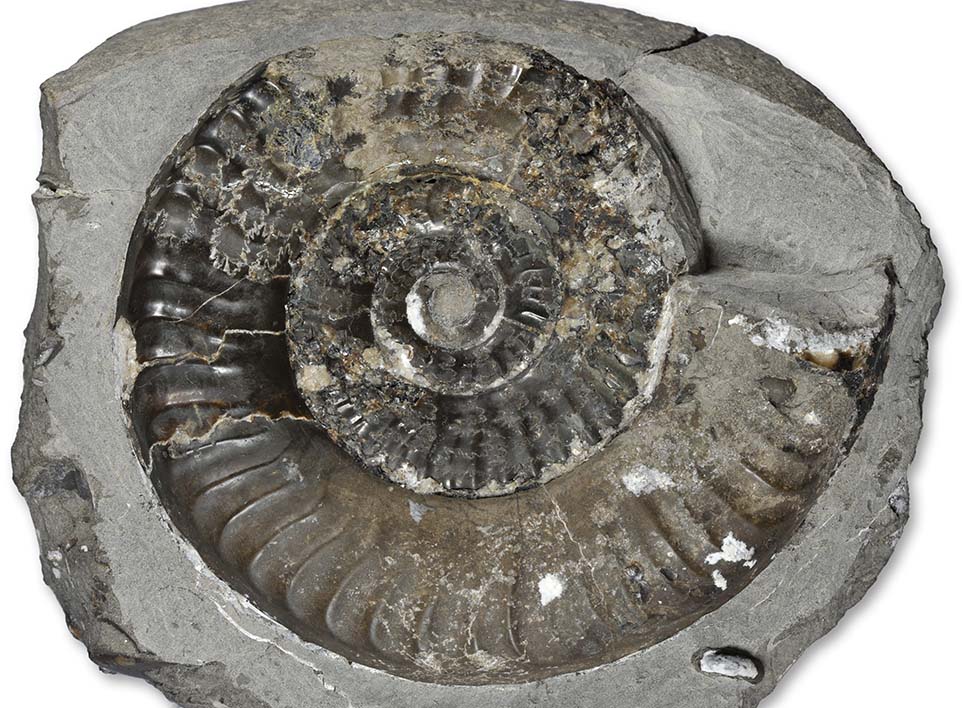
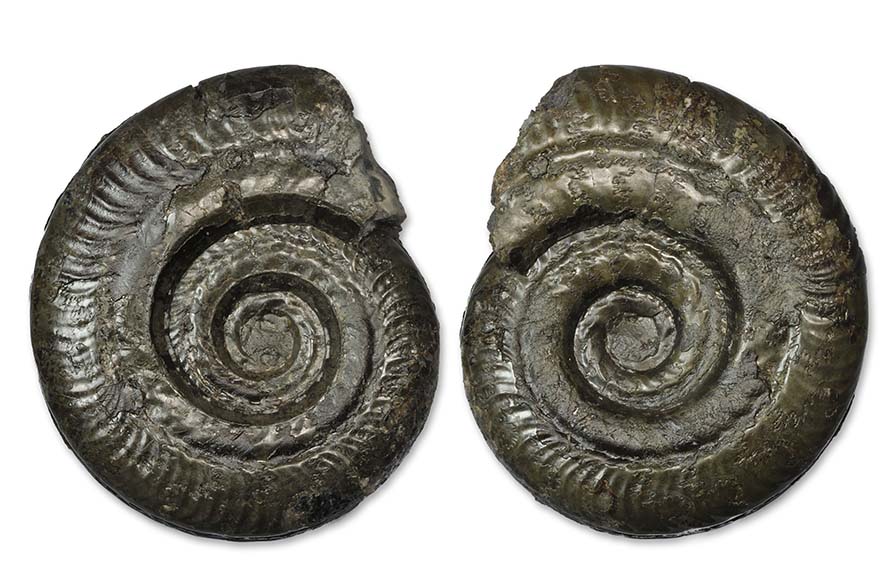
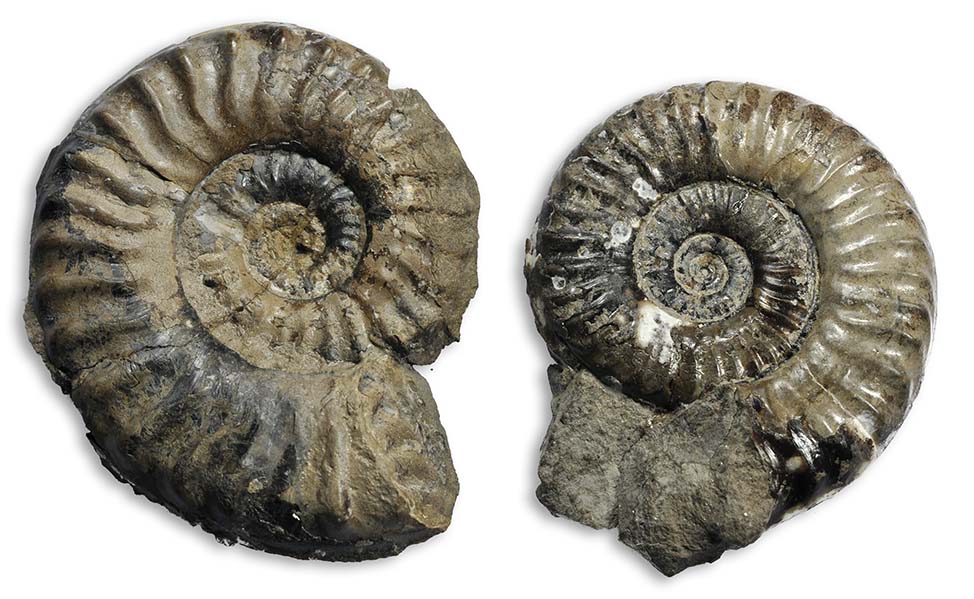
Dactylioceras semipolitum, 6 cm, showing both sides

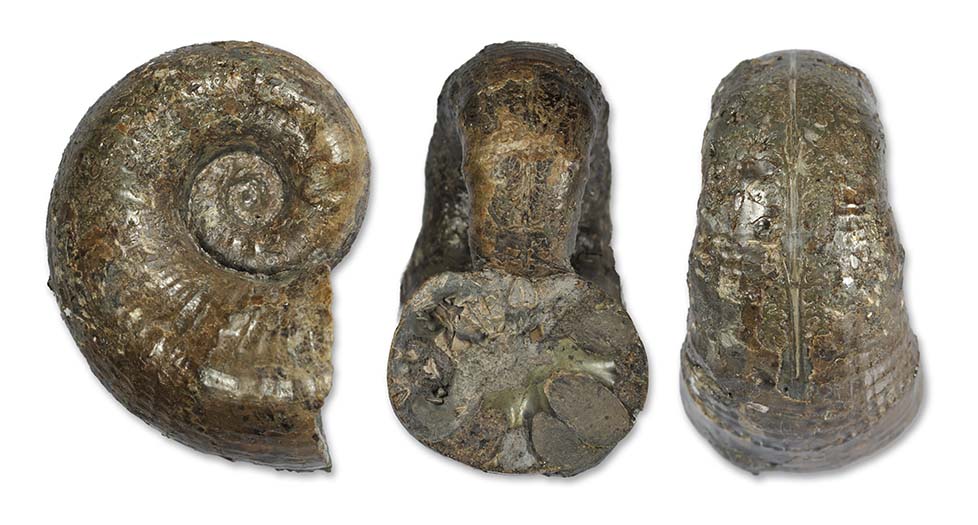
Hildoceras semipolitum, 6 cm, showing both sides

From time to time you might come across ammonites that look like a known species but then again they are different.
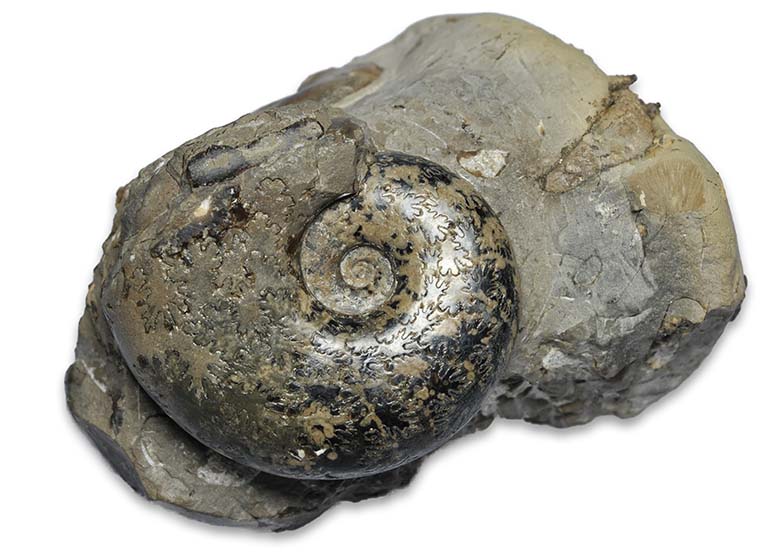
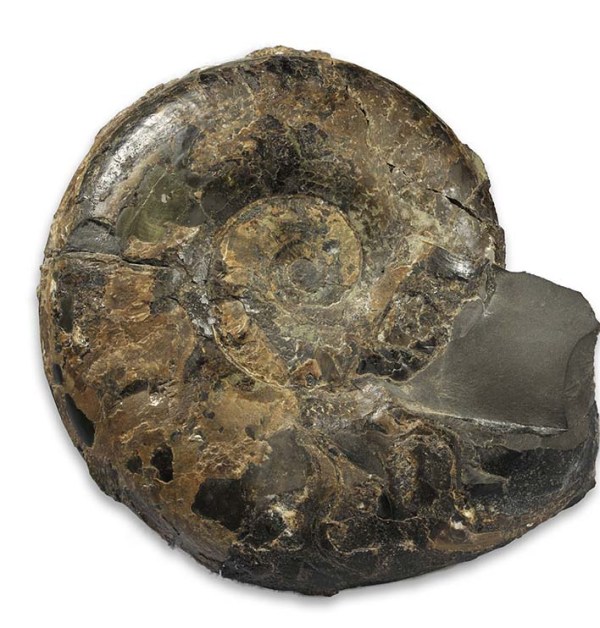
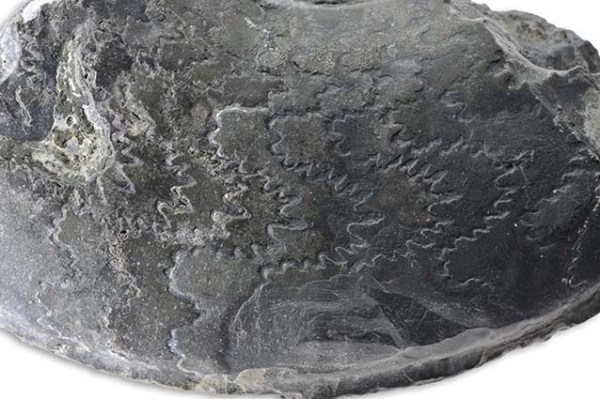
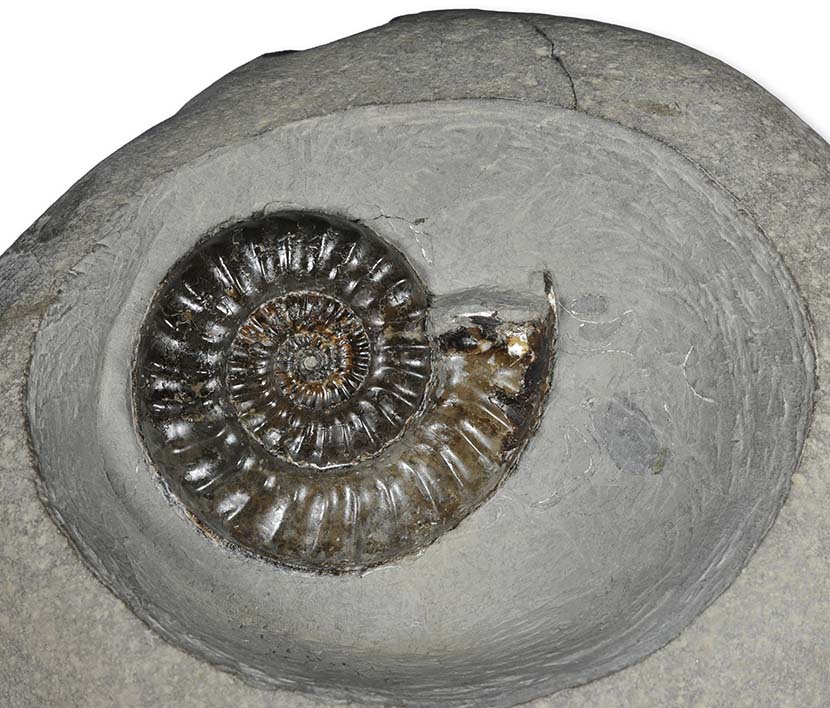
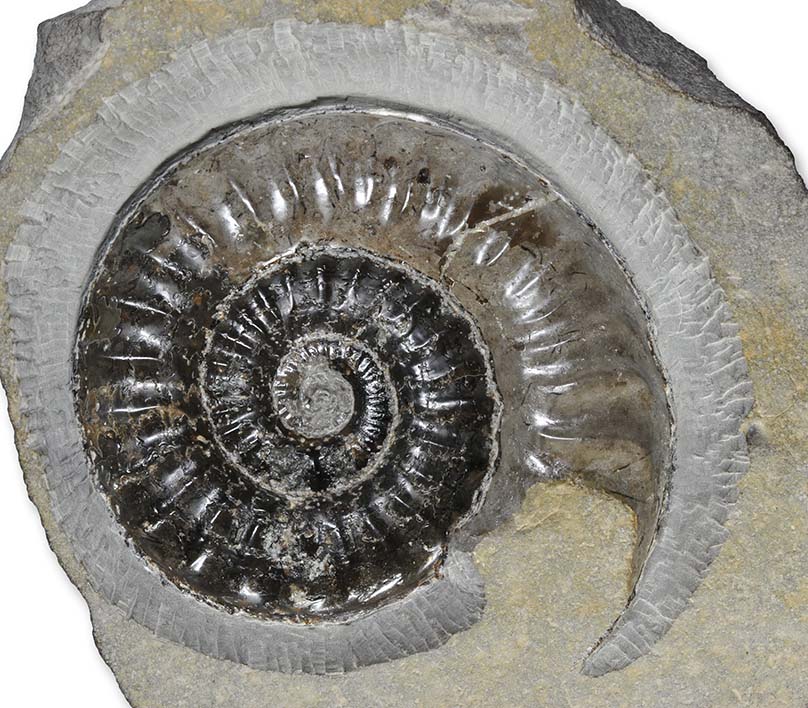
Just like the above ammonite. I had been looking at it when I was selecting the ammonites for one of the previous posts (it´s a Hildoceras semipolitum),
but something just wasn´t right :
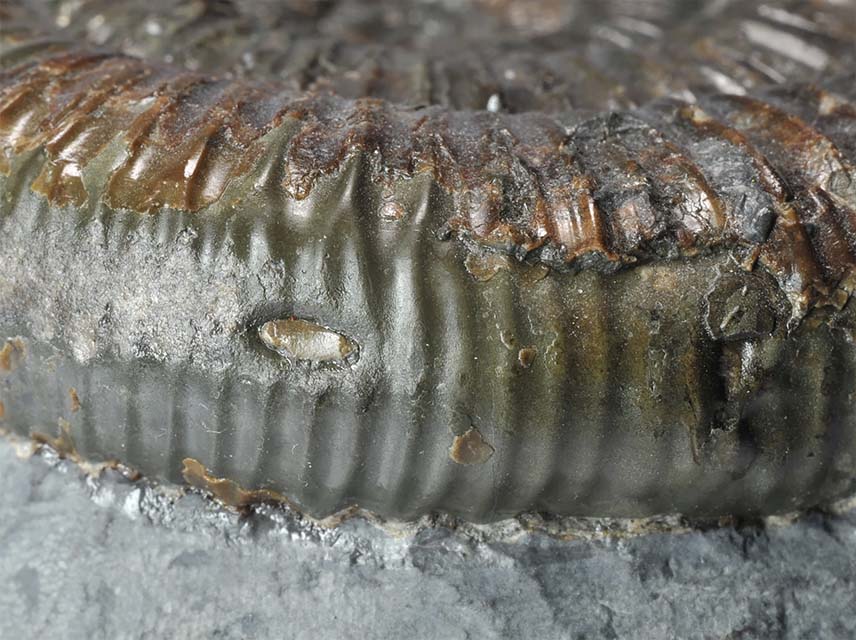
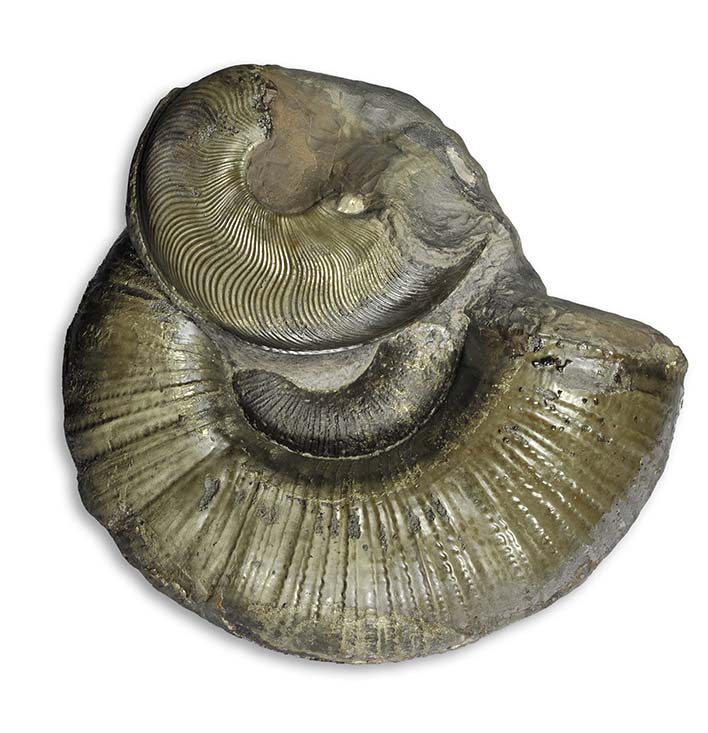
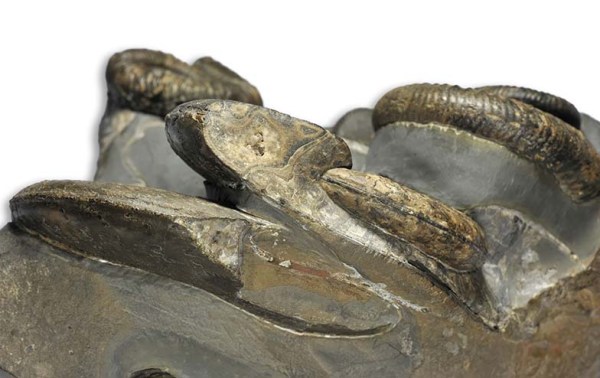
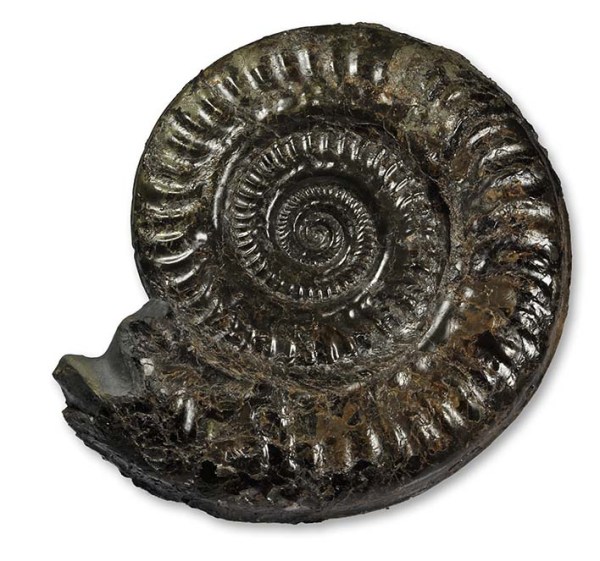
It has a steep smooth (apart from growth lines) umbilical wall with a sharply angled edge. The ammonite is like that as far as one can see down the umbilicus.
I was looking through my books to see what it could be – H. semipolitum does not have such a sharply angled umbilical edge – until I realized it is “just” a pathology
when I turned the ammonite to the other side : There it´s just like a normal H. semipolitum should be.
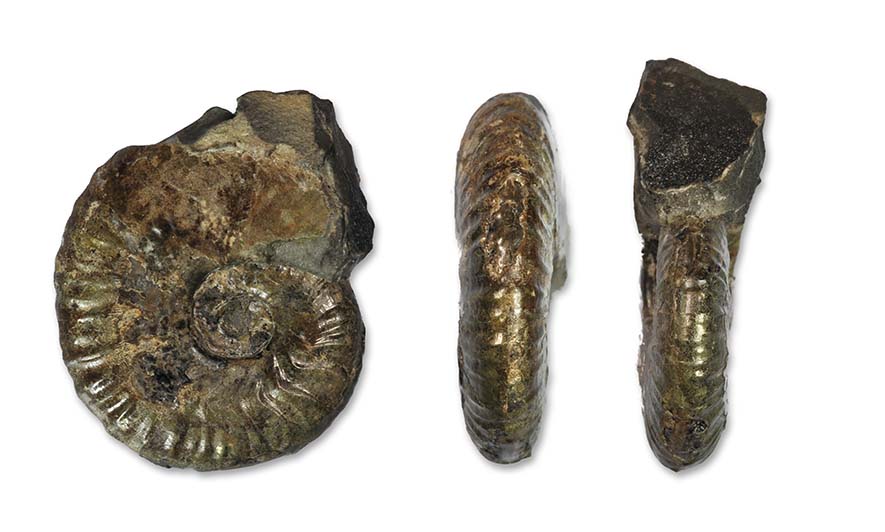
Some pathologies are just like that, only a small change, a missing rib, a slight change in ribbing pattern on the body chamber, a healed fracture etc, but overall the species is still recogizable. For others the change is more drastic: a missing keel, a complete change in ribbing pattern starting very early in the shell, a completely asymmetric shell etc. leading authors in previous centuries to create new species for them, examples are Hildoceras walcotti, Monestieria errata .
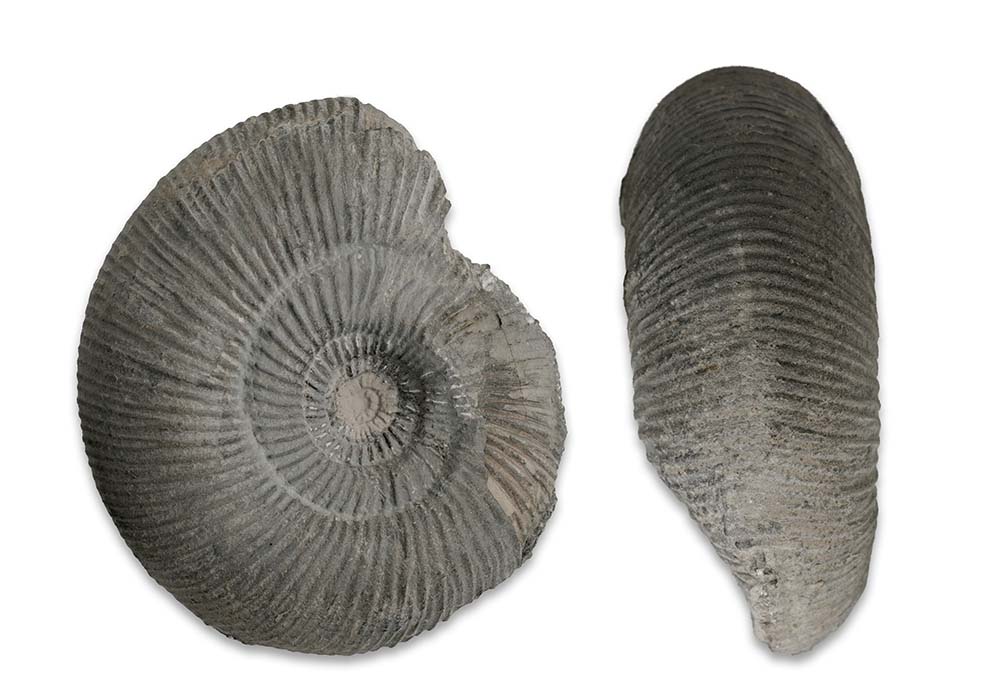
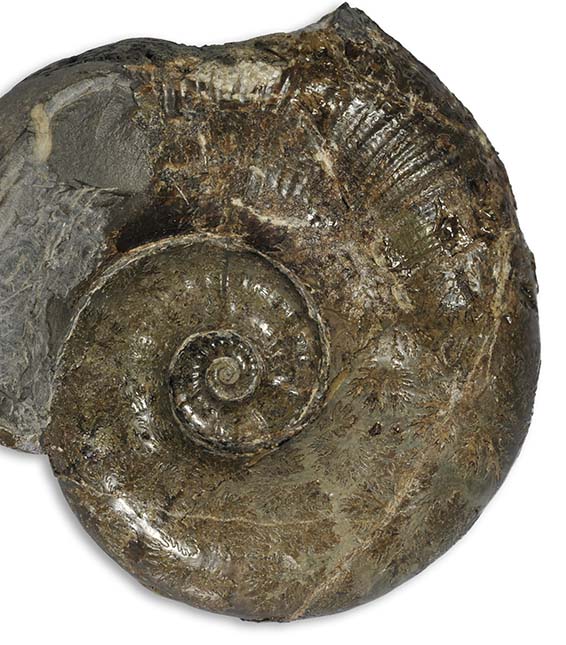
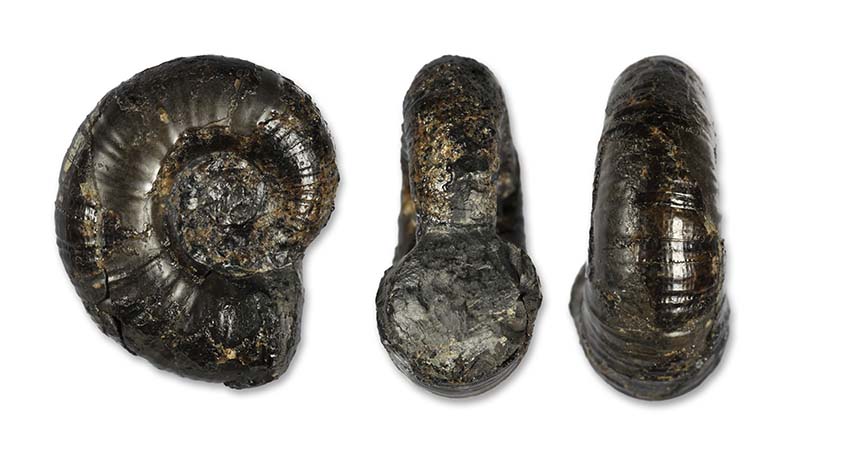
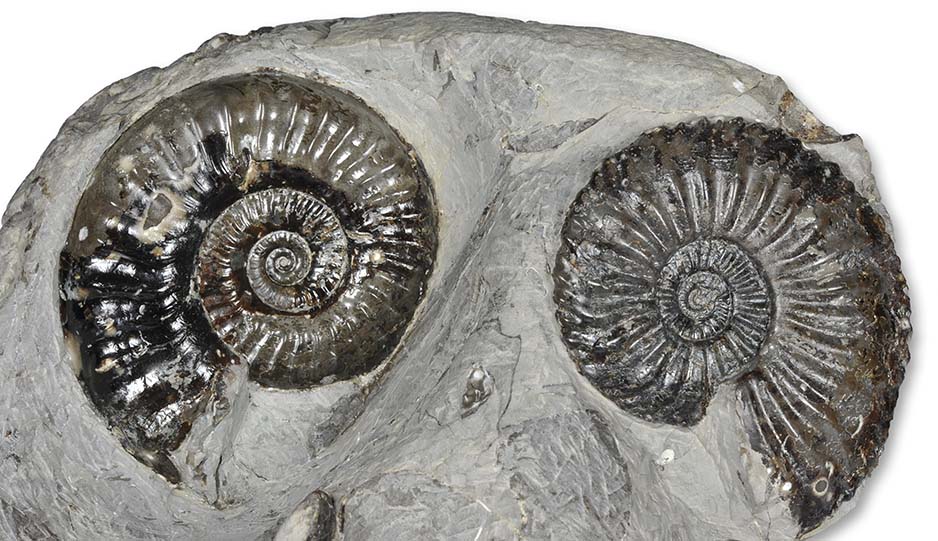
"Monestieria errata", 4 cm, a Cleviceras sp. forma aegra circumdata

“Monestieria errata”, 4 cm, a Cleviceras sp. forma aegra circumdata HÖLDER 1956

Complete loss of keel or any other structural elements on the keel.

Today it is generally being recognized that these changes in the ammonite shell might have been caused by predators, parasites, diseases or interaction with other
hard-ground settling organisms like bivalves or tube worms and have set up so called “forma aegra” or “sick form” types, describing the pathologies as what they are.
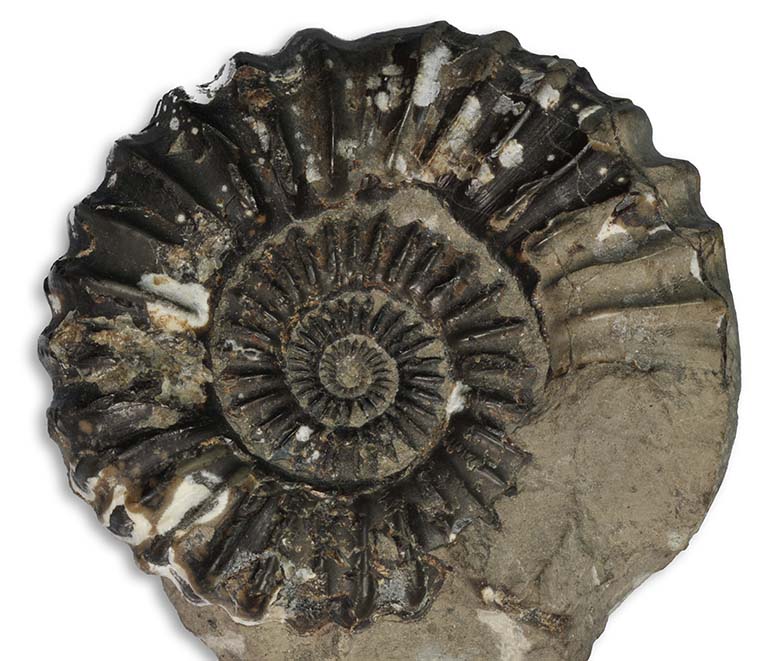
“Sick” forms sometimes offer interesting glimpses into how ammonite shell growth worked and how amazingly adaptable these animals really were.
We may never fully know what caused them in all cases , only where an external cause like a settling oyster, is still preserved with the ammonite, the cause becomes obvious.
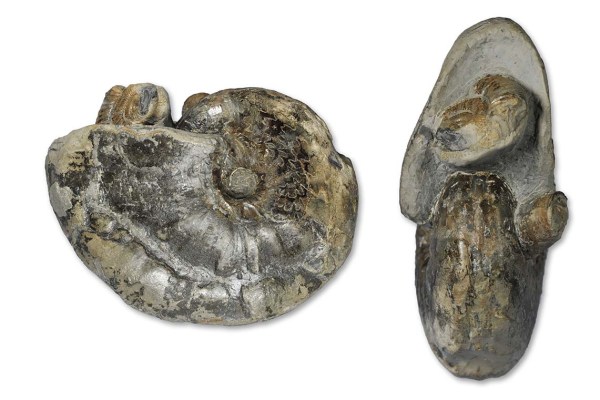
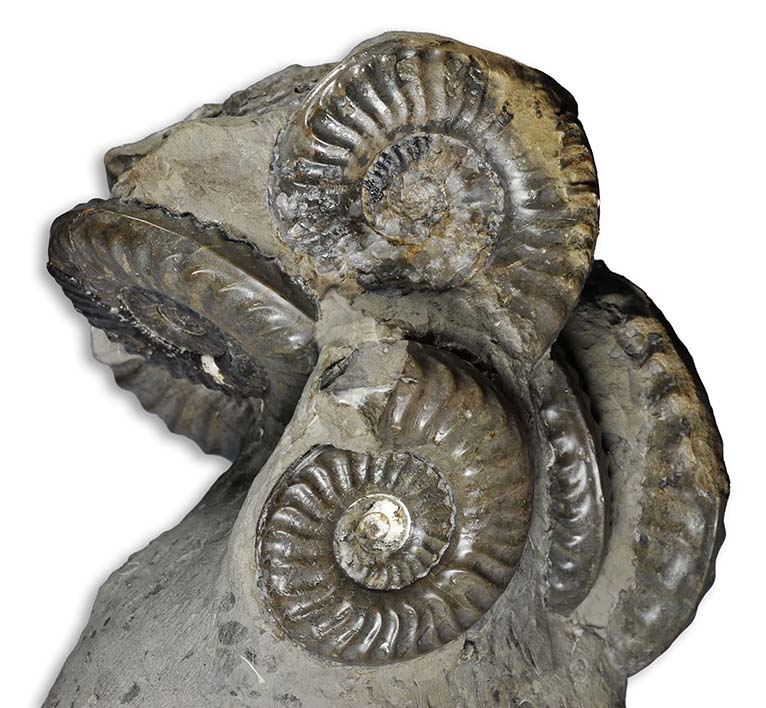
Androgynoceras lataecosta with "hook", overgrown bivalve or worm,  6 cm

Androgynoceras lataecosta with “hook”, overgrown bivalve or worm, 6 cm

A relatively common pathology : A bivalve or worm settled on the shell and was overgrown by the ammonite – a typical “bend” is created.

I´d like to show some that I have accumulated over the years, either found myself or bought from known fossil dealers.
They do represent only a portion of the described pathology types, I may add additional ones when I should find them…

forma aegra juxtacarinata HÖLDER 1956
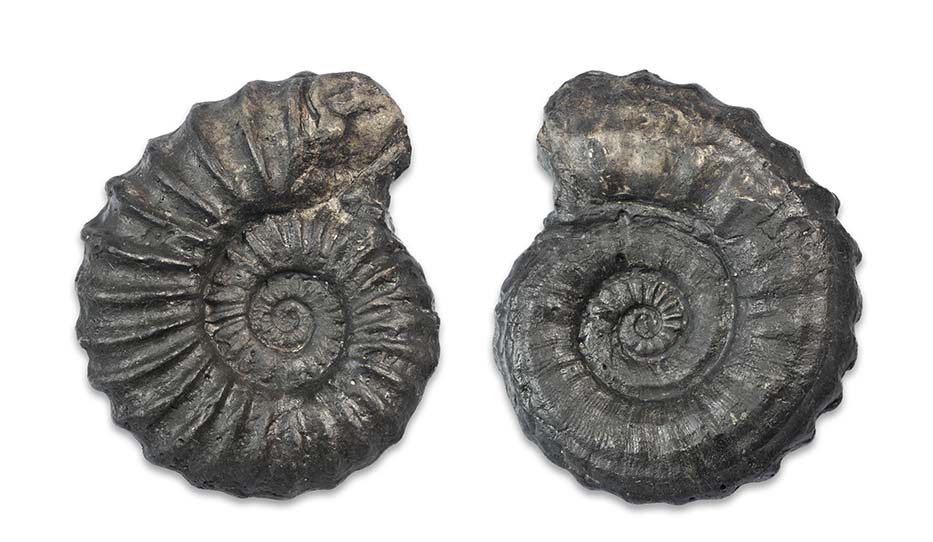
Asteroceras sp. forma aegra juxtacarinata, cast, 5 cm

Asteroceras sp. forma aegra juxtacarinata, cast, 5 cm

Keel drawn out and relocated to the flank – it seems like the keel producing tissue was stretched to the flank and produced the keel there.
This specimen is a cast kindly given to me by my friend Klaus.

forma aegra cicatricocarinata HELLER 1964
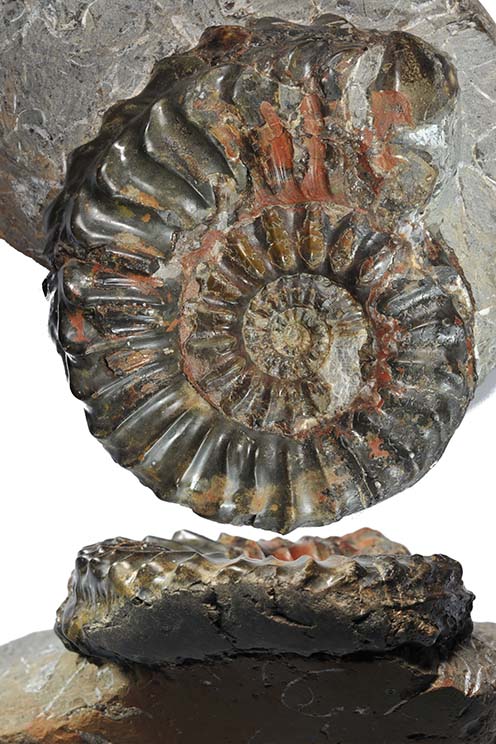
Pleuroceras paucicostatum forma aegra cicatricocarinata HELLER 1964, 7 cm

Pleuroceras paucicostatum forma aegra cicatricocarinata HELLER 1964, 7 cm

Keel, visible on the right side, “inversed” on the left side – the exact part of the shell where it happened is eroded…

forma aegra substructa HÖLDER 1973

Catacoeloceras sp. forma aegra substructa HÖLDER 1973, 4 cm

Catacoeloceras sp. forma aegra substructa HÖLDER 1973, 4 cm

Broken out shell underlaid with new shell, bulbous shell growth at break point

forma aegra excentrica HÖLDER 1956

Zugodactylites braunianus forma aegra excentrica, 4.5 cm

Zugodactylites braunianus forma aegra excentrica, 4.5 cm, top side concave
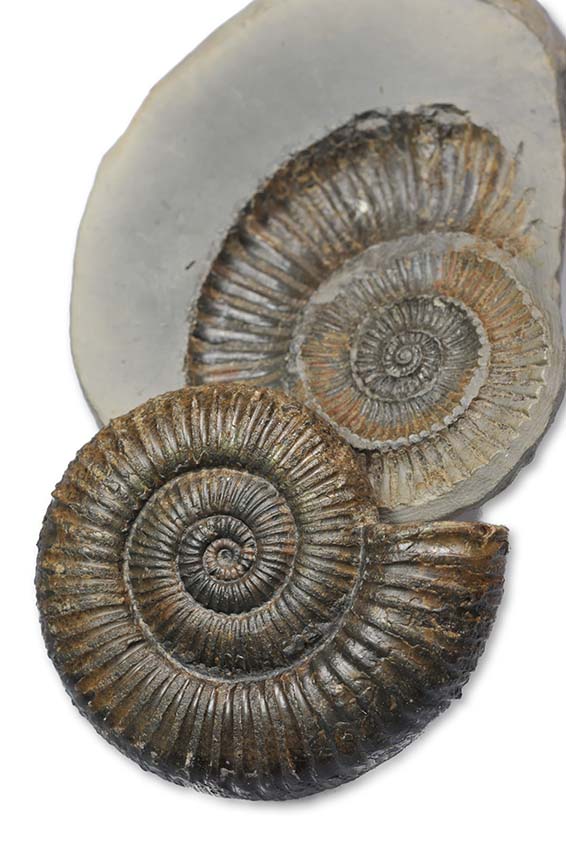
Zugodactylites braunianus forma aegra excentrica, 4.5 cm, underside convex
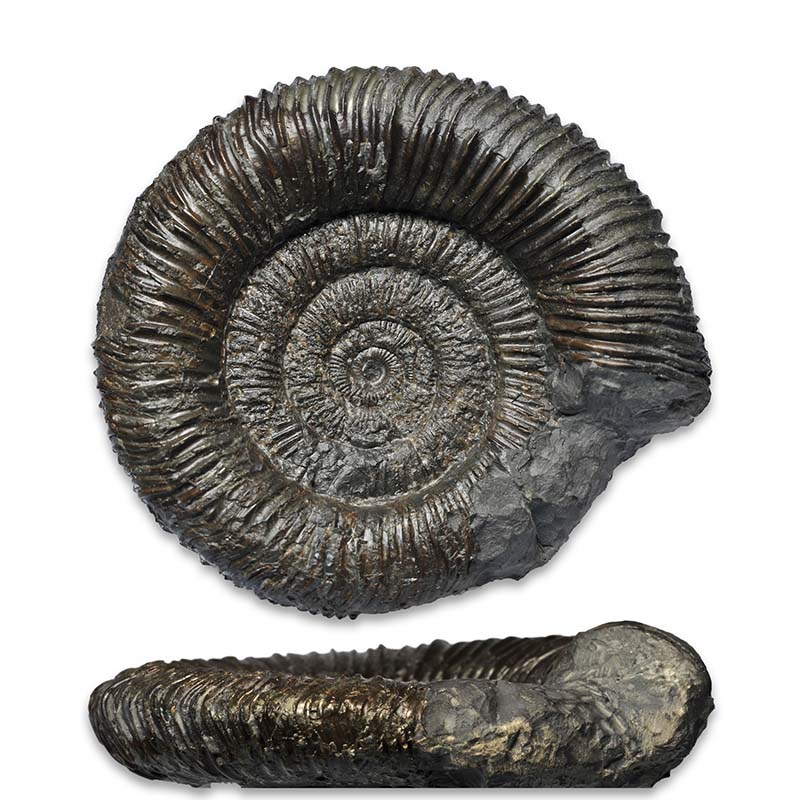
Zugodactylites braunianus forma aegra excentrica, 4.5 cm, underside convex

Dactylioceras sp. forma aegra excentrica, 8 cm, showing the bowl shape from the side

Dactylioceras sp. forma aegra excentrica, 8 cm, showing the bowl shape from the side

Growth out of the normal shell symmetry into a bowl shaped form, presumably to correct a shell imbalance

forma aegra verticata HÖLDER 1956
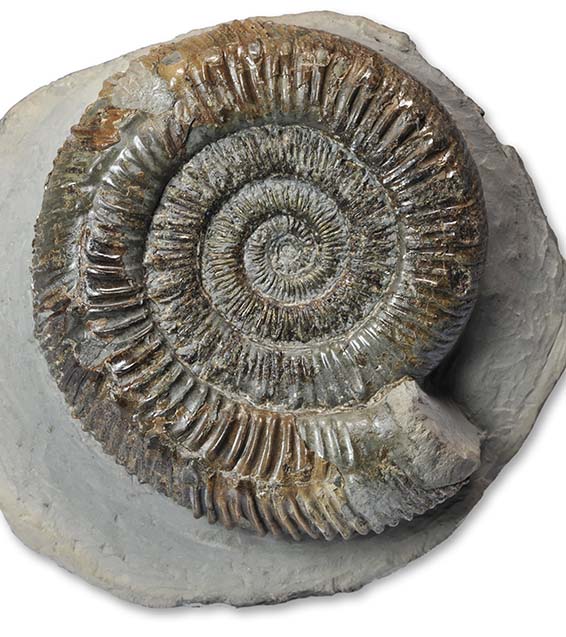
Peronoceras fibulatum forma aegra verticata, 7 cm

Peronoceras fibulatum forma aegra verticata, 7 cm

A punctate permanent injury of the shell secreting part of the mantle probably caused by something like a lobster’s pinch with its claws creates a continuous groove across the ribs as the shell continues to be generated.

forma aegra pseudocarinata FERNÁNDEZ-LÓPEZ
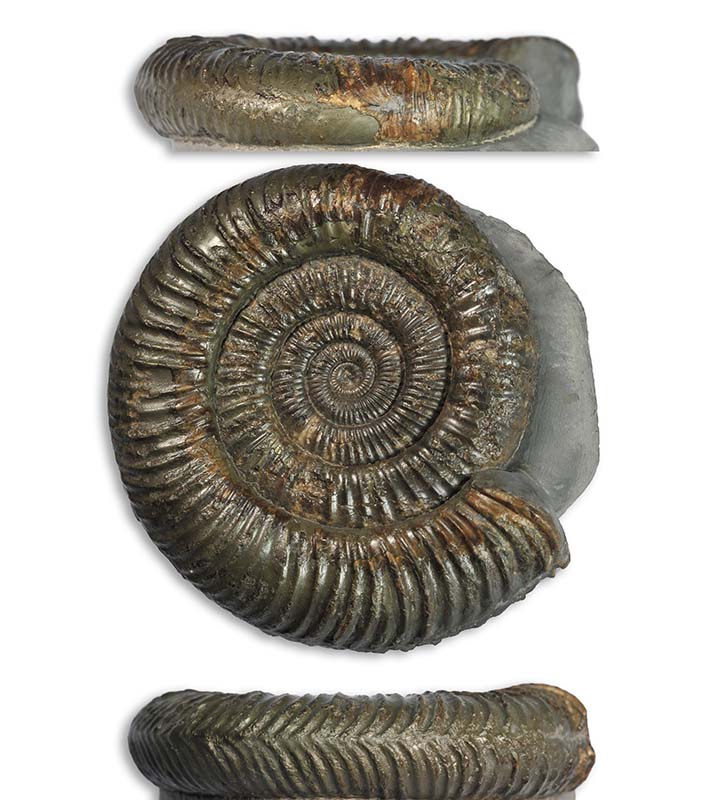
Dactylioceras sp. forma aegra pseudocarinata, 7 cm

Dactylioceras sp. forma aegra pseudocarinata, 7 cm

Special form of forma aegra verticata, the adjoining ribs forming a keel like sculpture by themselves

forma aegra concreta HENGSBACH 1996

Dactylioceras sp. forma aegra concreta, pearl 2 mm diameter

Dactylioceras sp. forma aegra concreta, pearl 2 mm diameter

Pearl growth on the inside of the shell, probably similar to what happens with pearls in bivalves.

forma aegra inflata KEUPP 1976

Dactylioceras sp. forma aegra inflata, 4 cm

Dactylioceras sp. forma aegra inflata, 4 cm

Bulbous shell growth to heal a larger hole in the shell – this specimen even has septae build into the “bulb” as the animal continued to grow !

forma aegra undaticarinata HELLER 1958
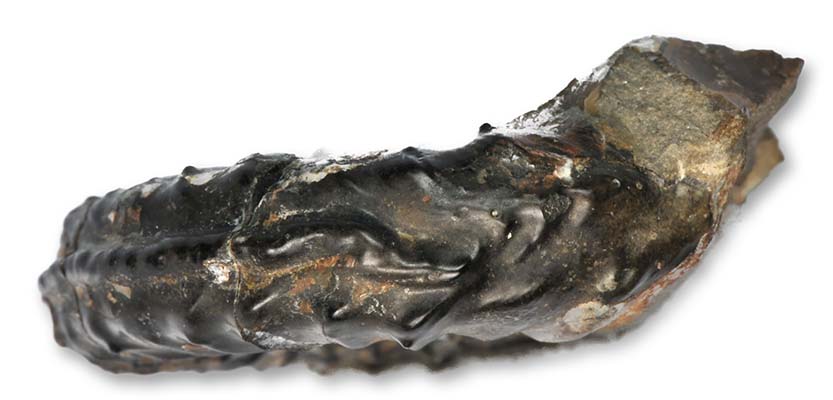
Pleuroceras sp. forma aegra undaticarinata, 3 cm

Pleuroceras sp. forma aegra undaticarinata, 3 cm

Swinging keel, most often seen with Pleuroceras.

Left/right “hybrid”

Hildoceras bifrons, 12 cm  showing a strong difference between the sides

Hildoceras bifrons, 12 cm
showing a strong difference between the sides

One of the most intriguing types of pathologies : One side shows a normal Hildoceras sculpture, while on the other the spriral grove is completely missing, it looks like a bit like a Grammoceras.
This is of course no real hybrid, but the pathological side came to be through loss/damage/sickness of the spiral grove producing part of the mantle.

forma aegra undatispirata KEUPP & ILG 1992

Dactylioceras sp. forma aegra undatispirata, 6 cm (Col. D. Groocock)
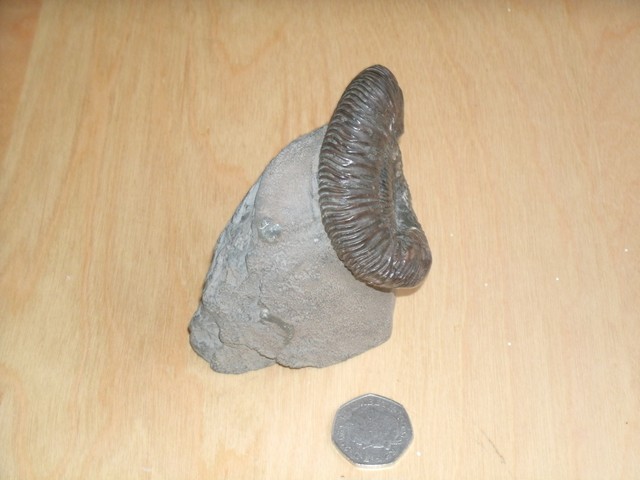
Dactylioceras sp. forma aegra undatispirata, 6 cm
(Col. D. Groocock)

Dactylioceras sp. forma aegra undatispirata, 6 cm
(Col. D. Groocock)
Dactylioceras sp. forma aegra undatispirata, 6 cm (Col. D. Groocock), keel view

Dactylioceras sp. forma aegra undatispirata, 6 cm
(Col. D. Groocock), keel view

Swinging whorl, apparently to equalize an imbalance in the shell caused by e.g. an oyster settling on the shell

The mystery…

Amaltheus stokesi without keel, 11 cm
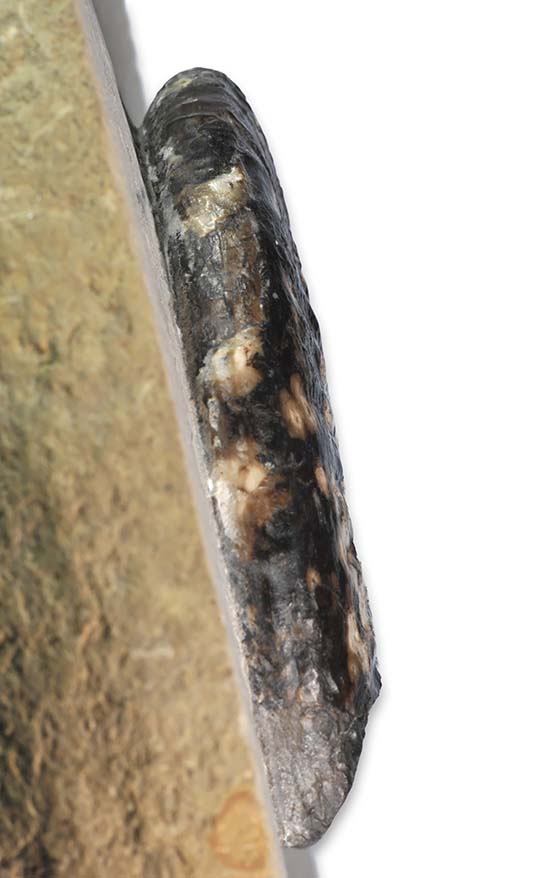
Amaltheus stokesi without keel, 11 cm

Amaltheus stokesi without keel, 11 cm, keel view

Amaltheus stokesi without keel, 11 cm, keel view

This pathology is still a mystery. What is hidden on the other side, still in the rock ?
Is is a forma aegra juxtacarinata, i.e. the keel has been dislocated to the (invisible) flank ?
Or is it a forma aegra circumdata, i.e. the keel is just not there ?
One of these days I will prep a window into the back of the matrix and see for myself…

AndyS

Literature :
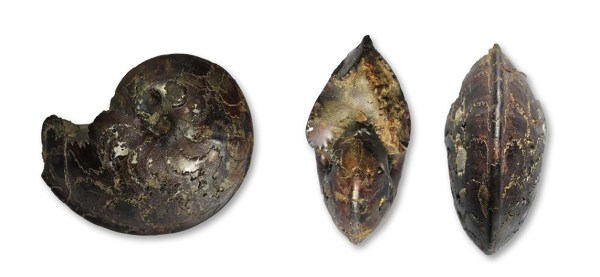
Helmut Keupp : Atlas zur Paläopathologie der Cephalopoden, Berliner Paläobiologische Abhandlungen Band 12 – Berlin 2012

What´s in the egg ?

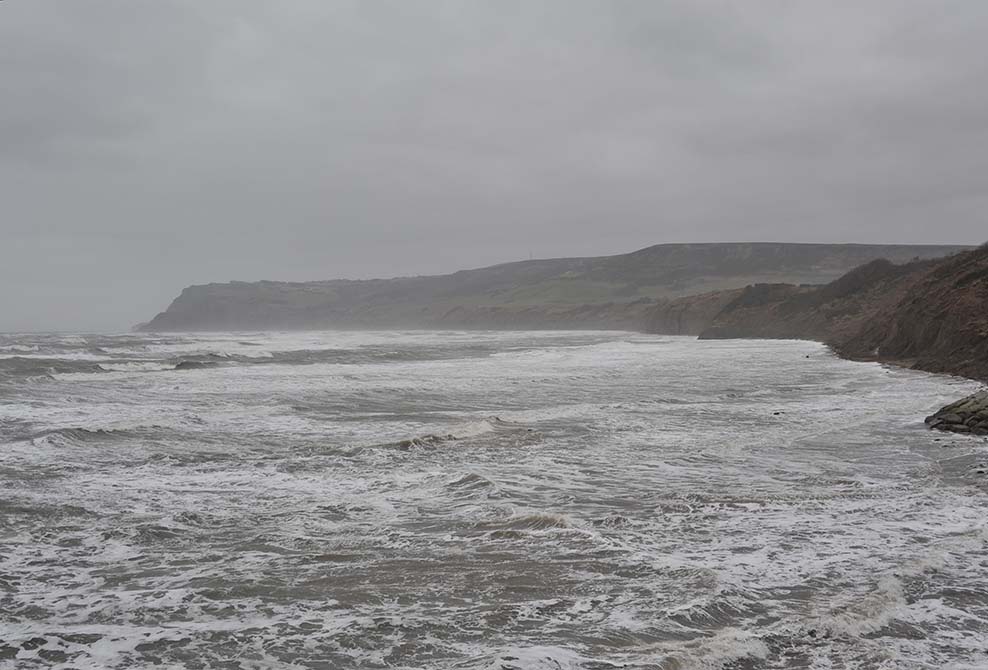
"Boiling" sea in Robin Hoods Bay - March 23,2013

“Boiling” sea in Robin Hoods Bay – March 23,2013

I know this is kind of silly and it´s also a little late, but the opportunity is just so tempting…

We´ve just returned home from a fortnight’s holiday on the Yorkshire coast,  and most of the time it was bitterly cold and the sea looked
just like on the picture above. This usually is good for fossil hunting, since it turns the beaches around and exposes fresh material,
but can be a little problem at times, when a strong easterly wind keeps you from getting to the locations you want to go, even at low tide.

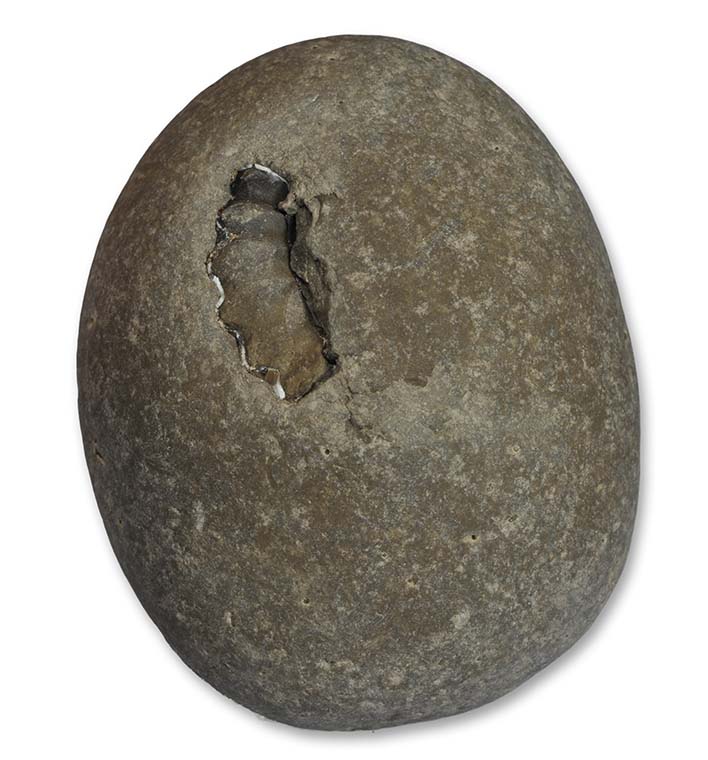
Anyway, on one of these days I found this little nodule at Bay Ness :

Egg shaped nodule as found with an ammonite just showing, height = 9 cm / 3.5 "

Egg shaped nodule as found with an ammonite just showing, height = 9 cm / 3.5 “

There are some nodules, in which the fossil is just under the surface and some exposure to seas like shown above,
where the nodule is frequently and violently bashed against other rocks, will sometimes break out a little window
showing the fossil inside.

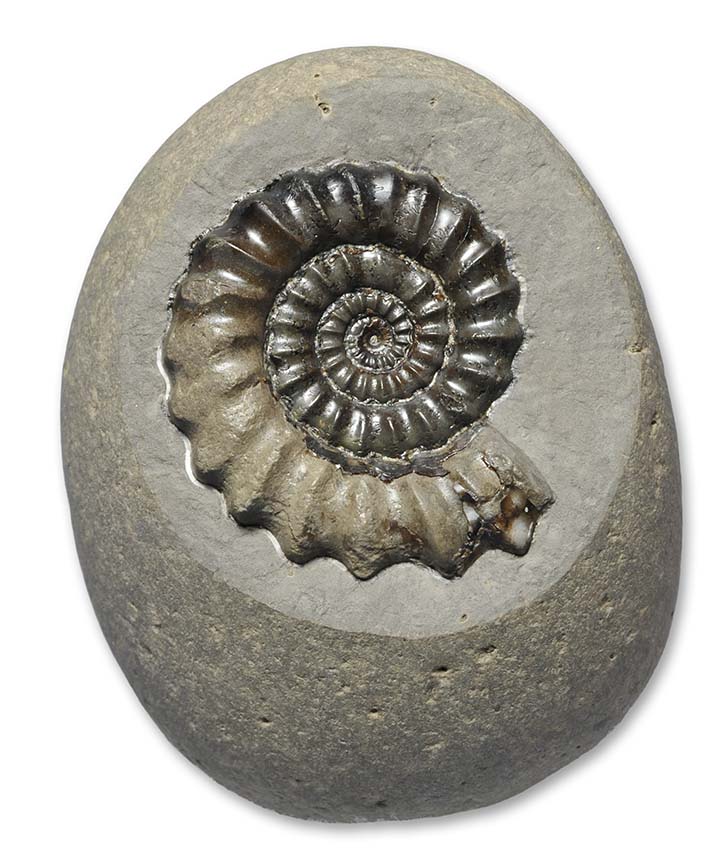
Now when I unpacked my finds yesterday, that little egg of a nodule had to be made into an Easter greeting :

Aegoceras (Androgynoceras) maculatum (YOUNG & BIRD, 1822) , 4.5 cm / 1.75 " diameter

Aegoceras (Androgynoceras) maculatum (YOUNG & BIRD, 1822) , 4.5 cm / 1.75 ” diameter

Happy Easter !

AndyS


Common as Dacs, Part 1 or A short digression into species theory

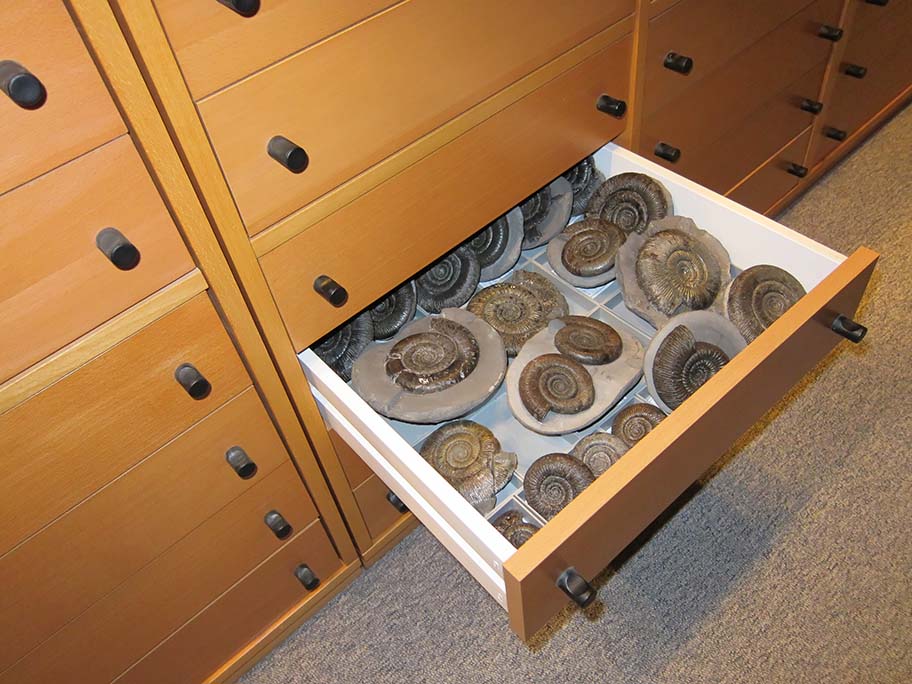
Drawer with various Dactylioceras (Orthodactylites) sp.

Drawer with various Dactylioceras (Orthodactylites) sp.

One of the most collected and most left behind,  most loved and most hated ammonites of the Yorkshire lias must be the genus Dactylioceras, also known as the “common Dac”. It is indeed one of the most common ammonites, at least at genus level, the seas of toarcian times  must have been teeming with these animals, considering that what we find today is probably only the small fraction that made it to preservation.

In the 1970s to 1990s there have been heated scientific discussions on the classification of the Dactylioceratidae e.g. between HOWARTH and GUEX.
The following articles follow the publications by M.K. Howarth who in my humble opinion provided a framework for classification grounded in solid stratigraphy and
statistics that is very consistent to what can be observed  on the Yorkshire coast.

This is the first part of what will most probably become a multipart post showing the surprising variety, and exploring the difficulty in identification of these fossils that comes with it…

Here I will cover the Grey Shales species
Dactylioceras (Orthodactylites) semicelatum (SIMPSON)
Dactylioceras (Orthodactylites) tenuicostatum (YOUNG & BIRD)
Dactylioceras (Orthodactylites) clevelandicum HOWARTH
Dactylioceras (Orthodactylites) crosbeyi (SIMPSON)
With a little care when splitting the nodules (and taking the negative with you for a transfer of torn off whorl sections if need be) ,
a lot of the specimen can be preserved with intact mouth borders. When I do find these nodules nowadays, I tend to just
carefully investigate if an ammonite is present in the nodule without splitting the nodule horizontally which raises the rate of success
in preserving the ammonite in its entirety.
Dacytlioceras (O.) semicelatum nodule, as found, with the negative taken home as well

Dacytlioceras (O.) semicelatum nodule, as found, with the negative taken home as well

Dactylioceras (Orthodactylites) semicelatum (SIMPSON)

Dactylioceras (Orthodactylites) cf. crosbeyi, 7 cm, from Yorkshire Coast Fossils

Dactylioceras (Orthodactylites) semicelatum, coronate form, 7 cm, from Yorkshire Coast Fossils

Dactylioceras (O.) semicelatum, thick form, with coronate inner whorls, 9 cm

Dactylioceras (O.) semicelatum, thick form, with coronate inner whorls, 9 cm

Dactylioceras (O.) semicelatum, slender form, 8 cm

Dactylioceras (O.) semicelatum, slender form, 8 cm

Dactylioceras (Orthodactylites) semicelatum (SIMPSON) is the youngest of the group, found at the top of the Grey shales, beds 28 to 32 (HOWARTH 1973),
which of course corresponds to the semicelatum subzone of the lower toarcian.
The 3 specimen pictured above perfectly show what is amazing about this species : The amount of variation in the shell forms exhibited may lead a collector who looks at these 3 specimen in isolation to think these are different species, yet when viewed in the context of all the specimen found in the above mentioned beds (HOWARTH examined more than 100 specimen for his “Grey Shales” paper) , it becomes apparent that there is continuous variation between the different forms.
(If you read my blog very carefully, you might have noticed that I had previously labeled the coronate form of D. semicelatum as D. cf. crosbeyi – but after reading Howarth´s paper completely and discussing the
location of the find with Mike Marshall, I´ve come to the conclusion that it´s really a D. semicelatum)

Now that of course leads to the questions : What is a species ? When is a morphological difference enough to call it a different species ?

For living organisms this is much easier to answer than for fossils : “A species is often defined as a group of organisms capable of interbreeding and producing fertile offspring” (from Wikipedia http://en.wikipedia.org/wiki/Species).  This is something that can be observed in the wild, today we even have genetics to measure the amount of differences in the genes. No such luck with fossils, we only have the rock and the impression and/or the petrified remains of the animal to judge from.

Thus the species definition for fossil material is not comparable to the biospecies definition, it is only based on morphological similarities, also called a morphospecies.
With a large enough population of fossils, you can quantify the variation in the fossils in measurements such as number of ribs / whorl @ diameter, whorl breadth, whorl height etc.  (see previous post ) as a statistical population variance. Comparing variances of different groups of fossils then helps to separate different morphospecies from each other. That brings us back to the semicelatum problem : When you find within that within a certain timeframe (a restricted number of beds) there is continuous variation of the fossil forms found within these beds, it is safe to assign it to the same species, then also called a chronospecies (see also Wikipedia http://en.wikipedia.org/wiki/Chronospecies, and http://www.mun.ca/biology/scarr/Evolutionary_vs_Chronospecies.htm )
But back to showing the practical differences for the collector :
To quote HOWARTH 1973 (it just hits the nail on the head, I just could not write it any better in a single sentence) :
“D. (O.) semicelatum is more involute and has higher whorls than either tenuicostatum or clevelandicum.” Ribs per whorl can vary from 45 to 80 at 70 mm diameter.
The typical semicelatum nodule usually has some pyrite content.

Dactylioceras (Orthodactylites) tenuicostatum (YOUNG & BIRD)

Dactylioceras (O.) tenuicostatum, 7.5 cm

Dactylioceras (O.) tenuicostatum, 7.5 cm

The zonal ammonite Dactylioceras (Orthodactylites) tenuicostatum (YOUNG & BIRD) (beds 20-26) has a more round whorl section,
can have a lot more ribs/whorl (between 90 and 140 ! at 70 mm) than any of the other species
(allthough there is overlap at the bottom of the range, average ribs/whorl also increase from bed 20 to 22).
The largest specimen of D. tenuicostatum seem to be smaller than the largest specimen of D. semicelatum and D. clevelandicum.
tenuicostatum-nodules are usually a bit softer than semicelatum nodules.

Dactylioceras (Orthodactylites) clevelandicum HOWARTH

Dactylioceras (O.) clevelandicum, 9 cm

Dactylioceras (O.) clevelandicum, 9 cm

Dactylioceras (Orthodactylites) clevelandicum HOWARTH (bed 19b) is more similar to D. tenuicostatum than to D. semicelatum or D. crosbeyi in being more evolute and having  a round whorl section (on the outer whorl), differences are mainly that D. clevelandicum has less ribs / whorl than D. tenuicostatum (70 at 70 mm for D. clevelandicum vs. about 100 for D. tenuicostatum) and much more robust inner whorls, usually with spines. The rate of growth in whorl breadth is higher than in D. tenuicostatum, thus the umbilicus looks deeper than in D. tenuicostatum and at same diameter, whorl breadth is greater i.e. the whorl is thicker.

Dactylioceras (Orthodactylites) crosbeyi (SIMPSON)

Dactylioceras (O.) crosbeyi, 8 cm, Mulroy collection

Dactylioceras (O.) crosbeyi, 8 cm, Mulroy collection

Dactylioceras (Orthodactylites) crosbeyi (SIMPSON) is the oldest ammonite of the group, occurring only in bed 18 of the Grey Shales.
It is a quite rare, most of the time preserved only fragmentary as body chamber with crushed inner whorls.
D. crosbeyi is similar in appearance to D. semicelatum, just slightly more involute, but whorls are a higher and a lot thicker, ribs /whorl (about 70 at 80mm) at are usually lower than on similarly sized D. semicelatum.
This first part covered the lower toarcian Dactylioceratidae that can be found on the Yorkshire coast. As you might have seen from the notes in which beds the ammonites can be found, for the lower toarcian “Dacs” it is sometimes helpful to know which bed they came from – for the upper toarcian “Dacs”, this is most of the times essential to be able to properly identify them.

The next post will not be Part II as the  continuation of this one, I have another post waiting about pathological ammonites and the following picture is just the ideal transition:

Double nodule of D.(O.) tenuicostatum, one with pathology, both about 7 cm, purchased from Yorkshire Coast Fossils / Mike Marshall

Double nodule of D.(O.) tenuicostatum, one with pathology, both about 7 cm, purchased from Yorkshire Coast Fossils / Mike Marshall

AndyS
Literature : M.K. Howarth : The Stratigraphy and Ammonite Fauna of the Upper Liassic Grey Shales of the Yorkshire Coast.
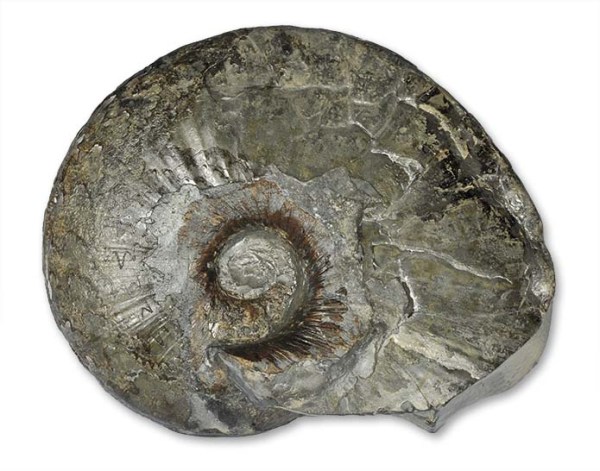
Bulletin of The British Museum (Natural History), Geology series, Vol. 24 No 4. London 1973

Recent prep results and What´s in the queue ?

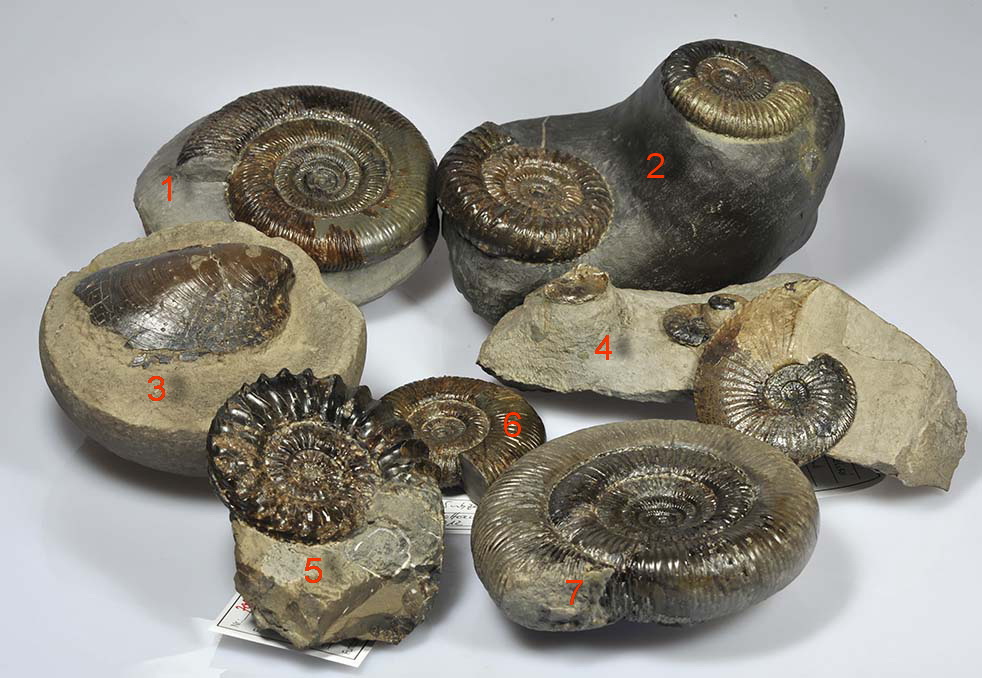
Recent prep results, numbers see text

Recent prep results, numbers see text

You might have noticed, I´ve deviated from my usual schedule of posting an article about every 2-3 weeks…
There are a couple of reasons, none bad, which have kept me from posting.
Reason number 1 is that commitments from my daytime job have kept me unusually busy for January and February and this will stay that way at least until mid march,
so you´ll have to wait for  a new full article until about 3-4 weeks time.

Reason number 2 is I´ve been working on several full articles, but due to my perfectionism I was not satisfied with what I could have posted…

In the “unfinished posts” queue is the first part of the Dactylioceras article, dealing with the lower toarcian Dactylioceras species.
When looking at some of the ammonites I was photographing (every little prep fault  somehow gets exaggerated when you look through a lens…),
I found that most of them needed some form of re-prep to comply to the same standard I´ve been trying to adhere to for the book.
This is for example the reason why #7 in the photograph, a Dactylioceras (Orthodactylites) clevelandicum,  went back to the top of my prep queue :
The inner whorls needed some more attention with the fine air pen and the air abrader – it had been found in 2002 and basically went straight to the drawer at that time.

Reason number 3 is I need to clean up my prep slate before I go for my traditional spring collection tour to make space for potential new finds,
so the proportion of time prepping was higher that the one on writing…
All of the ammonites (and other fossils) have been prepped last weekend, in case you´re wondering what they are here´s the list :

  1. Dactylioceras (Orthodactylites) tenuicostatum,  7 cm
  2. Double of Dacytlioceras commune, 5 & 4 cm, thanks to Dr. Mike Howarth for helping to correct my inital thoughts on this one…
  3. A Plagiostoma sp. bivalve, 6 cm,  from the apyrenum subzone of the middle lias, a “first” for me, I´ve never seen one before from the Yorkshire lias…
  4. A combo of Amaltheus stokesi (5.5 cm) , Amaltheus bifurcus (2.5 cm) , Amaltheus wertheri (2 & 1 cm)
  5. Pleuroceras hawskerense, 6 cm
  6. Dactylioceras (Orthodactylites) semicelatum, 5 cm
  7. Dactylioceras (Orthodactylites) clevelandicum, 9 cm

Another article that´s in the “unfinished posts” queue for a long time already is about pathologies on Yorkshire coast liassic ammonites, for the simple reason that
literature about pathologies was somewhat thinly spread across a wide range of publications, most of the time with few pictures (so important for the amateur collector !).
But thanks to Prof. Dr. Keupp from FU Berlin this has now changed (http://www.geo.fu-berlin.de/geol/fachrichtungen/pal/eigenproduktion/Band_12/index.html) :
A brand new copy of his almost 400 page thick, large format, just released new atlas on cephalopod palaeopathologies has landed on my desk, I had only very little time to study it yet, but what I´ve seen so far is
spectacular (pictures galore !) and will surely set the scientific standard on this topic for years to come (unfortunately it is currently only available in german).
So through this new publication my “sick ammonites from Yorkshire” post will take a giant leap forward and will be published after the first part of the Dac post…

AndyS


Lytoceras or Visitors from the deep

Lytoceras ceratophagum (16 cm) and half a Cleviceras exaratum (9 cm), both pyritized

Lytoceras ceratophagum (16 cm) and half a Cleviceras exaratum (9 cm), both pyritized

In the Yorkshire lias another relatively rare family of ammonites is the Lytoceratidae – finding a Lytoceras always makes a day a great collection day, the evolute shell shape reminiscent of  a “horn of plenty” and the complex suture make the ammonites very appealing.

Lytoceras is a rather “conservative” genus that remained relatively unchanged from the lower lias up to the upper cretaceous, its rarity in Yorkshire having something to do with the water depth : Lytoceras is considered a deep water genus that only occasionally strayed into the relatively shallow waters of the Cleveland basin.

Lytoceras seems to get more common during toarcian times, this may have to do with a temporary high in water levels that also allowed tethyan species like Frechiella to migrate in.

All of the liassic species that occur in Yorkshire have a more or less round whorl section, and have more or less evolute shells where the whorls hardly touch each other. The ribs on the shell generally show a typical fimbriation – a fringing of the ribs that leads to a characteristic shell pattern. A feature of the shell that is rarely preserved due to its fragilty (both during times of embedding and during preparation…) are the so-called flares – ribs that have developed into thin collar-like extensions of the shell.

Finding a Lytoceras with preserved flares is a real highlight – prepping it a real challenge, for the thin calcite flares almost break if you look at them – preparation is only possible in softer matrices where low impact prep methods (e.g. air abrasion) can be utilized.

One thing I did not know before reading newer literature about the topic (HOFFMANN 2010) for this post was that a pronounced sexual dimorphism has been
recognized in the Lytoceratidae, with relevant macroconch / microconch pairs so far published being

Lytoceras cornucopia  /  Lytoceras (Trachylytoceras) annulosum

Lytoceras ceratophagum / Lytoceras (Trachylytoceras) nitidum

I am aware of the following liassic members of the Lytoceratidae family from Yorkshire :
Lytoceras fimbriatum (SOWERBY) 

(luridum, maculatum, stokesi subzones)

Lytoceras fimbriatum (10.5 cm) from the maculatum subzone, with preserved flares

Lytoceras fimbriatum (10.5 cm) from the maculatum subzone, with preserved flares

This is a specimen from the maculatum subzone, which is relatively rare. L. fimbriatum is more common in the luridum subzone, but rarely well-preserved.

Lytoceras cornucopia (YOUNG & BIRD)

(bifrons zone)

Lytoceras cornucopia (8 cm)

Lytoceras cornucopia (8 cm)

This specimen has no shell on the inner whorls, thus showing the beautiful suture and constrictions on the innermost whorls.
The firmbriate ribbing on the outer whorl is just visible.

Perilytoceras jurense (ZIETEN)

(thourarsense zone)

Perilytoceras jurense (4 cm)

Perilytoceras jurense (4 cm)

Perilytoceras jurense (syn. Lytoceras jurense) has an oval whorl section.
 

Lytoceras ceratophagum (QUENSTEDT)

(falcifer zone)

 see title picture
Lytoceras ceratophagum and Lytoceras cornucopia are very similar, L. ceratophagum has more radial ribbing whereas L. cornucopia has slightly rursiradiate ribbing.

Lytoceras sublineatum (OPPEL)

(bifrons, variabilis zones)

Lytoceras sublineatum (5 cm)

Lytoceras sublineatum (5 cm)

Lytoceras sublineatum differs from the other species in having a more compressed whorl section.

Lytoceras (Trachylytoceras) nitidum 

(falcifer zone)

Lytoceras (Trachylytoceras) nitidum (3 cm)

Lytoceras (Trachylytoceras) nitidum (3 cm)

This is the tiny microconch of the macroconch Lytoceras ceratophagum.
The Whitby museum type specimen list also mention the three following :
Pachylytoceras gubernator
Pachylytoceras ? peregrinum
Trachylytoceras fasciatum
Allthough HOWARTH mentions the first two in his “The Yorkshire Type Ammonites And Nautiloids of Young and Bird, Phillips and Martin Simpson” paper as holotypes,
there is no further record of them in later literature.
Both OPPEL and WRIGHT had “Ammonites gubernator” as a synonym for Lytoceras jurense (now Perilytoceras jurense), which is assumed here as well.
BUCKMAN pictures the Whitby specimen of SIMPSON´s Ammonites peregrinum as Alocolytoceras peregrinus, but this is not mentioned later, either.
Due to the fragmentary nature of this specimen, this is not followed any further.
Trachylytoceras fasciatum is considered by HOWARTH as a potential synonym of Trachylytoceras nitidum, now Lytoceras (Trachylytoceras) nitidum.
AndyS

Frechiella or A nautilus with an ammonite suture…

Frechiella subcarinata (YOUNG & BIRD, 1822), 8.5 cm diameter, Port Mulgrave, with a Dactylioceras fragment and a belemnite phragmocone in the aperture

Frechiella subcarinata (YOUNG & BIRD, 1822), 8.5 cm diameter, Port Mulgrave, with a Dactylioceras fragment and a belemnite phragmocone in the aperture

Frechiella is one of the rarest Yorkshire lias ammonites and in some respects also one of the oddest.

It comes from a so-called “aberrant” line of ammonites, previously thought to come from one subfamily Bouleiceratinae of the family Hildoceratidae,
but nowadays after some more analysis (Rouleau et al 2003) is being split up into the 3 subfamilies Bouleiceratinae (lower Toarcian),
Leukadiellinae (middle Toarcian) and Paroniceratinae (upper Toarcian, including Frechiella) but all still under Hildoceratidae.
All are much more common in the tethyan realm, and are rare “strays” into the north-west european faunal province.
All members show a characteristically reduced, sometimes “ceratitic” suture (named after the triassic ammonite genus Ceratites, which showed a similar suture).
Oxyparoniceras telemachi (RENZ), 2 cm This is a member of the same subfamily, but not found in Britain, but somewhat further south from Barjac in the south of France (and purchased by me).

Oxyparoniceras telemachi (RENZ), 2 cm
This is a member of the same subfamily, but not found in Britain, but somewhat further south from Barjac in the south of France (and purchased by me).

This is also the main diagnostic feature, otherwise one could easily confuse these very involute ammonites with a nautilus , especially when they are wave-rolled –
In fact, Frechiella subcarinata was originally called Nautilus subcarinatus YOUNG & BIRD, 1822 –
you can just believe that, if it weren’t for the very characteristic suture, and I guess some of you might now go checking the nautilus in their collections …
(and of course : Frechiella is an ammonite, not a nautilus !)
Well preserved specimen show a faint keel on a rounded, sometimes slightly rectangular venter, faint radial ribs, sometimes flat waves can be seen close to the umbilicus.
With almost all specimen I’ve seen (and that’s not many…) the body chamber is more or less crushed or imploded.
Frechiella subcarinata (YOUNG & BIRD, 1822), 10 cm, Hawsker Bottoms

Frechiella subcarinata (YOUNG & BIRD, 1822), 10 cm, Hawsker Bottoms

Frechiella subcarinata (YOUNG & BIRD, 1822) , the only Yorkshire species in the genus Frechiella found so far,
occurs only in the main alum shales, commune subzone, bed 54 (HOWARTH 1992).
It is one of the rarest Yorkshire coast lias ammonites, and many regard it as the “holy grail” of upper lias ammonites.
I had for a time almost given up on trying to find one myself, and bought an unprepared specimen, found at Port Mulgrave (the one pictured below the title),
from Mike Marshall in September 2003.
But as it happened – and doesn´t it always happen like this ?!  – a year later in September 2004 one twinkled up at me from the cliff debris on one of my favourite
spots around Hawsker Bottoms – this is the one pictured above – I have not found one since, not even a fragment.
AndyS

I´m learning something new every time or A year review

Christmas trees in the snow - Eleganticeras sutures

Christmas trees in the snow – Eleganticeras sutures

As the year 2012 draws to a close, it`s time for a yet another year review…

I´ve started this blog in May 2012, and 36 blog posts later I can still say : It works for me !
It works for me because it drives me to write a post every couple of weeks, and that requires research into the ammonites I want to write about, photographs of the ammonites and maybe even a re-prep to make them presentable (allthough that sometime pushes back the publication date, because when you see those fossils through the lense, it´s so much easier to notice all the imperfections in the prep-work…).
It´s sometimes hard to stick to the schedule, because I do have a (non-fossil-related) , sometimes stressful day job and sometimes require a time-out from working at the keyboard, but I think it´s the right sort of methodology to keep work on the ultimate goal – the book – going.
And, the great thing is : I´m learning something new every time I research a new genus of ammonites for posting…
I´ve made some wonderful new contacts through people who have come forward and commented on posts and revived some old contacts who allowed me to photograph
some of their beautiful fossils. Thanks to all of you and I´d hopefully meet you next year to photograph some more !
But does it work for you ?

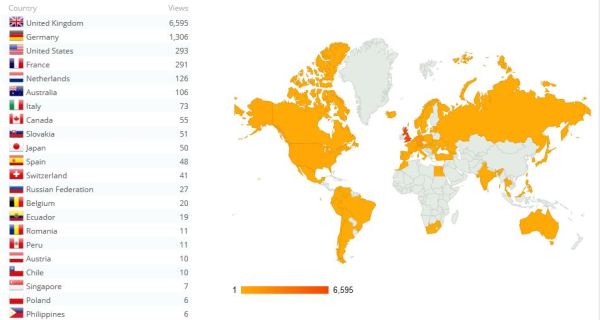
Countries with 6 or more visitsto this blog , there are 30 more countries below this list !

Countries with 6 or more visits to this blog , there are 30 more countries below this list !

Looking at the map, it does seem so… Of course, most of the readers are in Great Britain, that´s where the fossils come from, those are the readers this english language blog is made for. You know what they say about a prophet in his own country, I guess it´s the language issue why there is only a comparatively small participation from my fellow countrymen in Germany. But what makes me particularly proud is the worldwide readership…isn´t the internet a wonderful thing sometimes  ?

But I have a request, too: Compared to the amount of visits (close to 10,000, I know this is not all that much, but then this is not a fashion blog…)
there are just a bit more than 60 comments (and some are from me as well…)
So, I´d really love to hear from you more ! What are your questions, what are your finds, don´t be shy !
And remember : If you comment, you have to leave a valid e-mail address, but nobody else other than me can read it and I do not pass on e-mail adresses !

And a few little steps can make it so much easier to follow this blog, as you get an e-mail whenever I write something new.

The folks from WordPress have a handy little explanation on how to follow a blog :
If you don´t like to post a comment here, you can reach me in the UKFOSSILS forum (www.discussfossils.com) as AndyS and
on the german Steinkern forum (www.steinkern.de/forum) as AndyS (for both forums : You still need an account there to post messages).
Wherever you are, and whatever tradition you follow during the days at the end of the year:
Have a good time with your family and the ones you love, a healthy new year, and, if you´re collecting fossils, a fossiliferous year 2013 !
All the best,
AndyS

Ovaticeras or End of the line

Section of septarian nodule with Dacytlioceras sp (fron) and Ovaticeras ovatum (back)

Section of septarian nodule with Dactylioceras sp (front) and Ovaticeras ovatum (back)

If you read the title of this blog and start to worry that I might stop working on the book and on the blog – well, don’t. This is just referring to the subject of this post, the ammonite genus Ovaticeras…
The title specimen by the way (you might have guessed by the quality of the prepwork) is a specimen purchased from Mike Marshall. Maximum size of the Ovaticeras on this piece is 8 cm.

Ovaticeras is a somewhat rarer ammonite which seems to be very restricted, both in terms of local distribution (it’s apparently only really documented from Britain, with its main occurrence in Yorkshire) and in terms of its relative short-livedness (it has only been found in the approx. 35 cm of the so called ovatum bed at the top of the falciferum subzone of the lower toarcian (of course named after the species O. ovatum) and shortly below it. It is thought to have descended from Harpocas falciferum (HOWARTH 1992) and apparently left no descendants itself – end of the line.
I have found Ovaticeras ovatum at Saltwick Bay, at Hawsker and at Ravenscar, but you should be able to find it everywhere on the Yorkshire coast,
where there’s an outcrop of the aforementioned bed.
View of Ovaticeras keel and typical oval whorl section

View of Ovaticeras keel and typical oval whorl section

The oval whorl shape of Ovaticeras is quite characteristic, as are the sloping umbilical walls without an edge,
which differentiates it from large Eleganticeras body chambers.
Comparison of umbilical edges of Eleganticeras (top) and Ovaticeras (bottom), both approx. 12 cm

Comparison of umbilical edges of Eleganticeras (top) and Ovaticeras (bottom), both approx. 12 cm

Adult specimen have  a bit of a “hood” at the end of the body chamber, where the keel slightly overarches the whorl.
The ribs are those of a typical Harpoceratid, of weak falcoid form, receding to mere sinuous growth stripes on adult specimens’ body chambers.
It does have a simple keel with smooth areas to the side of it that also grows weaker on large body chambers.
Large 17 cm Ovaticeras ovatum

Large 17 cm Ovaticeras ovatum

This large, 17 cm, complete specimen was found on Oct 7, 1991 at Saltwick Bay in a large nodule with a strong pyrite crust and was
extracted from the nodule using hammer and small chisels alone (on the kitchen table of our holiday flat, if you need to know…)
It is not my prettiest specimen, but my largest and the first of the species I’ve found.
Suture of Ovaticeras

Suture of Ovaticeras

This partial specimen shows the nice characteristical sutures of Ovaticeras.
Must be getting close to Christmas, I see Christmas trees everywhere…
AndyS

Hildoceras or A plague of snakes

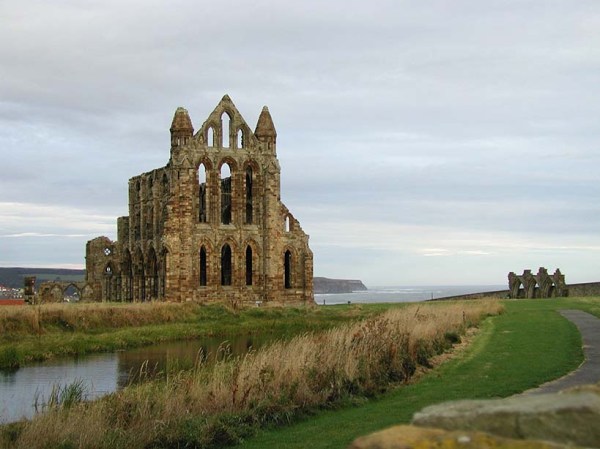
Whitby Abbey (2003)

Whitby Abbey (2003)

Legend has it that St. Hilda, founding abbess of Whitby abbey, turned a plague of snakes to stone and threw them off the cliff, thus creating the ammonites we can find there today.
This legend was immortalized by Alpheus Hyatt in 1876 by naming the ammonite genus I´d like to present to you next after her: Hildoceras.
In Victorian times, snake heads were often carved on ammonites to capitalize on this legend – today there seems to be a renaissance of this art going on, and the quality
you´ll find on places like ebay is usually quite good, although these are mostly Dactylioceras ammonites.

But back to palaeontological reality :
In Yorkshire, there are 3 species of Hildoceras (I´m following HOWARTH´s “The Ammonite Family Hildoceratidae in the Lower Jurassic of Britain” here)  :

Hildoceras bifrons (BRUGUIÈRE, 1789)
Hildoceras bifrons, 13.5 cm

Hildoceras bifrons, 13.5 cm

Hildoceras bifrons is the lead ammonite for the bifrons zone of the lower Toarcian. It has a strong spiral groove, strong ribbing on the external half of the side,
and a keel with strong side furrows.

Hildoceras semipolitum BUCKMAN, 1902
 
Hildoceras bifrons (left), Hildoceras semipolitum (right), both 10 cm

Hildoceras bifrons (left), Hildoceras semipolitum (right), both 10 cm

 
Hildoceras semipolitum has a higher whorl section than H. bifrons, both spiral groove and ribbing are finer. The outer whorls overlap the inner whorls to a degree that
the ribs on the inner whorls are no longer or just about visible. As H. semipolitum is considered a descendant of H. bifrons, there are many intermediates.

 
Hildoceras lusitanicum MEISTER, 1913
 
Hildoceras lusitanicum, 15 cm

Hildoceras lusitanicum, 15 cm

Hildoceras lusitanicum (also known under the synonym Hildoceras sublevisoni) is very similar in ribbing to H. bifrons,
the main difference is the missing spiral groove on the side of the whorl.

AndyS

Protogrammoceras or A rare immigrant from the Tethys

Protogrammoceras (M.) geometricum and Amaltheus bifurcus, both 6 cm

Protogrammoceras (M.) geometricum and Amaltheus bifurcus, both 6 cm

In the stokesi subzone of the Yorkshire coast, there are very few cephalopods other than Amaltheus. There is the very occasional Lytoceras, maybe even a very rare nautilus and a few immigrant ammonites from the Tethys, a new ocean that had begun to form during the triassic (for a visualization of the movement of continents during the ages see e.g. http://www.scotese.com/earth.htm)

One of these immigrant genera from the Tethys is Protogrammoceras, an early member of the Hildoceratidae family of ammonites, that is going to be one of the dominant ammonite families in the Toarcian, with genera like Hildoceras, Harpoceras, Eleganticeras, Hildaites, Pseudolioceras etc.
Much of the evolution leading to Protogrammoceras is assumed to have occurred in the Tethys, so appearance of Protogrammoceras in Yorkshire seems rather “sudden”.
Protogrammoceras is also rather a rare ammonite in Yorkshire, finding good specimen requires intense searching of the hard flat limestone nodules of the stokesi subzone.
There are 2 species that I´ve found so far :
Protogrammoceras (Matteiceras) geometricum (PHILLIPS, 1829)
Protogrammoceras (Matteiceras) nitescens (YOUNG & BIRD, 1828)
There are 2 further species known from Yorkshire (HOWARTH 1992) :

Protogrammoceras (Protogrammoceras) paltum (BUCKMAN, 1922) from the paltum subzone
Protogrammoceras (Protogrammoceras) turgidulum (FUCINI, 1904) from the hawskerense subzone

As usual, if you do have a specimen of these species in your collection, and would allow me to photograph it for the book, please let me know…
Again, M.K. HOWARTH has provided the perfect reference for these ammonites in the form of a monograph of the Palaeontographical Society :”The Ammonite Family Hildoceratidae in the Lower Jurassic of Britain, London, 1992″

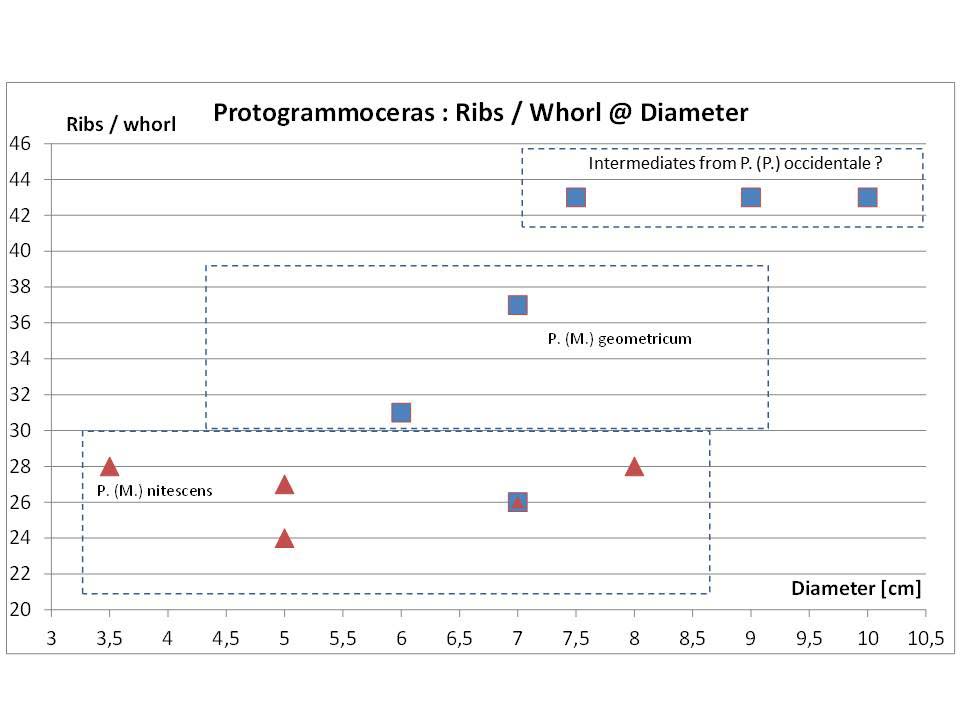
The two species mentioned above can be separated by their rib densities (measurements were taken from the specimen shown here):
Diagram of rib density differences between P. (M.) nitescens and P. (M.) geometricum

Diagram of rib density differences between P. (M.) nitescens and P. (M.) geometricum

Protogrammoceras (Matteiceras) nitescens (YOUNG & BIRD, 1828)
P. (M.) nitescens has lower rib densities on the outer whorls, ribs are more angled backwards (rursiradiate) on the outer half of the whorl than
P. (M.) geometricum.
Protogrammoceras (M.) nitescens, 7 cm, "bowl" preparation

Protogrammoceras (M.) nitescens, 7 cm, “bowl” preparation

Protogrammoceras (M.) nitescens, 8 cm, only aperture was visible before prep

Protogrammoceras (M.) nitescens, 8 cm, only aperture was visible before prep

Protogrammoceras (Matteiceras) geometricum (PHILLIPS, 1829)
 
P. (M.) geometricum has higher rib densities throughout, the ribs do not angle backwards as much as P. (M.) nitescens
Protogrammoceras (M.) nitescens (left, 7 cm) and Protogrammoceras (M.) geometricum (right, 6 cm)

Protogrammoceras (M.) nitescens (left, 7 cm) and Protogrammoceras (M.) geometricum (right, 6 cm)

Possible Intermediates
This interesting cluster of 8 Protogrammoceras, 1 Amaltheus stokesi and various bivalves was found in July 2009.
By their rib densities , of the 8 Protogrammoceras 2-3 are P. (M.) geometricum or intermediates, while the other 5 are P.(M.) nitescens.
Cluster of 8 Protogrammoceras, between 6 and 8 cm

Cluster of 8 Protogrammoceras, between 6 and 8 cm

The following 2 large specimen don´t really fall into the rib density range given by HOWARTH with ribs/ whorl over 40, but they are also
larger than the specimen HOWARTH used for his rib density observations.
Large 10.5 cm Protogrammoceras, possible intermediate from P. occidentale ?

Large 10.5 cm Protogrammoceras, possible intermediate from P. occidentale ?

Large 9 cm Protogrammoceras, possible intermediate from P. occidentale ?

Large 9 cm Protogrammoceras, possible intermediate from P. occidentale ?

Identification of species by rib densities is certainly no exact science, but they could also be intermediates from P. (P.) occidentale ?
AndyS