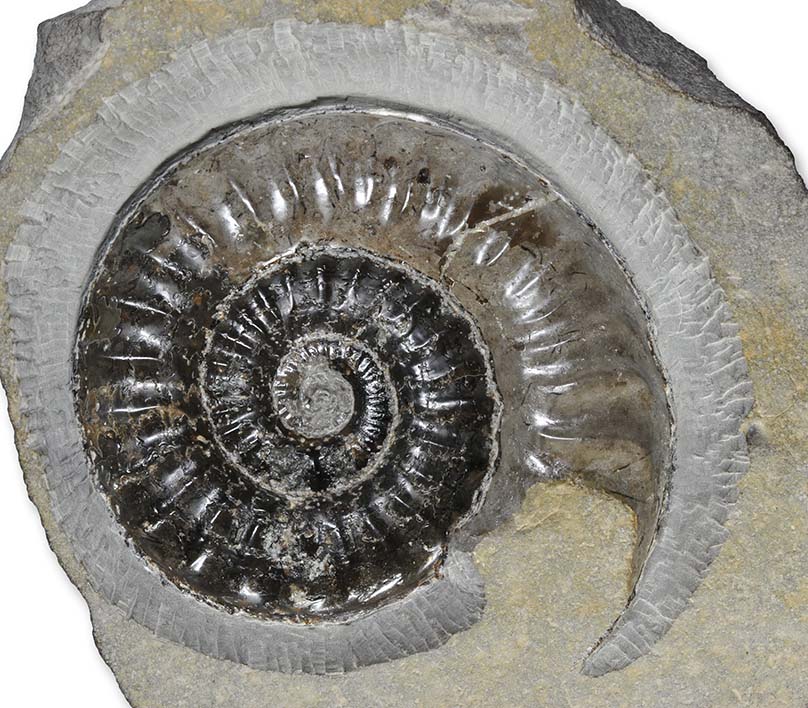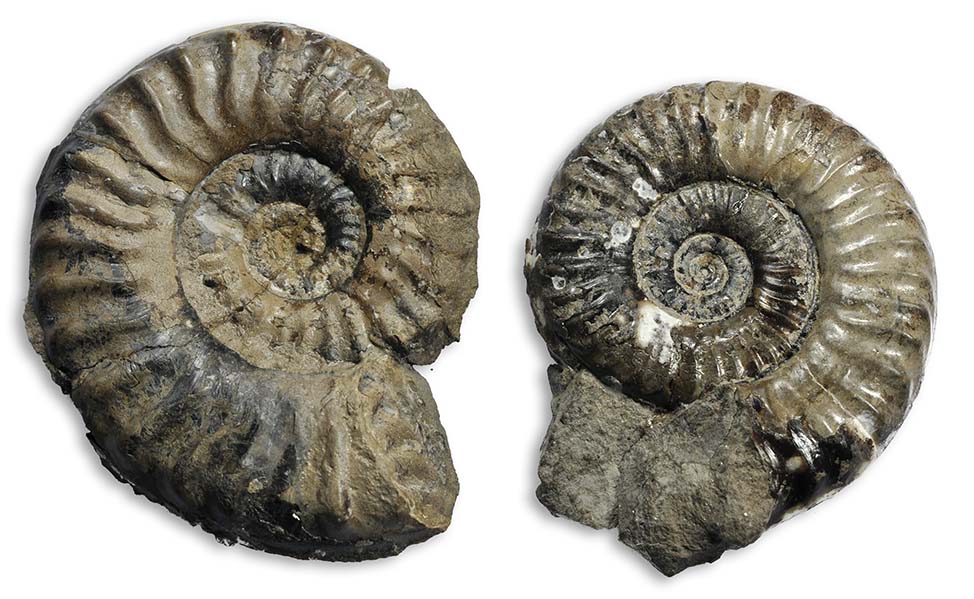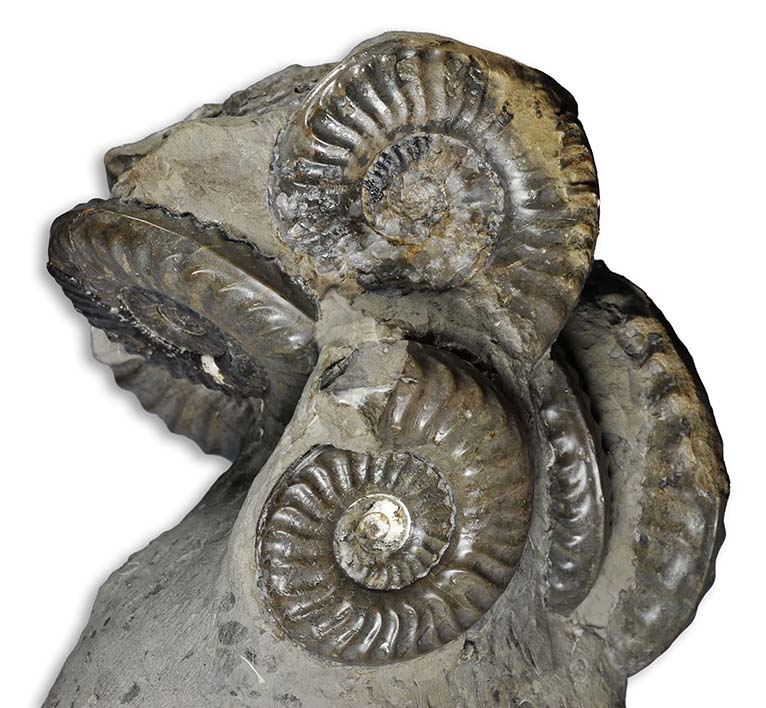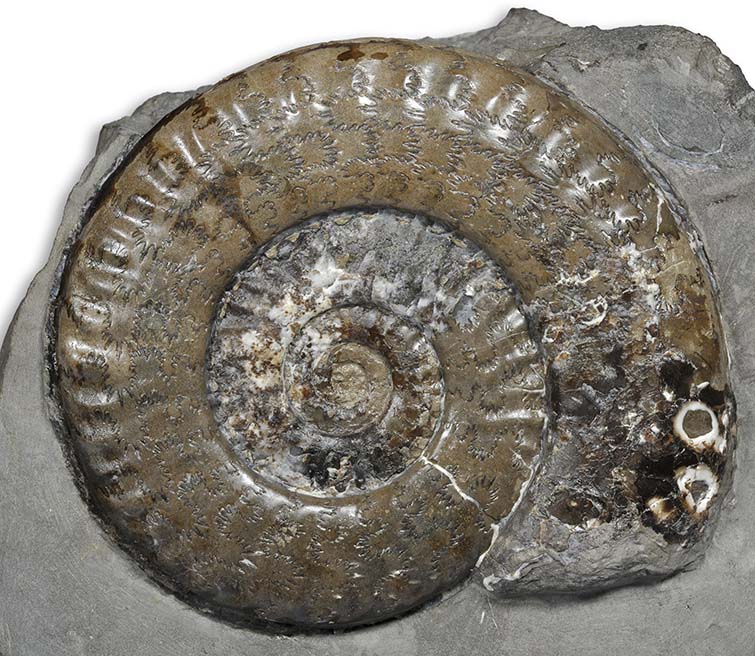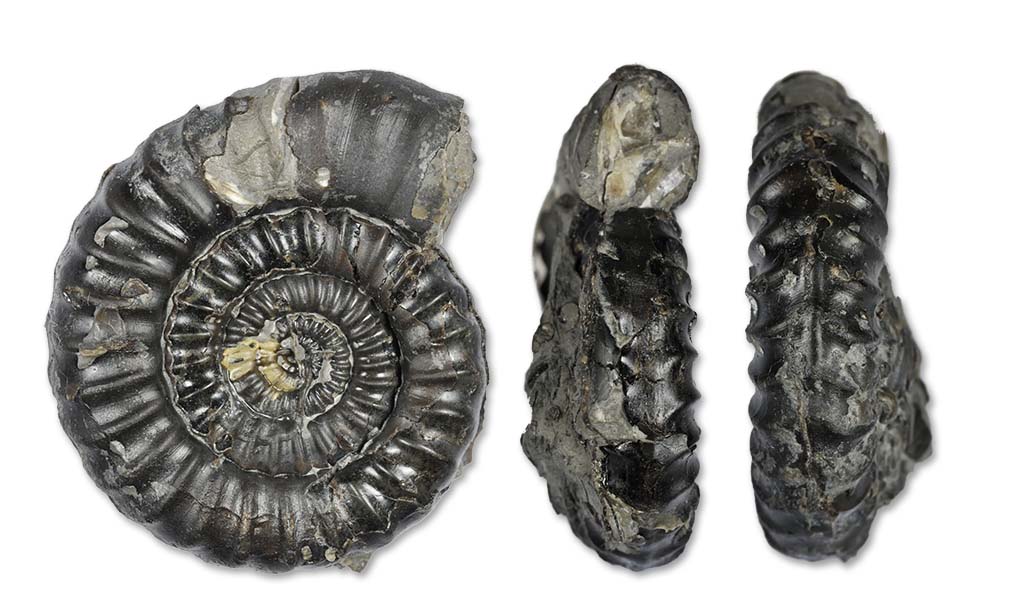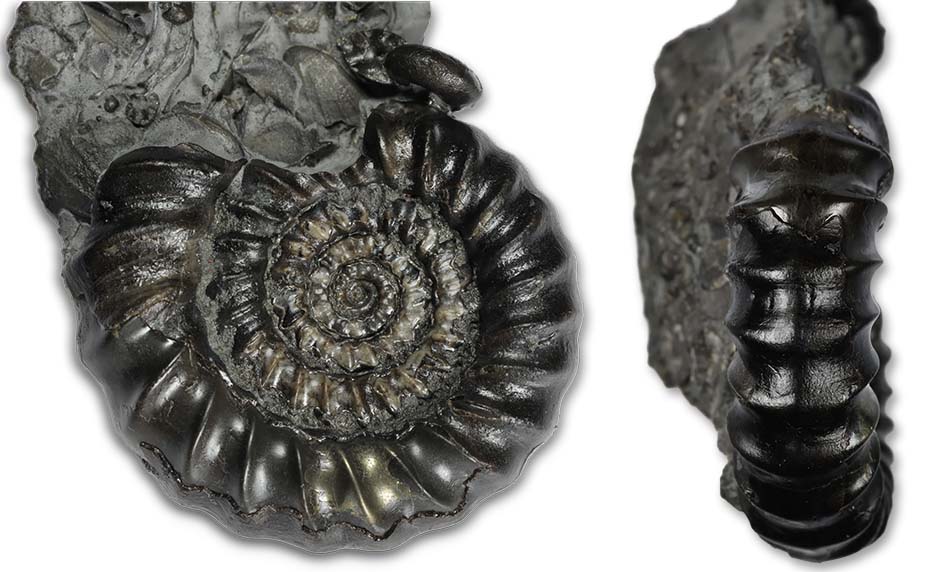
Recent prep results and What´s in the queue ?

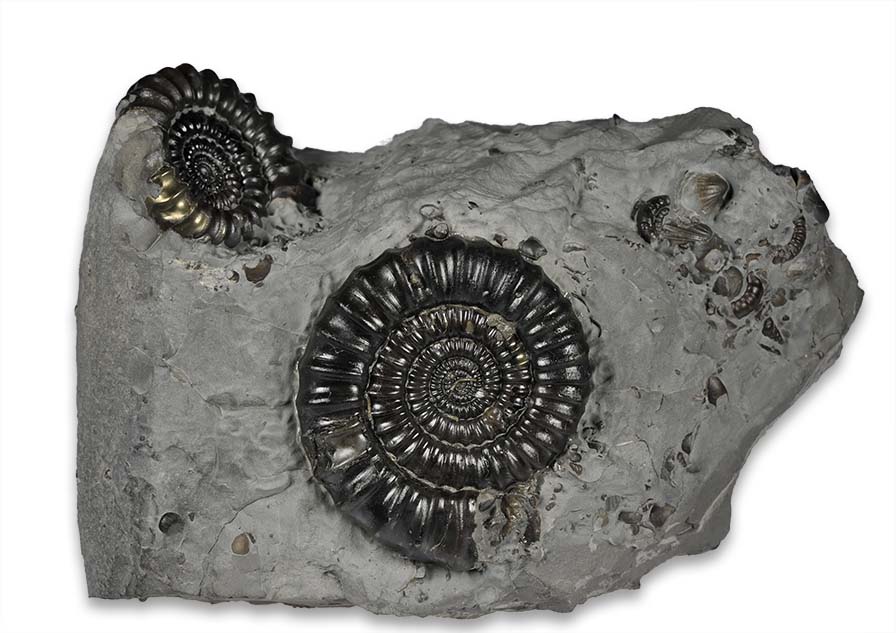
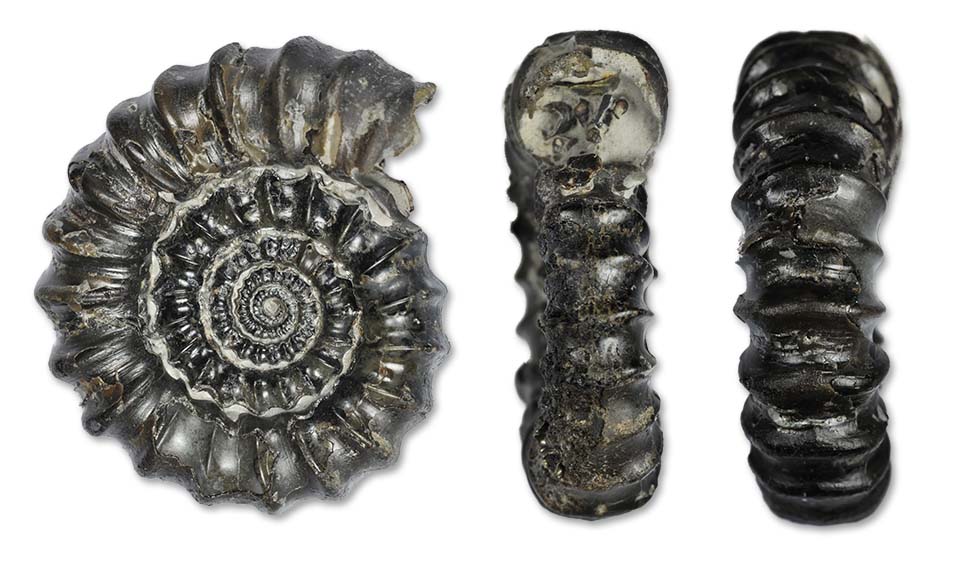
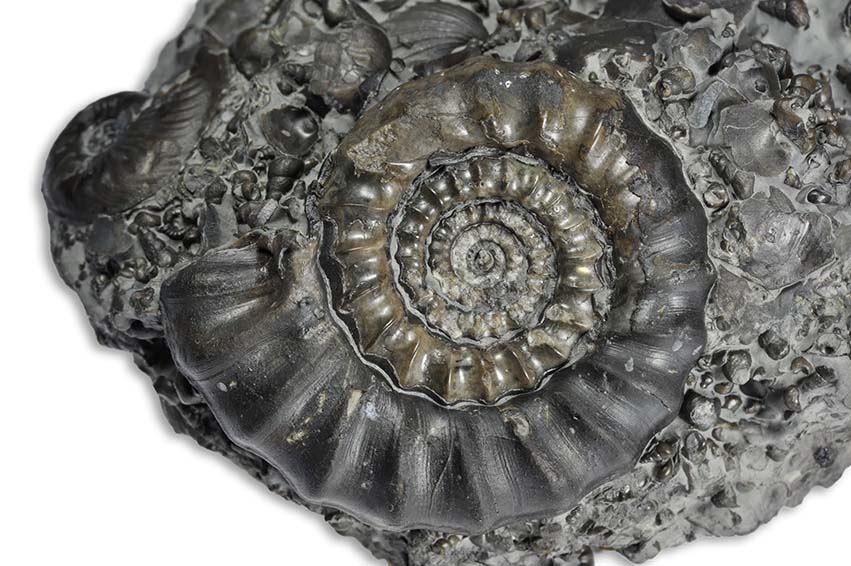
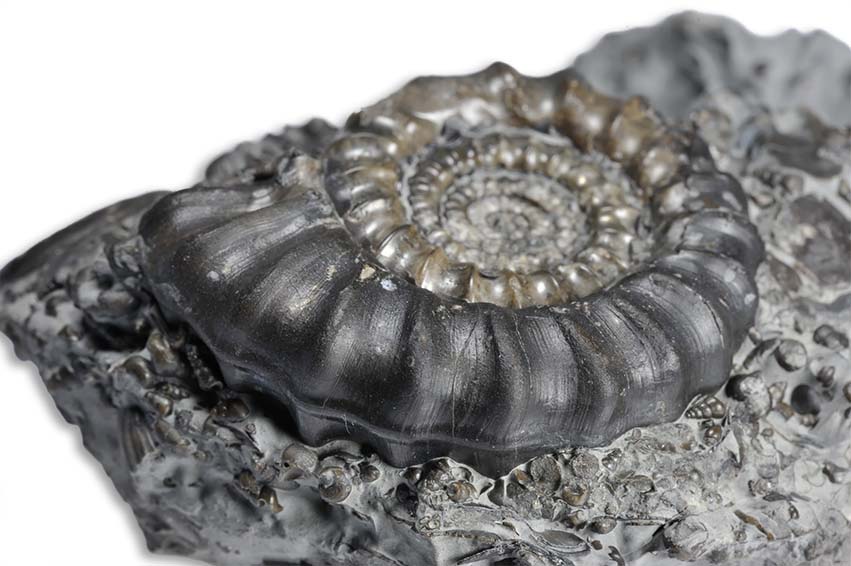
Recent prep results, numbers see text

Recent prep results, numbers see text

You might have noticed, I´ve deviated from my usual schedule of posting an article about every 2-3 weeks…
There are a couple of reasons, none bad, which have kept me from posting.
Reason number 1 is that commitments from my daytime job have kept me unusually busy for January and February and this will stay that way at least until mid march,
so you´ll have to wait for  a new full article until about 3-4 weeks time.

Reason number 2 is I´ve been working on several full articles, but due to my perfectionism I was not satisfied with what I could have posted…

In the “unfinished posts” queue is the first part of the Dactylioceras article, dealing with the lower toarcian Dactylioceras species.
When looking at some of the ammonites I was photographing (every little prep fault  somehow gets exaggerated when you look through a lens…),
I found that most of them needed some form of re-prep to comply to the same standard I´ve been trying to adhere to for the book.
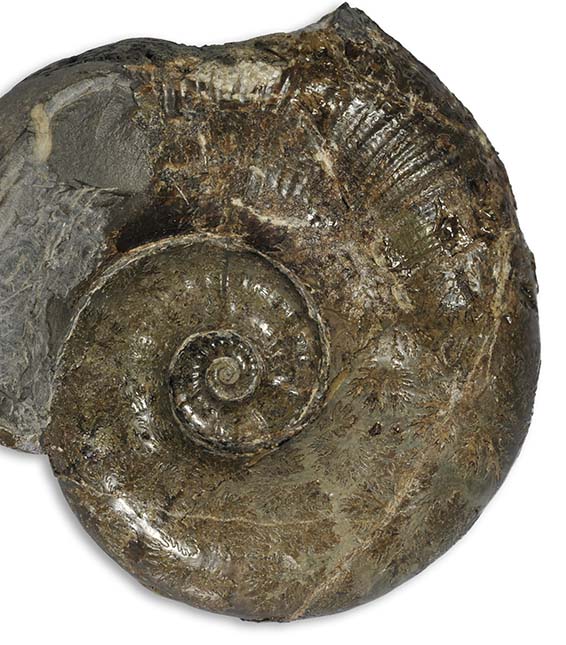
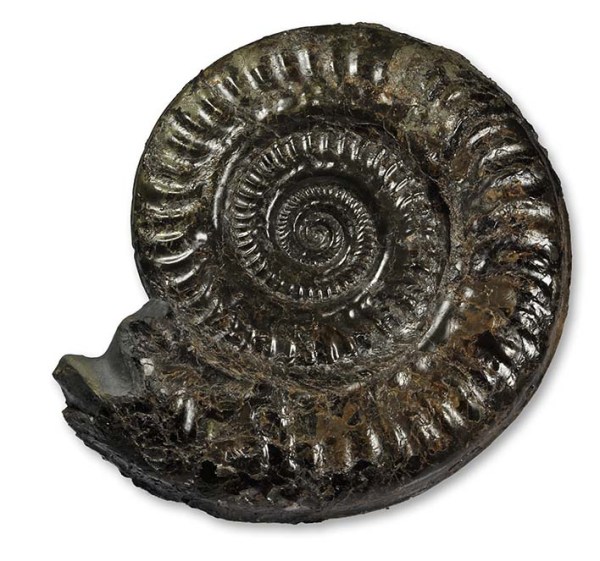
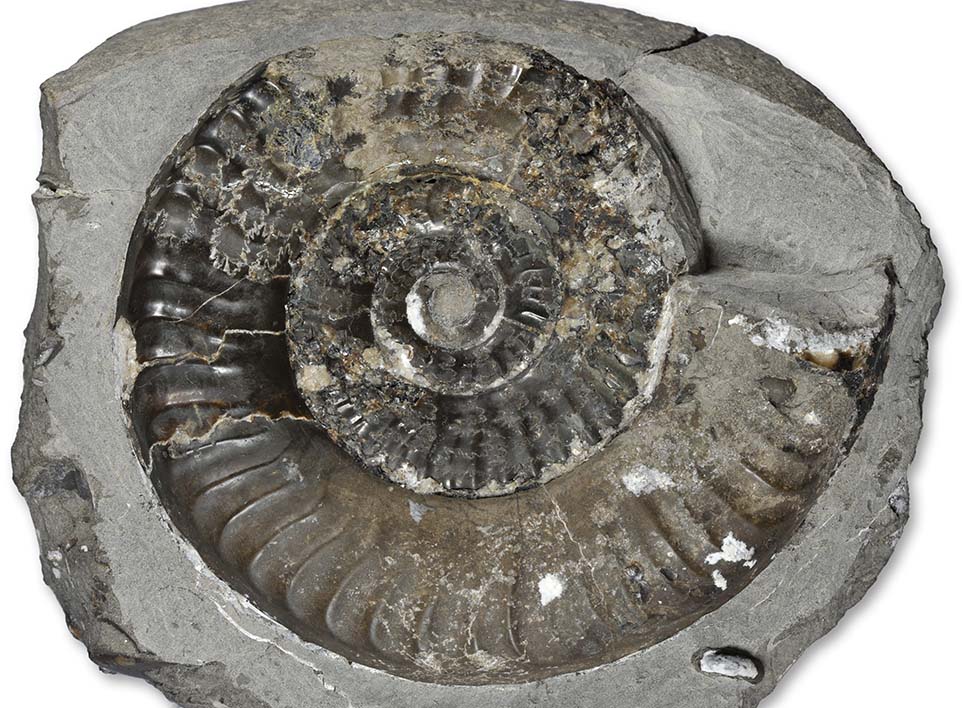
This is for example the reason why #7 in the photograph, a Dactylioceras (Orthodactylites) clevelandicum,  went back to the top of my prep queue :
The inner whorls needed some more attention with the fine air pen and the air abrader – it had been found in 2002 and basically went straight to the drawer at that time.

Reason number 3 is I need to clean up my prep slate before I go for my traditional spring collection tour to make space for potential new finds,
so the proportion of time prepping was higher that the one on writing…
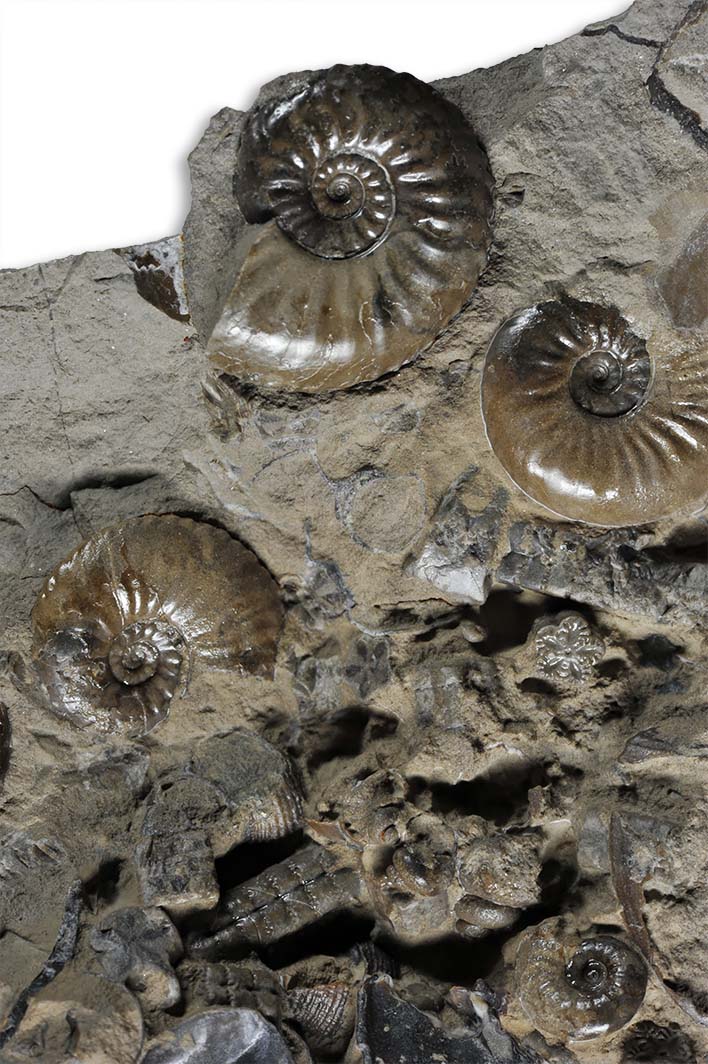
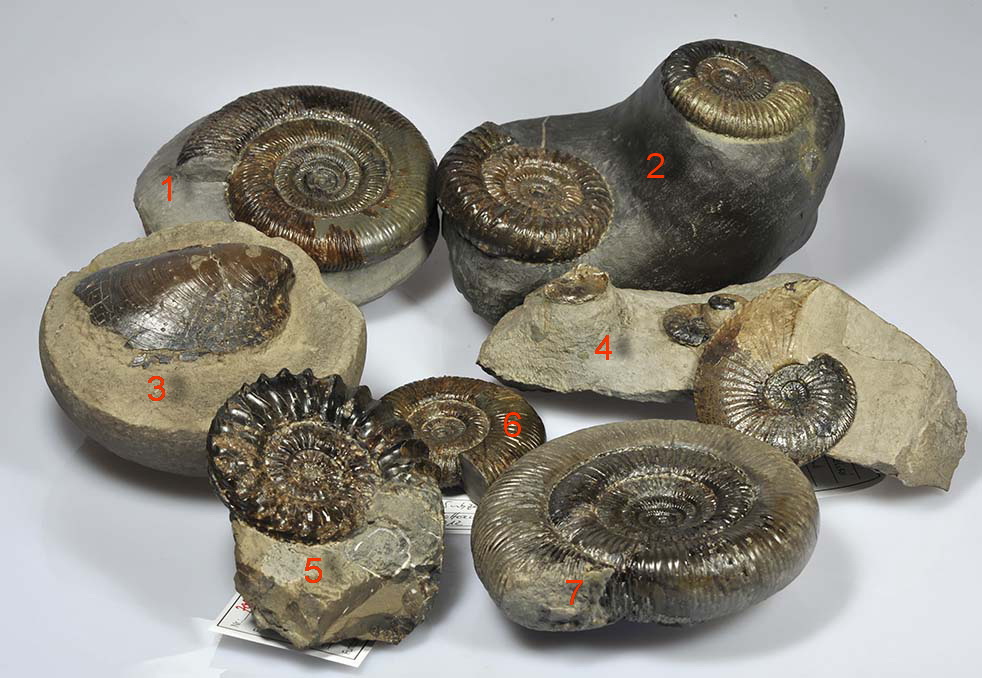
All of the ammonites (and other fossils) have been prepped last weekend, in case you´re wondering what they are here´s the list :

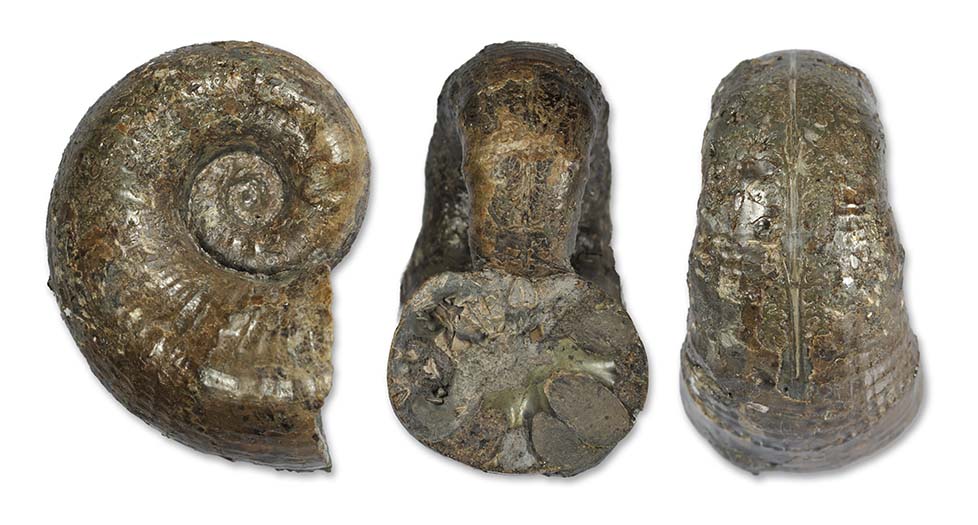
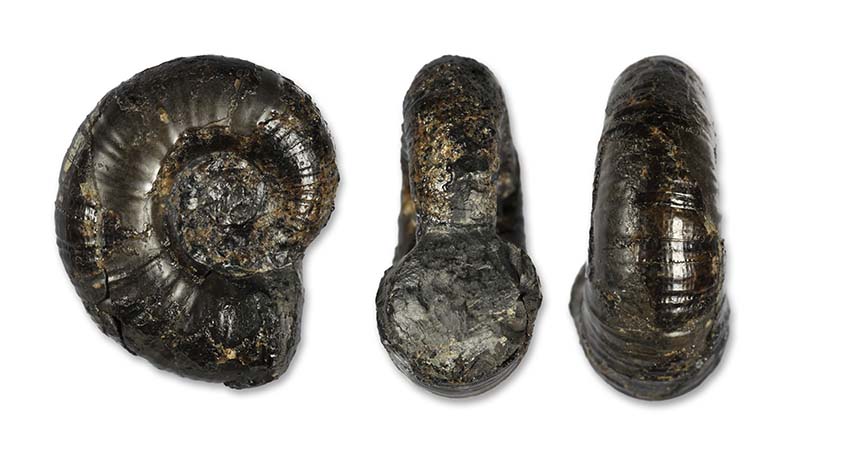
  1. Dactylioceras (Orthodactylites) tenuicostatum,  7 cm
  2. Double of Dacytlioceras commune, 5 & 4 cm, thanks to Dr. Mike Howarth for helping to correct my inital thoughts on this one…
  3. A Plagiostoma sp. bivalve, 6 cm,  from the apyrenum subzone of the middle lias, a “first” for me, I´ve never seen one before from the Yorkshire lias…
  4. A combo of Amaltheus stokesi (5.5 cm) , Amaltheus bifurcus (2.5 cm) , Amaltheus wertheri (2 & 1 cm)
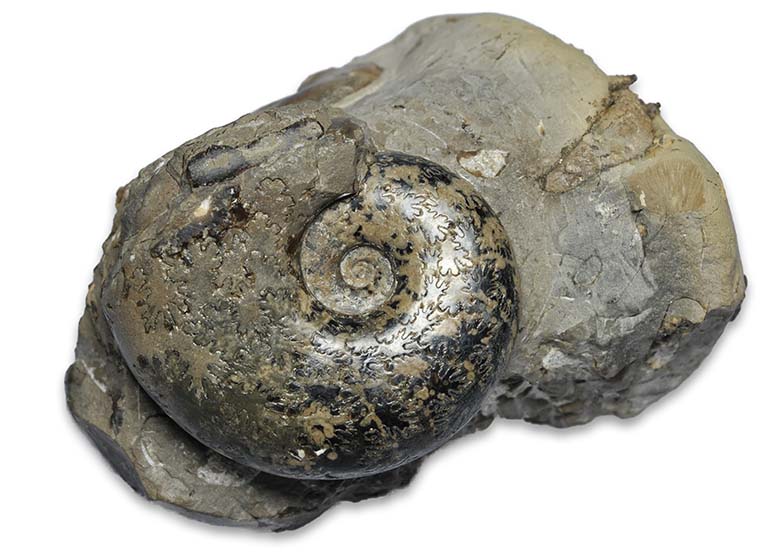
  5. Pleuroceras hawskerense, 6 cm
  6. Dactylioceras (Orthodactylites) semicelatum, 5 cm
  7. Dactylioceras (Orthodactylites) clevelandicum, 9 cm

Another article that´s in the “unfinished posts” queue for a long time already is about pathologies on Yorkshire coast liassic ammonites, for the simple reason that
literature about pathologies was somewhat thinly spread across a wide range of publications, most of the time with few pictures (so important for the amateur collector !).
But thanks to Prof. Dr. Keupp from FU Berlin this has now changed (http://www.geo.fu-berlin.de/geol/fachrichtungen/pal/eigenproduktion/Band_12/index.html) :
A brand new copy of his almost 400 page thick, large format, just released new atlas on cephalopod palaeopathologies has landed on my desk, I had only very little time to study it yet, but what I´ve seen so far is
spectacular (pictures galore !) and will surely set the scientific standard on this topic for years to come (unfortunately it is currently only available in german).
So through this new publication my “sick ammonites from Yorkshire” post will take a giant leap forward and will be published after the first part of the Dac post…

AndyS
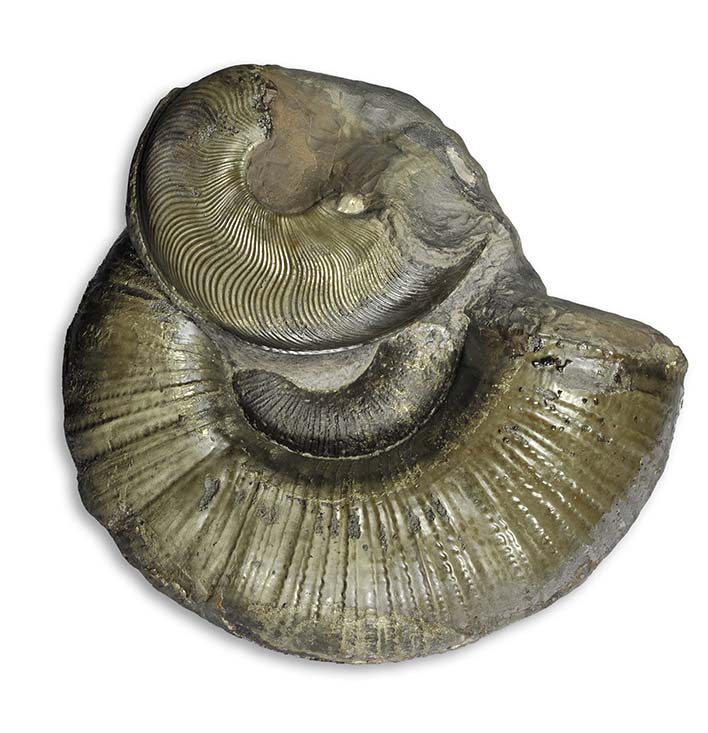


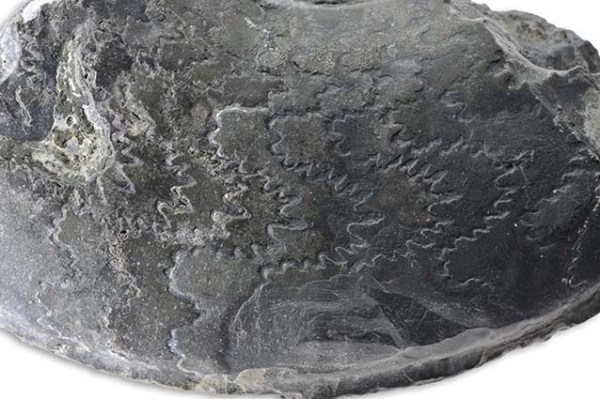
Lytoceras or Visitors from the deep

Lytoceras ceratophagum (16 cm) and half a Cleviceras exaratum (9 cm), both pyritized

Lytoceras ceratophagum (16 cm) and half a Cleviceras exaratum (9 cm), both pyritized

In the Yorkshire lias another relatively rare family of ammonites is the Lytoceratidae – finding a Lytoceras always makes a day a great collection day, the evolute shell shape reminiscent of  a “horn of plenty” and the complex suture make the ammonites very appealing.

Lytoceras is a rather “conservative” genus that remained relatively unchanged from the lower lias up to the upper cretaceous, its rarity in Yorkshire having something to do with the water depth : Lytoceras is considered a deep water genus that only occasionally strayed into the relatively shallow waters of the Cleveland basin.

Lytoceras seems to get more common during toarcian times, this may have to do with a temporary high in water levels that also allowed tethyan species like Frechiella to migrate in.

All of the liassic species that occur in Yorkshire have a more or less round whorl section, and have more or less evolute shells where the whorls hardly touch each other. The ribs on the shell generally show a typical fimbriation – a fringing of the ribs that leads to a characteristic shell pattern. A feature of the shell that is rarely preserved due to its fragilty (both during times of embedding and during preparation…) are the so-called flares – ribs that have developed into thin collar-like extensions of the shell.

Finding a Lytoceras with preserved flares is a real highlight – prepping it a real challenge, for the thin calcite flares almost break if you look at them – preparation is only possible in softer matrices where low impact prep methods (e.g. air abrasion) can be utilized.

One thing I did not know before reading newer literature about the topic (HOFFMANN 2010) for this post was that a pronounced sexual dimorphism has been
recognized in the Lytoceratidae, with relevant macroconch / microconch pairs so far published being

Lytoceras cornucopia  /  Lytoceras (Trachylytoceras) annulosum

Lytoceras ceratophagum / Lytoceras (Trachylytoceras) nitidum

I am aware of the following liassic members of the Lytoceratidae family from Yorkshire :

Lytoceras fimbriatum (SOWERBY) 

(luridum, maculatum, stokesi subzones)

Lytoceras fimbriatum (10.5 cm) from the maculatum subzone, with preserved flares

Lytoceras fimbriatum (10.5 cm) from the maculatum subzone, with preserved flares

This is a specimen from the maculatum subzone, which is relatively rare. L. fimbriatum is more common in the luridum subzone, but rarely well-preserved.

Lytoceras cornucopia (YOUNG & BIRD)

(bifrons zone)

Lytoceras cornucopia (8 cm)

Lytoceras cornucopia (8 cm)

This specimen has no shell on the inner whorls, thus showing the beautiful suture and constrictions on the innermost whorls.
The firmbriate ribbing on the outer whorl is just visible.

Perilytoceras jurense (ZIETEN)

(thourarsense zone)

Perilytoceras jurense (4 cm)

Perilytoceras jurense (4 cm)

Perilytoceras jurense (syn. Lytoceras jurense) has an oval whorl section.
 

Lytoceras ceratophagum (QUENSTEDT)

(falcifer zone)

 see title picture
Lytoceras ceratophagum and Lytoceras cornucopia are very similar, L. ceratophagum has more radial ribbing whereas L. cornucopia has slightly rursiradiate ribbing.

Lytoceras sublineatum (OPPEL)

(bifrons, variabilis zones)

Lytoceras sublineatum (5 cm)

Lytoceras sublineatum (5 cm)

Lytoceras sublineatum differs from the other species in having a more compressed whorl section.

Lytoceras (Trachylytoceras) nitidum 

(falcifer zone)

Lytoceras (Trachylytoceras) nitidum (3 cm)

Lytoceras (Trachylytoceras) nitidum (3 cm)

This is the tiny microconch of the macroconch Lytoceras ceratophagum.
The Whitby museum type specimen list also mention the three following :
Pachylytoceras gubernator
Pachylytoceras ? peregrinum
Trachylytoceras fasciatum
Allthough HOWARTH mentions the first two in his “The Yorkshire Type Ammonites And Nautiloids of Young and Bird, Phillips and Martin Simpson” paper as holotypes,
there is no further record of them in later literature.
Both OPPEL and WRIGHT had “Ammonites gubernator” as a synonym for Lytoceras jurense (now Perilytoceras jurense), which is assumed here as well.
BUCKMAN pictures the Whitby specimen of SIMPSON´s Ammonites peregrinum as Alocolytoceras peregrinus, but this is not mentioned later, either.
Due to the fragmentary nature of this specimen, this is not followed any further.
Trachylytoceras fasciatum is considered by HOWARTH as a potential synonym of Trachylytoceras nitidum, now Lytoceras (Trachylytoceras) nitidum.
AndyS

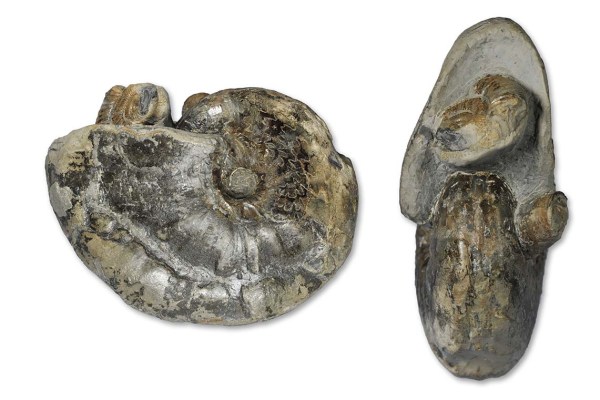
Frechiella or A nautilus with an ammonite suture…

Frechiella subcarinata (YOUNG & BIRD, 1822), 8.5 cm diameter, Port Mulgrave, with a Dactylioceras fragment and a belemnite phragmocone in the aperture

Frechiella subcarinata (YOUNG & BIRD, 1822), 8.5 cm diameter, Port Mulgrave, with a Dactylioceras fragment and a belemnite phragmocone in the aperture

Frechiella is one of the rarest Yorkshire lias ammonites and in some respects also one of the oddest.

It comes from a so-called “aberrant” line of ammonites, previously thought to come from one subfamily Bouleiceratinae of the family Hildoceratidae,
but nowadays after some more analysis (Rouleau et al 2003) is being split up into the 3 subfamilies Bouleiceratinae (lower Toarcian),
Leukadiellinae (middle Toarcian) and Paroniceratinae (upper Toarcian, including Frechiella) but all still under Hildoceratidae.
All are much more common in the tethyan realm, and are rare “strays” into the north-west european faunal province.
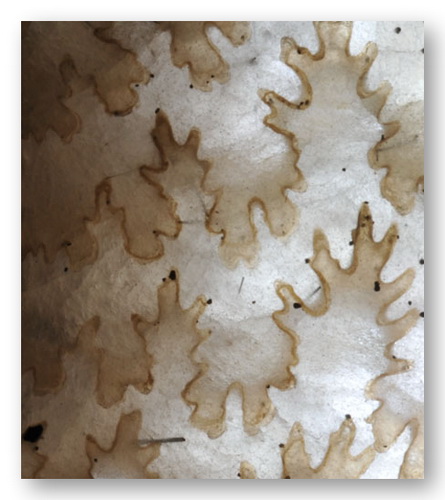
All members show a characteristically reduced, sometimes “ceratitic” suture (named after the triassic ammonite genus Ceratites, which showed a similar suture).
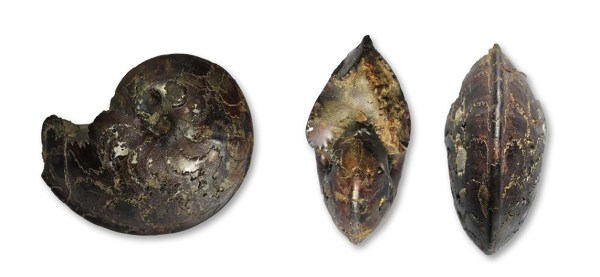
Oxyparoniceras telemachi (RENZ), 2 cm This is a member of the same subfamily, but not found in Britain, but somewhat further south from Barjac in the south of France (and purchased by me).

Oxyparoniceras telemachi (RENZ), 2 cm
This is a member of the same subfamily, but not found in Britain, but somewhat further south from Barjac in the south of France (and purchased by me).

This is also the main diagnostic feature, otherwise one could easily confuse these very involute ammonites with a nautilus , especially when they are wave-rolled –
In fact, Frechiella subcarinata was originally called Nautilus subcarinatus YOUNG & BIRD, 1822 –
you can just believe that, if it weren’t for the very characteristic suture, and I guess some of you might now go checking the nautilus in their collections …
(and of course : Frechiella is an ammonite, not a nautilus !)
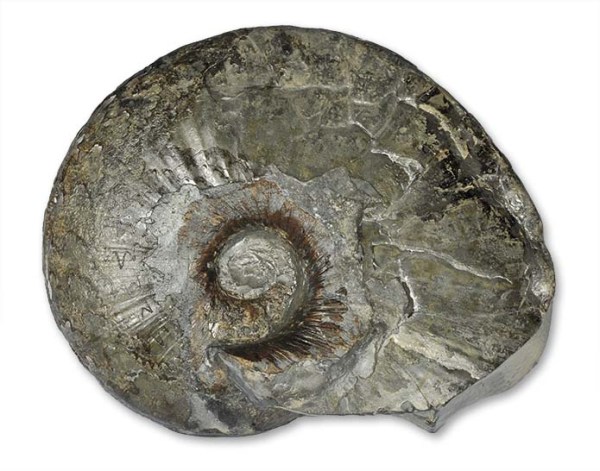
Well preserved specimen show a faint keel on a rounded, sometimes slightly rectangular venter, faint radial ribs, sometimes flat waves can be seen close to the umbilicus.
With almost all specimen I’ve seen (and that’s not many…) the body chamber is more or less crushed or imploded.
Frechiella subcarinata (YOUNG & BIRD, 1822), 10 cm, Hawsker Bottoms

Frechiella subcarinata (YOUNG & BIRD, 1822), 10 cm, Hawsker Bottoms

Frechiella subcarinata (YOUNG & BIRD, 1822) , the only Yorkshire species in the genus Frechiella found so far,
occurs only in the main alum shales, commune subzone, bed 54 (HOWARTH 1992).
It is one of the rarest Yorkshire coast lias ammonites, and many regard it as the “holy grail” of upper lias ammonites.
I had for a time almost given up on trying to find one myself, and bought an unprepared specimen, found at Port Mulgrave (the one pictured below the title),
from Mike Marshall in September 2003.
But as it happened – and doesn´t it always happen like this ?!  – a year later in September 2004 one twinkled up at me from the cliff debris on one of my favourite
spots around Hawsker Bottoms – this is the one pictured above – I have not found one since, not even a fragment.
AndyS

I´m learning something new every time or A year review

Christmas trees in the snow - Eleganticeras sutures

Christmas trees in the snow – Eleganticeras sutures

As the year 2012 draws to a close, it`s time for a yet another year review…

I´ve started this blog in May 2012, and 36 blog posts later I can still say : It works for me !
It works for me because it drives me to write a post every couple of weeks, and that requires research into the ammonites I want to write about, photographs of the ammonites and maybe even a re-prep to make them presentable (allthough that sometime pushes back the publication date, because when you see those fossils through the lense, it´s so much easier to notice all the imperfections in the prep-work…).
It´s sometimes hard to stick to the schedule, because I do have a (non-fossil-related) , sometimes stressful day job and sometimes require a time-out from working at the keyboard, but I think it´s the right sort of methodology to keep work on the ultimate goal – the book – going.
And, the great thing is : I´m learning something new every time I research a new genus of ammonites for posting…
I´ve made some wonderful new contacts through people who have come forward and commented on posts and revived some old contacts who allowed me to photograph
some of their beautiful fossils. Thanks to all of you and I´d hopefully meet you next year to photograph some more !
But does it work for you ?

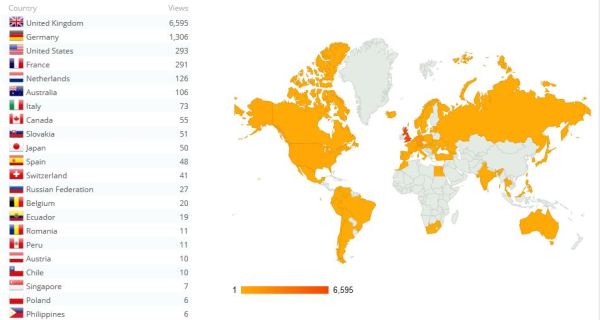
Countries with 6 or more visitsto this blog , there are 30 more countries below this list !

Countries with 6 or more visits to this blog , there are 30 more countries below this list !

Looking at the map, it does seem so… Of course, most of the readers are in Great Britain, that´s where the fossils come from, those are the readers this english language blog is made for. You know what they say about a prophet in his own country, I guess it´s the language issue why there is only a comparatively small participation from my fellow countrymen in Germany. But what makes me particularly proud is the worldwide readership…isn´t the internet a wonderful thing sometimes  ?

But I have a request, too: Compared to the amount of visits (close to 10,000, I know this is not all that much, but then this is not a fashion blog…)
there are just a bit more than 60 comments (and some are from me as well…)
So, I´d really love to hear from you more ! What are your questions, what are your finds, don´t be shy !
And remember : If you comment, you have to leave a valid e-mail address, but nobody else other than me can read it and I do not pass on e-mail adresses !

And a few little steps can make it so much easier to follow this blog, as you get an e-mail whenever I write something new.

The folks from WordPress have a handy little explanation on how to follow a blog :
If you don´t like to post a comment here, you can reach me in the UKFOSSILS forum (www.discussfossils.com) as AndyS and
on the german Steinkern forum (www.steinkern.de/forum) as AndyS (for both forums : You still need an account there to post messages).
Wherever you are, and whatever tradition you follow during the days at the end of the year:
Have a good time with your family and the ones you love, a healthy new year, and, if you´re collecting fossils, a fossiliferous year 2013 !
All the best,
AndyS

Ovaticeras or End of the line

Section of septarian nodule with Dacytlioceras sp (fron) and Ovaticeras ovatum (back)

Section of septarian nodule with Dactylioceras sp (front) and Ovaticeras ovatum (back)

If you read the title of this blog and start to worry that I might stop working on the book and on the blog – well, don’t. This is just referring to the subject of this post, the ammonite genus Ovaticeras…
The title specimen by the way (you might have guessed by the quality of the prepwork) is a specimen purchased from Mike Marshall. Maximum size of the Ovaticeras on this piece is 8 cm.

Ovaticeras is a somewhat rarer ammonite which seems to be very restricted, both in terms of local distribution (it’s apparently only really documented from Britain, with its main occurrence in Yorkshire) and in terms of its relative short-livedness (it has only been found in the approx. 35 cm of the so called ovatum bed at the top of the falciferum subzone of the lower toarcian (of course named after the species O. ovatum) and shortly below it. It is thought to have descended from Harpocas falciferum (HOWARTH 1992) and apparently left no descendants itself – end of the line.
I have found Ovaticeras ovatum at Saltwick Bay, at Hawsker and at Ravenscar, but you should be able to find it everywhere on the Yorkshire coast,
where there’s an outcrop of the aforementioned bed.
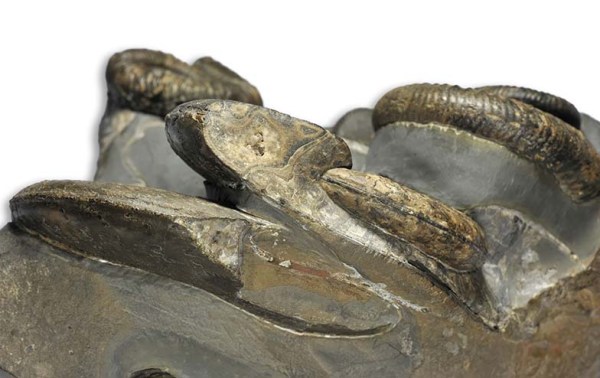
View of Ovaticeras keel and typical oval whorl section

View of Ovaticeras keel and typical oval whorl section

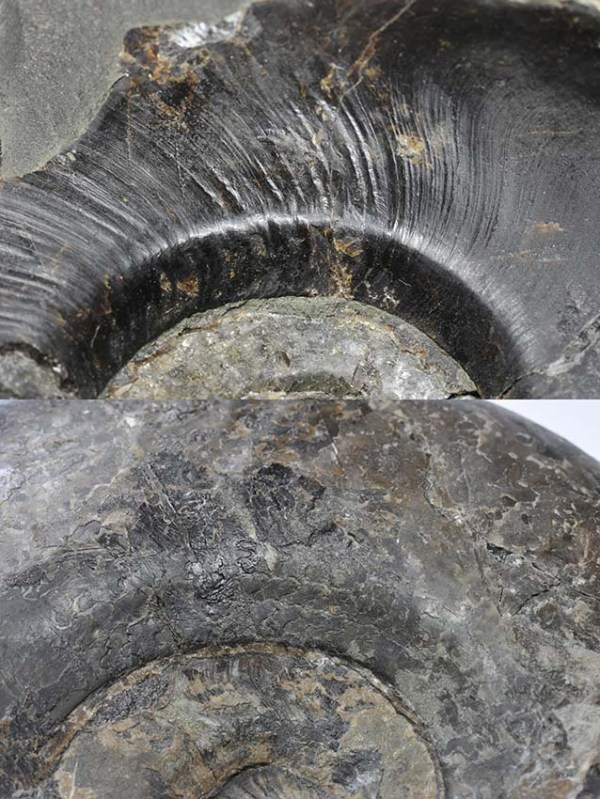
The oval whorl shape of Ovaticeras is quite characteristic, as are the sloping umbilical walls without an edge,
which differentiates it from large Eleganticeras body chambers.
Comparison of umbilical edges of Eleganticeras (top) and Ovaticeras (bottom), both approx. 12 cm

Comparison of umbilical edges of Eleganticeras (top) and Ovaticeras (bottom), both approx. 12 cm

Adult specimen have  a bit of a “hood” at the end of the body chamber, where the keel slightly overarches the whorl.
The ribs are those of a typical Harpoceratid, of weak falcoid form, receding to mere sinuous growth stripes on adult specimens’ body chambers.
It does have a simple keel with smooth areas to the side of it that also grows weaker on large body chambers.
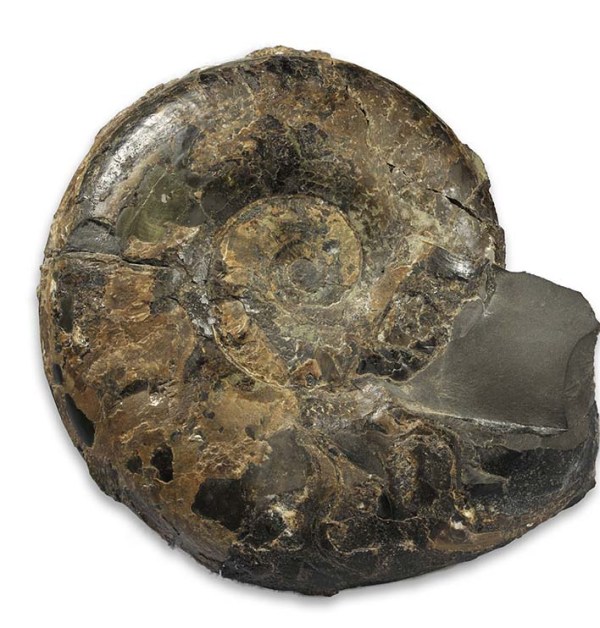
Large 17 cm Ovaticeras ovatum

Large 17 cm Ovaticeras ovatum

This large, 17 cm, complete specimen was found on Oct 7, 1991 at Saltwick Bay in a large nodule with a strong pyrite crust and was
extracted from the nodule using hammer and small chisels alone (on the kitchen table of our holiday flat, if you need to know…)
It is not my prettiest specimen, but my largest and the first of the species I’ve found.
Suture of Ovaticeras

Suture of Ovaticeras

This partial specimen shows the nice characteristical sutures of Ovaticeras.
Must be getting close to Christmas, I see Christmas trees everywhere…
AndyS
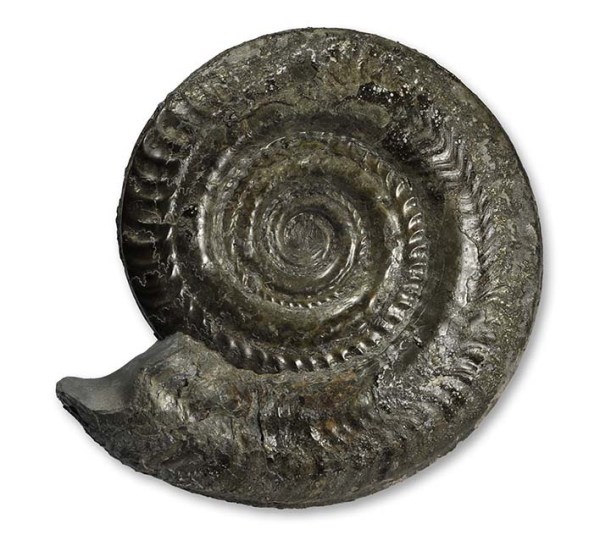
Hildoceras or A plague of snakes

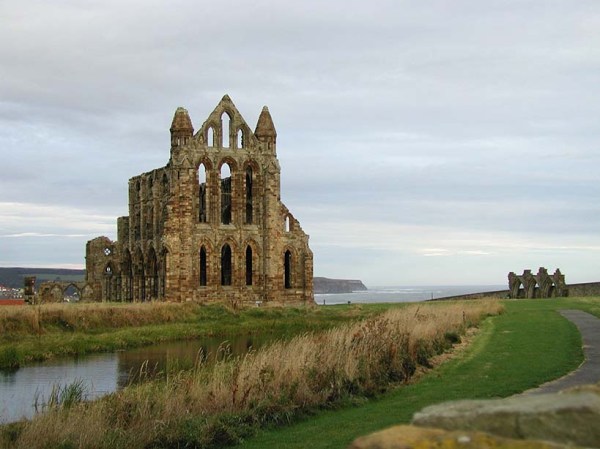
Whitby Abbey (2003)

Whitby Abbey (2003)

Legend has it that St. Hilda, founding abbess of Whitby abbey, turned a plague of snakes to stone and threw them off the cliff, thus creating the ammonites we can find there today.
This legend was immortalized by Alpheus Hyatt in 1876 by naming the ammonite genus I´d like to present to you next after her: Hildoceras.
In Victorian times, snake heads were often carved on ammonites to capitalize on this legend – today there seems to be a renaissance of this art going on, and the quality
you´ll find on places like ebay is usually quite good, although these are mostly Dactylioceras ammonites.

But back to palaeontological reality :
In Yorkshire, there are 3 species of Hildoceras (I´m following HOWARTH´s “The Ammonite Family Hildoceratidae in the Lower Jurassic of Britain” here)  :

Hildoceras bifrons (BRUGUIÈRE, 1789)
Hildoceras bifrons, 13.5 cm

Hildoceras bifrons, 13.5 cm

Hildoceras bifrons is the lead ammonite for the bifrons zone of the lower Toarcian. It has a strong spiral groove, strong ribbing on the external half of the side,
and a keel with strong side furrows.

Hildoceras semipolitum BUCKMAN, 1902
 
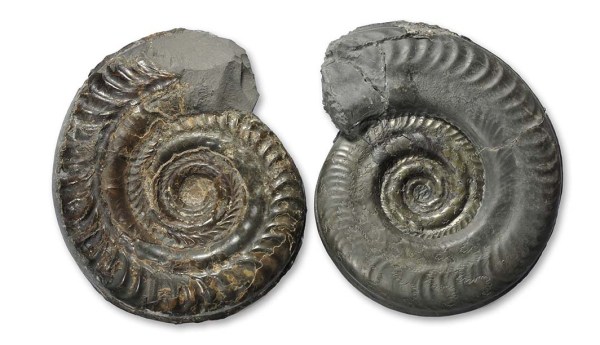
Hildoceras bifrons (left), Hildoceras semipolitum (right), both 10 cm

Hildoceras bifrons (left), Hildoceras semipolitum (right), both 10 cm

 
Hildoceras semipolitum has a higher whorl section than H. bifrons, both spiral groove and ribbing are finer. The outer whorls overlap the inner whorls to a degree that
the ribs on the inner whorls are no longer or just about visible. As H. semipolitum is considered a descendant of H. bifrons, there are many intermediates.

 
Hildoceras lusitanicum MEISTER, 1913
 
Hildoceras lusitanicum, 15 cm

Hildoceras lusitanicum, 15 cm

Hildoceras lusitanicum (also known under the synonym Hildoceras sublevisoni) is very similar in ribbing to H. bifrons,
the main difference is the missing spiral groove on the side of the whorl.

AndyS
Protogrammoceras or A rare immigrant from the Tethys

Protogrammoceras (M.) geometricum and Amaltheus bifurcus, both 6 cm

Protogrammoceras (M.) geometricum and Amaltheus bifurcus, both 6 cm

In the stokesi subzone of the Yorkshire coast, there are very few cephalopods other than Amaltheus. There is the very occasional Lytoceras, maybe even a very rare nautilus and a few immigrant ammonites from the Tethys, a new ocean that had begun to form during the triassic (for a visualization of the movement of continents during the ages see e.g. http://www.scotese.com/earth.htm)

One of these immigrant genera from the Tethys is Protogrammoceras, an early member of the Hildoceratidae family of ammonites, that is going to be one of the dominant ammonite families in the Toarcian, with genera like Hildoceras, Harpoceras, Eleganticeras, Hildaites, Pseudolioceras etc.
Much of the evolution leading to Protogrammoceras is assumed to have occurred in the Tethys, so appearance of Protogrammoceras in Yorkshire seems rather “sudden”.
Protogrammoceras is also rather a rare ammonite in Yorkshire, finding good specimen requires intense searching of the hard flat limestone nodules of the stokesi subzone.
There are 2 species that I´ve found so far :
Protogrammoceras (Matteiceras) geometricum (PHILLIPS, 1829)
Protogrammoceras (Matteiceras) nitescens (YOUNG & BIRD, 1828)
There are 2 further species known from Yorkshire (HOWARTH 1992) :

Protogrammoceras (Protogrammoceras) paltum (BUCKMAN, 1922) from the paltum subzone
Protogrammoceras (Protogrammoceras) turgidulum (FUCINI, 1904) from the hawskerense subzone

As usual, if you do have a specimen of these species in your collection, and would allow me to photograph it for the book, please let me know…
Again, M.K. HOWARTH has provided the perfect reference for these ammonites in the form of a monograph of the Palaeontographical Society :”The Ammonite Family Hildoceratidae in the Lower Jurassic of Britain, London, 1992″

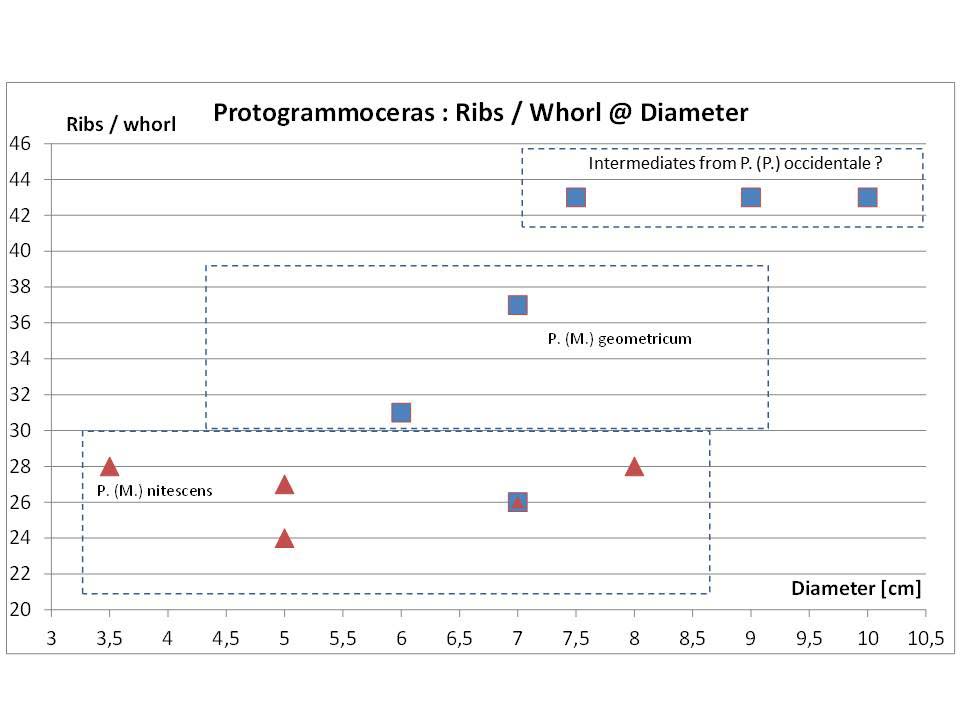
The two species mentioned above can be separated by their rib densities (measurements were taken from the specimen shown here):
Diagram of rib density differences between P. (M.) nitescens and P. (M.) geometricum

Diagram of rib density differences between P. (M.) nitescens and P. (M.) geometricum

Protogrammoceras (Matteiceras) nitescens (YOUNG & BIRD, 1828)
P. (M.) nitescens has lower rib densities on the outer whorls, ribs are more angled backwards (rursiradiate) on the outer half of the whorl than
P. (M.) geometricum.
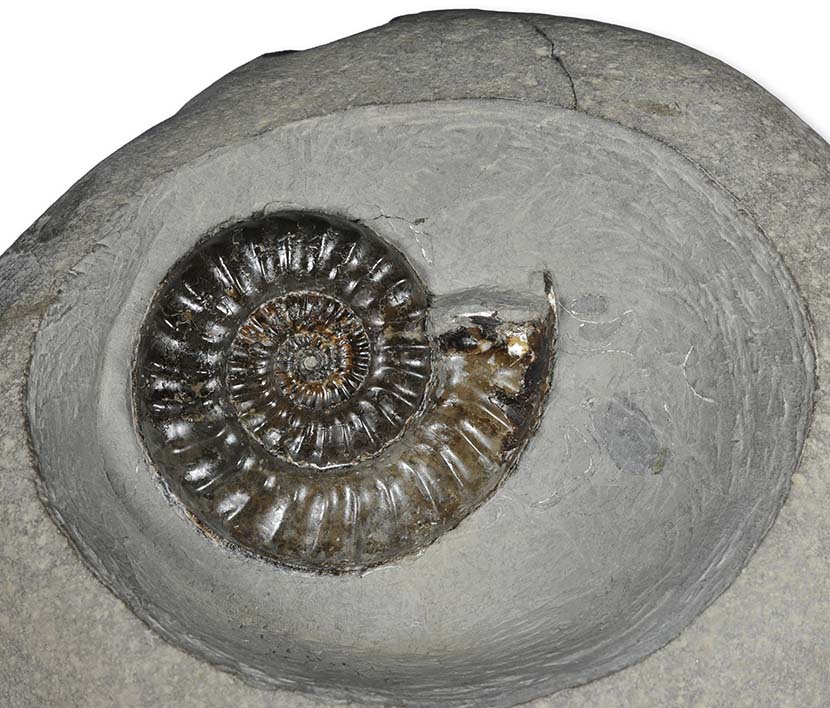
Protogrammoceras (M.) nitescens, 7 cm, "bowl" preparation

Protogrammoceras (M.) nitescens, 7 cm, “bowl” preparation

Protogrammoceras (M.) nitescens, 8 cm, only aperture was visible before prep

Protogrammoceras (M.) nitescens, 8 cm, only aperture was visible before prep

Protogrammoceras (Matteiceras) geometricum (PHILLIPS, 1829)
 
P. (M.) geometricum has higher rib densities throughout, the ribs do not angle backwards as much as P. (M.) nitescens
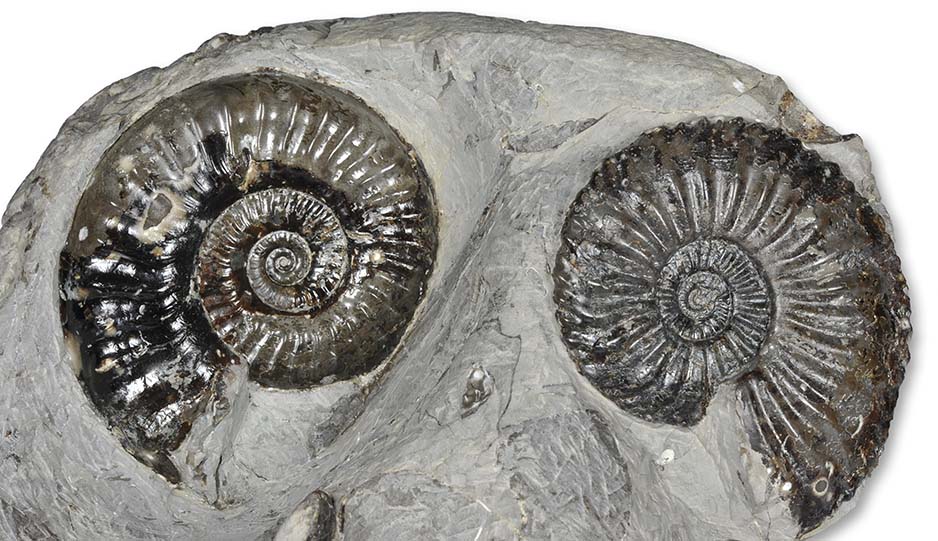
Protogrammoceras (M.) nitescens (left, 7 cm) and Protogrammoceras (M.) geometricum (right, 6 cm)

Protogrammoceras (M.) nitescens (left, 7 cm) and Protogrammoceras (M.) geometricum (right, 6 cm)

Possible Intermediates
This interesting cluster of 8 Protogrammoceras, 1 Amaltheus stokesi and various bivalves was found in July 2009.
By their rib densities , of the 8 Protogrammoceras 2-3 are P. (M.) geometricum or intermediates, while the other 5 are P.(M.) nitescens.
Cluster of 8 Protogrammoceras, between 6 and 8 cm

Cluster of 8 Protogrammoceras, between 6 and 8 cm

The following 2 large specimen don´t really fall into the rib density range given by HOWARTH with ribs/ whorl over 40, but they are also
larger than the specimen HOWARTH used for his rib density observations.
Large 10.5 cm Protogrammoceras, possible intermediate from P. occidentale ?

Large 10.5 cm Protogrammoceras, possible intermediate from P. occidentale ?

Large 9 cm Protogrammoceras, possible intermediate from P. occidentale ?

Large 9 cm Protogrammoceras, possible intermediate from P. occidentale ?

Identification of species by rib densities is certainly no exact science, but they could also be intermediates from P. (P.) occidentale ?
AndyS
A moment frozen in time, part II

In the first part of this blog post I described the Yorkshire liassic crinoids, now´s the time to show you the starfish.
It feels like starfish are even a bit more rare than crinoids – at least with crinoids you get the obvious isolated segments (ossicles) in most sediments.
Disarticulated starfish remains are less obvious, though I guess they must be there as well, most Yorkshire lias sediments are just difficult to prepare for microfossil analysis.
Most articulated starfish remains in my collection are from the figulinum – stokesi subzones of the Yorkshire coast, as are the first three.

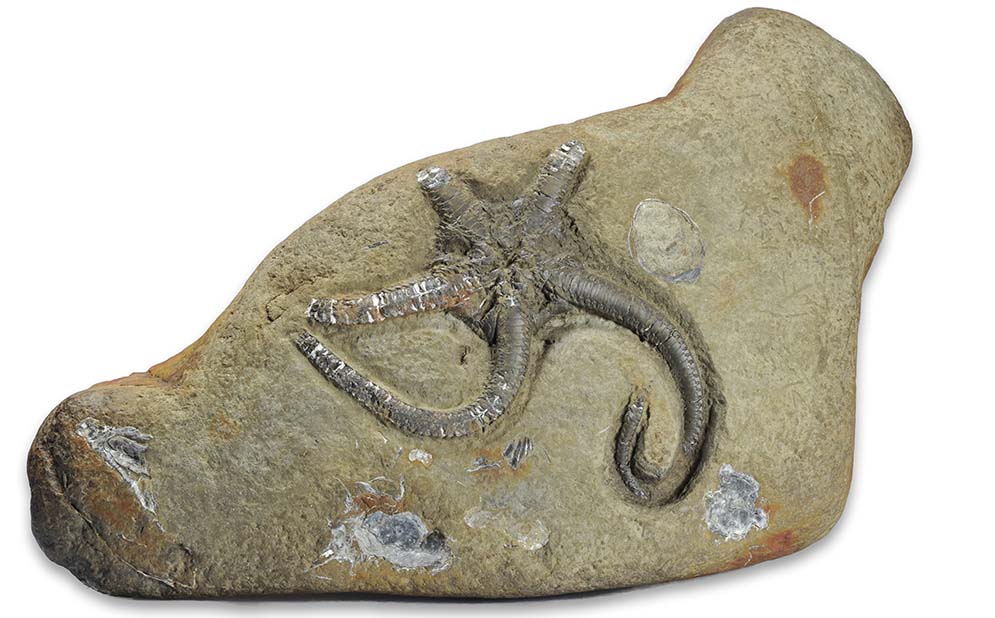
Palaeocoma milleri (PHILLIPS,1829)
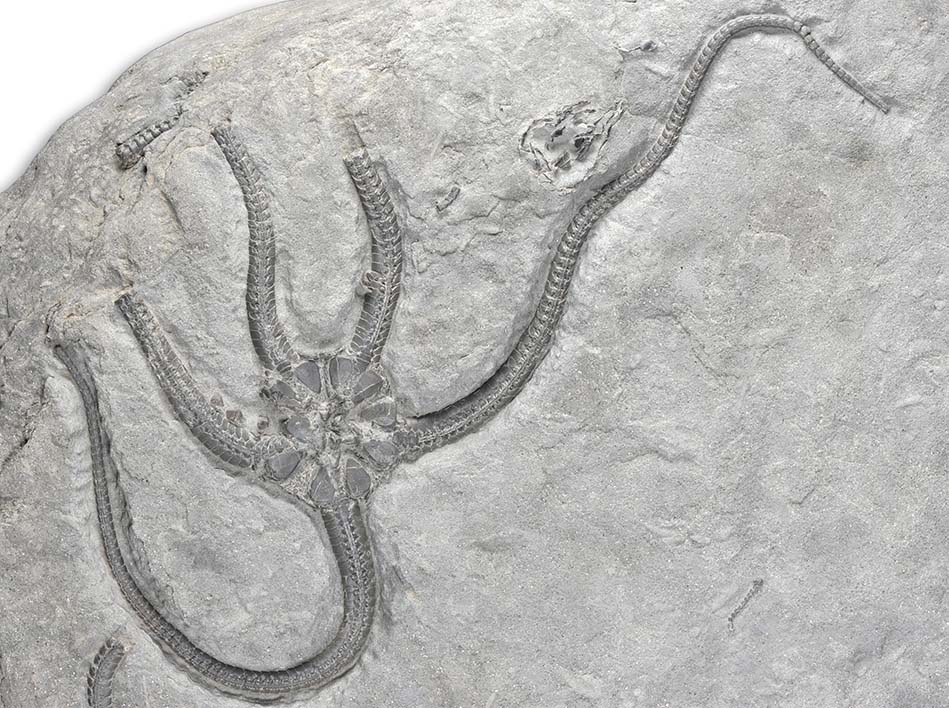
This is the most “common” brittle star from the Yorkshire coast and can reach considerable size – my largest specimen has an arm length of 6″ / 15 cm –
 “Yorkshire” seas also fed the brittle stars better 😉 – Dorset specimen of the same species are usually considerably smaller.
(In his 1964 revision of the brittle stars of the british jurassic (“Die Ophiuren des Englischen Jura”) HESS sums some davoei/margaritazus zone
Palaeocoma species  (P. egertoni, P. gaveyi) under one species P. milleri.)
Palaecoma milleri, 9 cm diameter

Palaecoma milleri, 9 cm diameter

This one was found in a fresh cliff fall on a block of softer sediment, sensitive to both drying out/cracking and falling apart when subjected to water.
Mike Marshall kindly dry-cut the block to size and stabilized it with some epoxy putty. Having thus safely arrived home, a couple of minutes of
air abrading brought the winding arms of the 9 cm diameter brittle star to light.
Palaecoma milleri, width of view = 24 cm

Palaecoma milleri, width of view = 24 cm

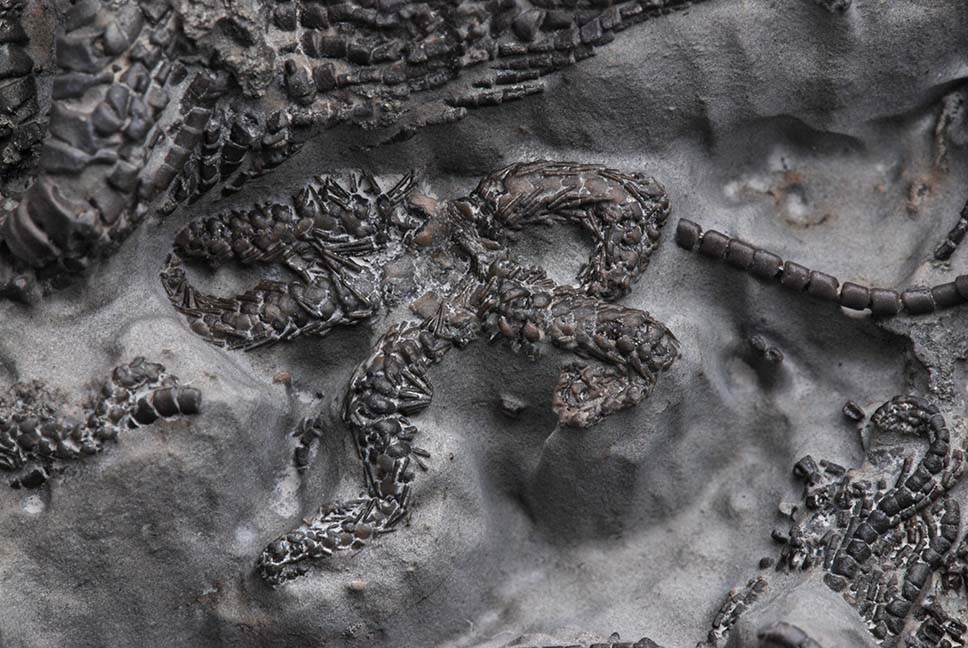
Palaecoma milleri, detail of center

Palaecoma milleri, detail of center

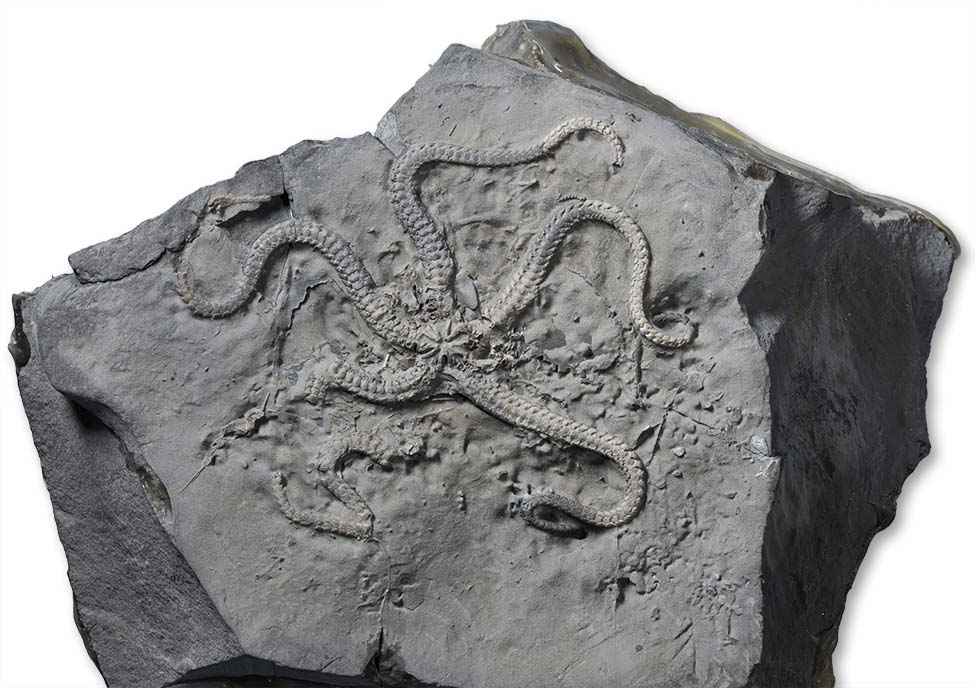
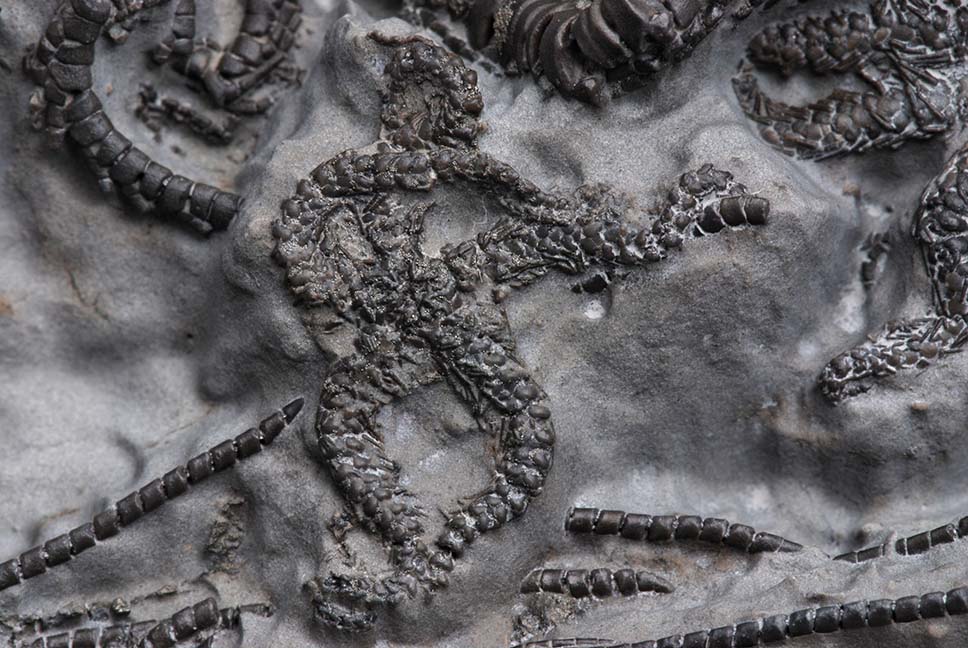
This is the said large specimen of Palaeocoma with the arm length of 15 cm (stretched out)  and an “arm span” (as embedded) of more than 22 cm.
The long arms sink deep into the thinly bedded sandstone with harder and softer layers, with the very tips less than 0.5 mm thick.
This fossil was prepped with alternating runs of air pen (for breaking through the harder layers) and air abrader (for the detailed work around the fossil).
There is a little curiosity at the missing arm (5 o´clock position) : There is a small very thin little arm seemingly coming out of the stump, it is tempting to assume
it could be a replacement arm (allthough it looks too small for it).
I have not seen any pictures of what replacement arms with brittle stars look like, I you have, please let me know…
Palaecoma milleri, block as found

Palaecoma milleri, block as found

Palaecoma milleri, width of block 22 cm

Palaecoma milleri, width of block 22 cm

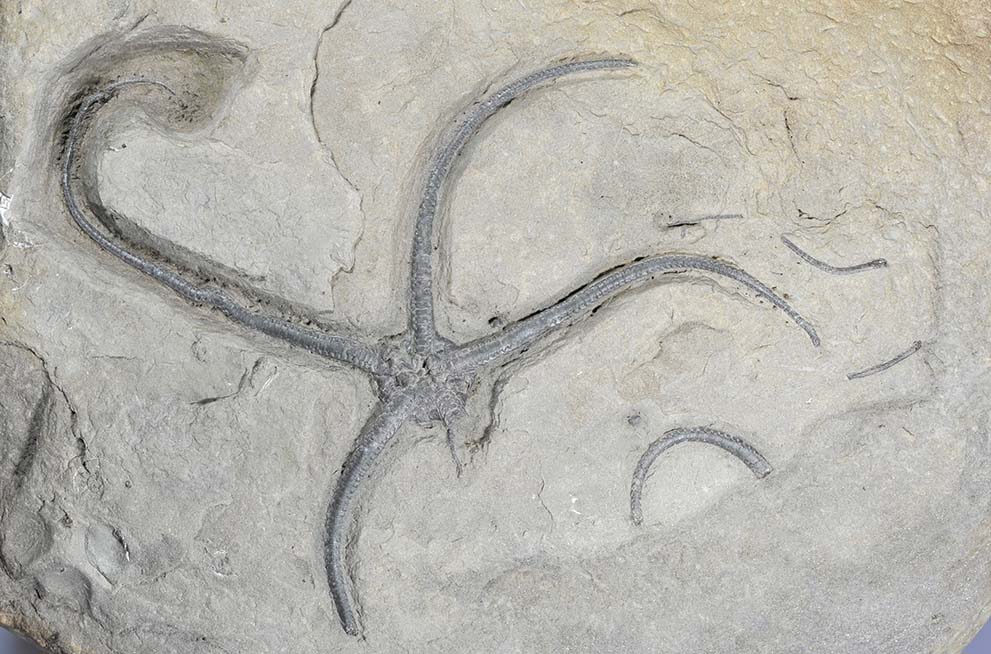
This starfish was found in March this year. It sits in a little block about 23 cm wide and was again prepped with air pen / air abrader.
The central disc is about 3.5 cm wide – the arms must have really been long on this one, if they had been preserved…
While prepping it I mistakenly thought the arm in the 4 o´clock position was connected to the end coming up in the 5 o´clock position – they are not,
as I had to notice when finding that the arm in the 5 o´clock position grew thinner while it was going down, instead of thicker to connect with the other arm…
The embedding rock seems to originate from beds around the oyster bed, showing some oysters as well.
Palaecoma milleri, width of view approx. 20 cm

Palaecoma milleri, width of view approx. 20 cm

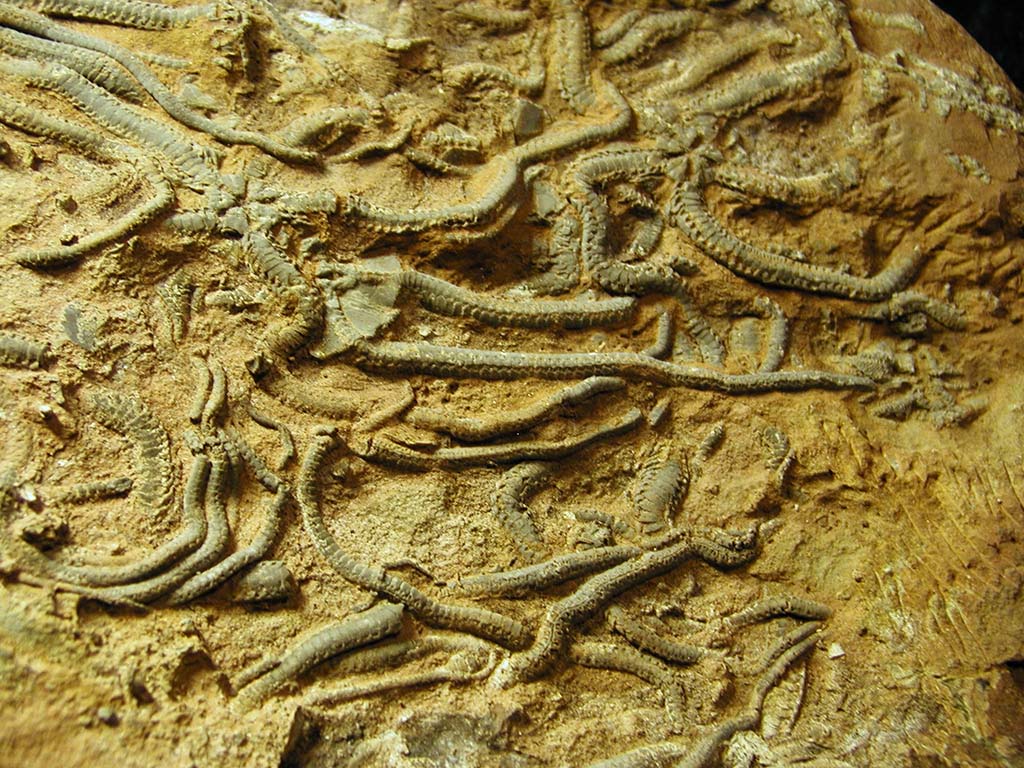
Recent brittle stars are known to gather where there is a large supply of nutrients, i.e. in the deep sea on decaying whale carcasses.
This picture shows a section of a larger slab that contains such a fossilized gathering – the reason for it is not known (I can safely say it wasn´t a whale, though…)
The slab was found in 1999 on the way back from a long day out at Hawsker (I told you, it always happens to me like this…);
as the tide came in already, it had to be left on the beach and was hidden in a secretively marked spot.
After a very restless night and anxiously awaiting the next low tide, the 40 kg slab was carried back to Robin Hoods Bay in a large Rucksack and carried up the hill in a fishermen´s box with the help of my friend Klaus…
The reddish covering sediment was found to be preppable using potassium hydroxide (KOH) pellets, and over the course of some months
it was treated in a large cement tub. It is now awaiting finishing touches in a big enough air abrading chamber (planned for 2013…)
The slab had an eroded Amaltheus stokesi on the back, so it must originate from the stokesi subzone.

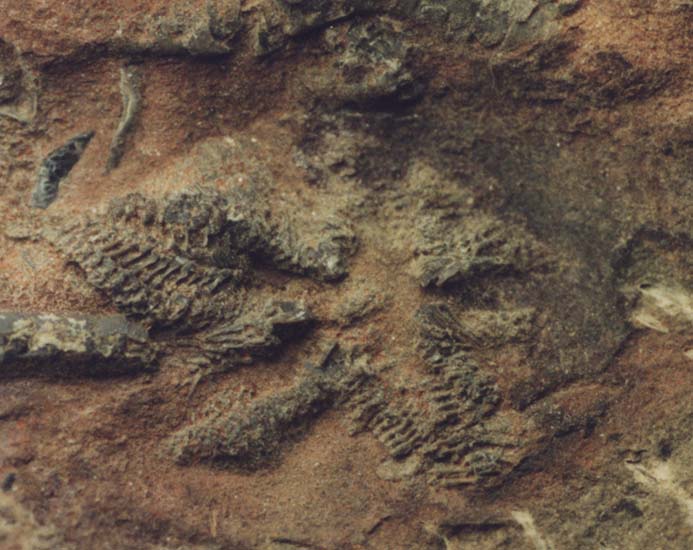
Tropidaster pectinatus FORBES, 1850
Tropidaster pectinatus, 4 cm wide

Tropidaster pectinatus, 4 cm wide

This small starfish sits on the same slab as the Palaeocoma specimen of the last picture. It is only relatively small (4 cm diameter) and very fragile.
While looking at some photographs of the slab some time ago, I notied a second Tropidaster specimen on the slab as well which I had not seen when looking at it with the “naked” eye…

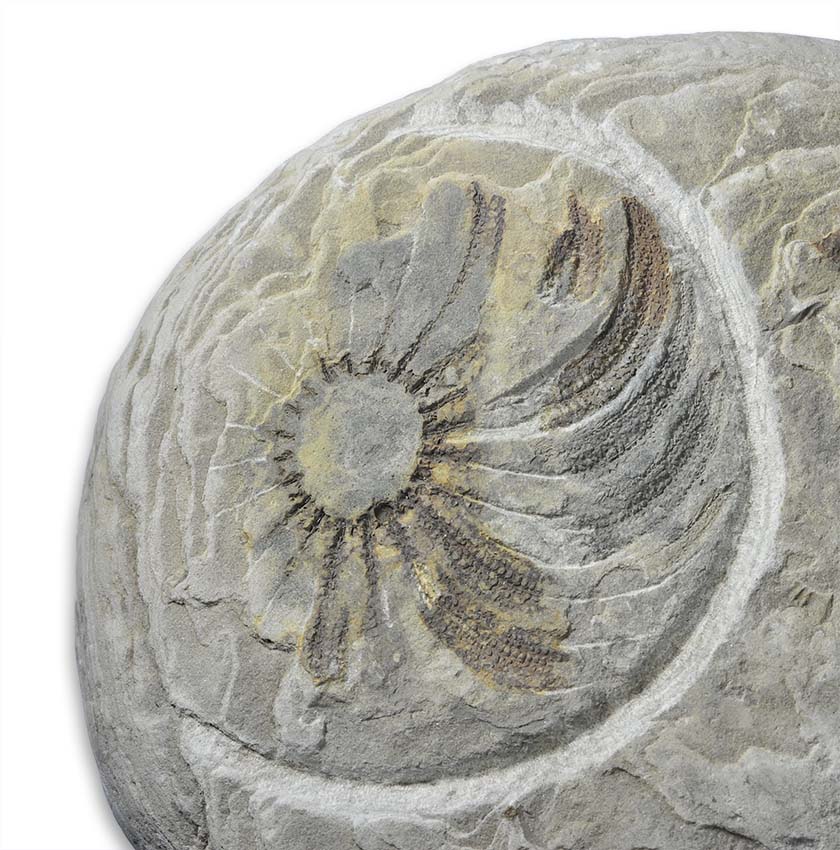
Luidia murchisoni (WILLIAMSON, 1836)
This is the elusive sun starfish. I have only ever found one specimen myself, but could not salvage it without risk (huge block, last day of the holiday…)
I notified a local collector who had it cut out of the block with a diamond still saw and had it prepped professionally ,it is now on public display in a shop in Robin Hoods Bay.
Luidia murchisoni in situ (center), to the right the snout of dear beach dog Lucy

Luidia murchisoni in situ (center), to the right the snout of dear beach dog Lucy

As a surrogate, here´s an eroded specimen I got off Mike Marshall :
Luidia murchisoni, 10 cm diameter

Luidia murchisoni, 10 cm diameter


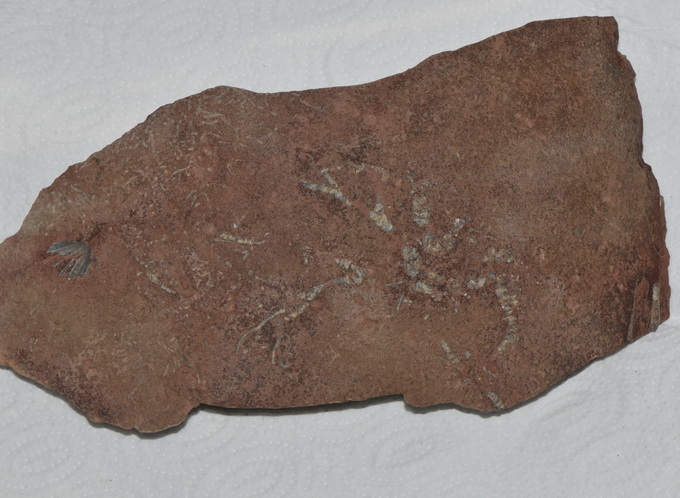
?Sinosura sp.
 
Bilder kl. brittle stars
The small brittle stars associated with the Hispidocrinus scalaris crinoid I showed you in the previous post are just too small to be identified – a little over 1 cm diameter.
I have tentatively put them towards Sinosura, since larger specimen of Sinosura have been found with these crinoids.
?Sinosura sp., 1 cm diameter

?Sinosura sp., 1 cm diameter

?Sinosura sp., 1 cm diameter

?Sinosura sp., 1 cm diameter

These tiny little brittle stars are preserved so life-like, with even some of the finest hairs still attached, truly a moment frozen in time.

Addendum November 25, 2012 :

I´ve recently had the opportunity to prep a beautifully preserved P. milleri which is, unlike all the other P. milleri shown here before (did you notice ?) not prepped in oral aspect (from the underside),
but in aboral aspect (like you would see it crawling around in and over the sediment). It is perfectly preserved and could be teased out of the relatively soft shale with low air abrader pressure in about 45 minutes.
Congratulations to the finder (D. Clark) and thanks again for letting me picture it here !

Brittle star Palaeocoma milleri, width approx. 20 cm, collection D. Clark

Brittle star Palaeocoma milleri, width approx. 20 cm, collection D. Clark

AndyS

A moment frozen in time, part I

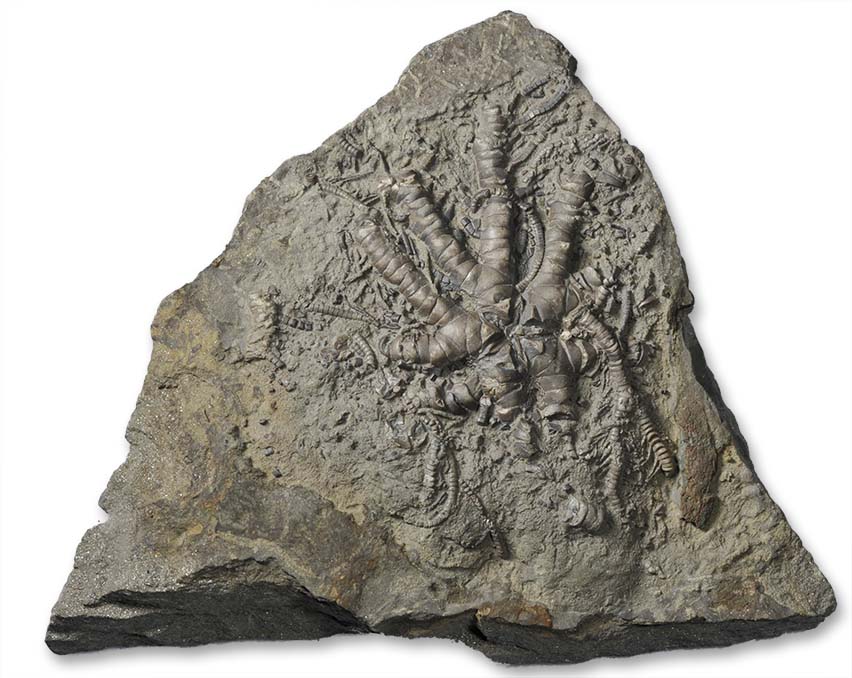
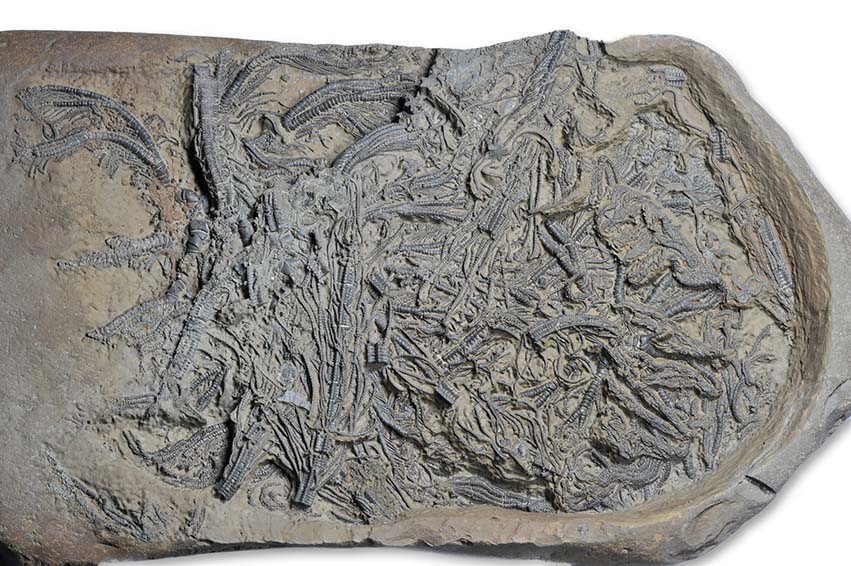
Hispidocrinus scalaris, showing crown from underside, width = 6 cm

Hispidocrinus scalaris, showing crown from underside, width = 6 cm

The title of this blog says it already : “…and other fossils”…, so now’s the time to introduce you to (for a change) my other fossil passion :
echinoderms, more specifically starfish and crinoids. It really came more as a by-product of hunting for ammonites, mostly when my rucksack was already full on the way back, tiredly stumbling across the large blocks while taking a different route across the boulder strewn beach on the way home. It also happens that I pick up rocks with crinoid or starfish content when I´m frustrated because there is nothing else (meaning decent ammonites) to find – almost as if you have to be in a certain state of mind to notice these fossils, when your attention is no longer focused on other fossils, similar to when you start hearing strange sounds in the dark night when your visual sense becomes useless…
This of course has to do something with the difference in the “search mode” when your looking for ammonites vs. starfish / crinoids : With ammonites, on the Yorkshire coast you´re mostly looking for concretions, while with starfish / crinoids you´re carefully surveying the surfaces of (potentially large) fallen blocks – this also explains the of course totally unobjective observation that I tend to find crinoids / starfish mostly on the return from a location : I tend to use the easier way across the large blocks, and it´s usually later in the day, which makes for nice low angled light and better chances to see the delicate fossils…

For intact, articulated preservation, fragile animals like starfish and crinoids need fast embedding, because decay sets in quickly, e.g. for brittle stars, already after half a day. Brittle stars cannot free themselves when they´re suddenly covered by more than 5 cm of sediment – most of the brittle star fossils on the Yorkshire coast have probably been created by rapid burial in sediment, like a sediment avalanche – truly a moment frozen in time.
Some of the crinoids that can be found articulated are thought to have been deposited in scour troughs.
In Yorkshire, subzones where the liklihood of finding articulated crinoids or starfish are greatest are in my experience :
  • taylori
  • obtusum
  • oxynotum
  • maculatum
  • figulinum
  • stokesi
  • tenuicostatum
  • falciferum
Still – “greatest liklihood” does not mean they’re common fossils, finding an articulated crinoid or starfish remains a great rarity. The falciferum zone is the odd one out here, since benthic conditions were mostly anoxic during this time (very little oxygen at the bottom) – so there are no starfish, and crinoids that occur were usually attached to drifting logs at the surface of the sea.
So the crinoids and starfish I’m showing you here now really represent more than 20 years collecting – please do not get the impression that fossils like these can be found on a day’s trip to the coast – unless of course you are extremely lucky !
Some of these have been purchased, some reside in collections other than my own and are pictured here by kind permission of their respective owners – you will see that in the notes for the fossils.
Generally preparation of starfish and crinoids most of the time is a difficult and time consuming task.
Their delicate structures are usually firmly embedded in the sediments and can only be retrieved if there is a difference between the surrounding matrix and the fossils which are usually preserved as calcite or pyrite. This difference can either be a difference in hardness, when the fossils are harder than the matrix – these fossils can be prepared mechanically, i.e. needles, airpens or – you might have guessed – air abrader. If there is no difference in hardness, there can also be the option of chemical preparation – when the fossils are more resistant to certain chemicals like acids or alkaline solutions than the matrix. In rare cases, the environment (or rather what we put into it – sulphur dioxide / nitrogen dioxide from burning fossil fuels reacting with water to form sulfurous/sulfuric resp. nitric/nitrous acid) or certain naturally occuring humic acids can do the job for us – but that is only really the exception.
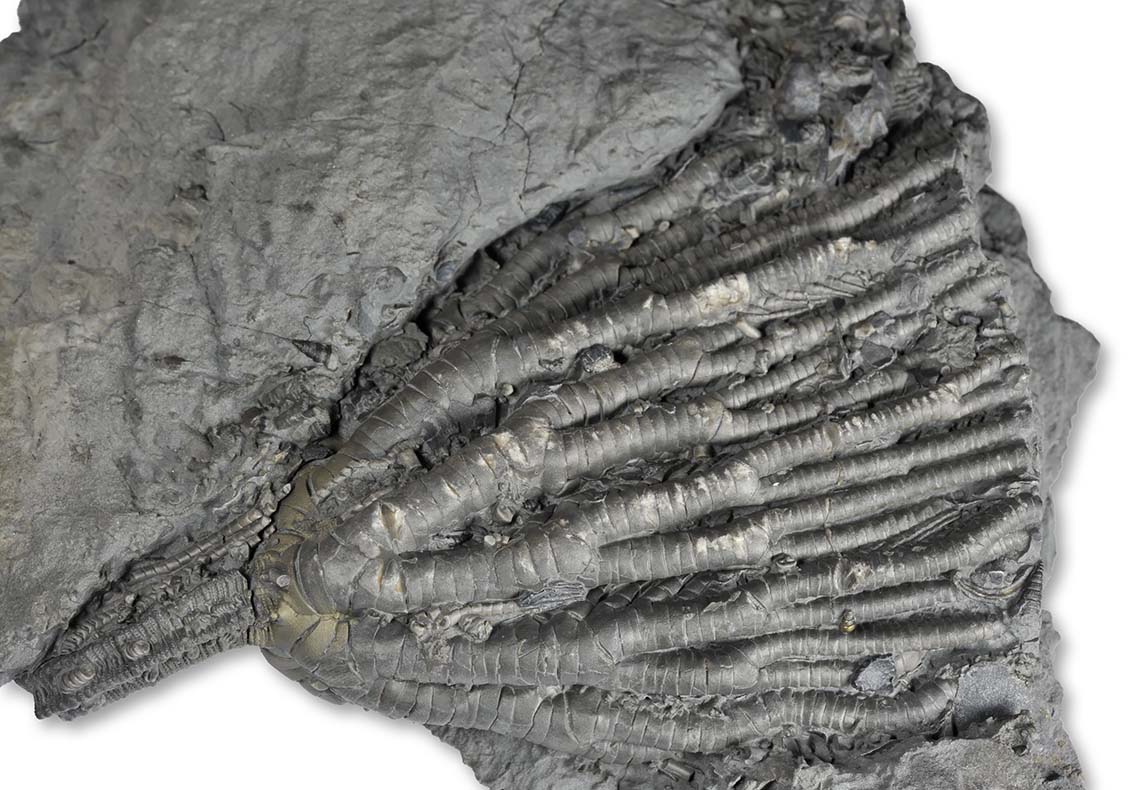
This first part will be about the Yorkshire liassic crinoids, so without much further ado, here they are :

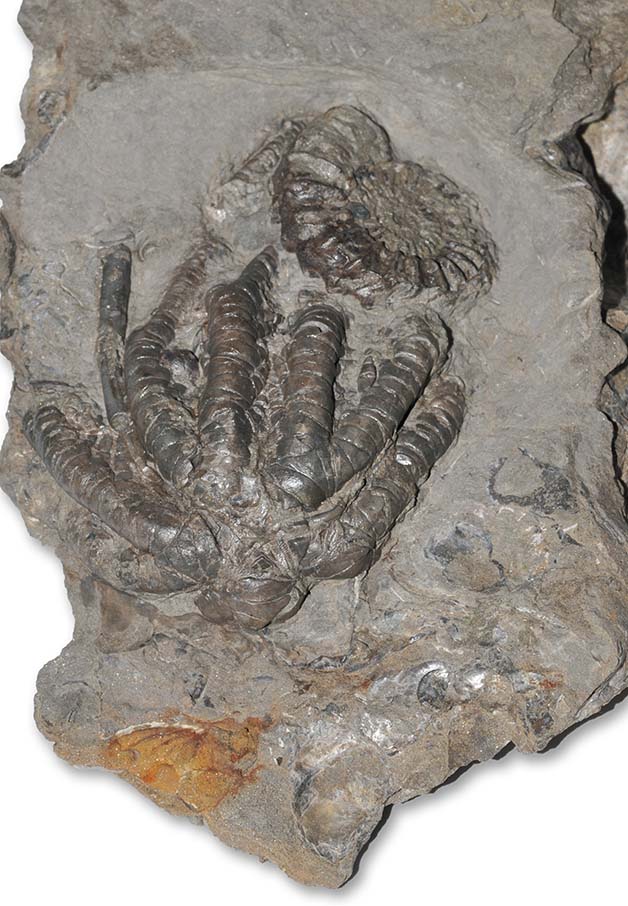
Eocomatula interbrachiatus (BLAKE, 1876)
Eocomatula interbrachiatus, width = 13 cm

Eocomatula interbrachiatus, width = 13 cm

This is one of the first more or less articulated crinoid crowns I´ve found on the Yorkshire coast.
Eocomatula interbrachiatus with Oistoceras ammonite

Eocomatula interbrachiatus with Oistoceras ammonite

Another specimen found by Keeley and Adrian which they kindly let me prep and photograph shows the crown in association
with an Oistoceras ammonite, which places the crinoid in the figulinum subzone of the lower Pliensbachian.
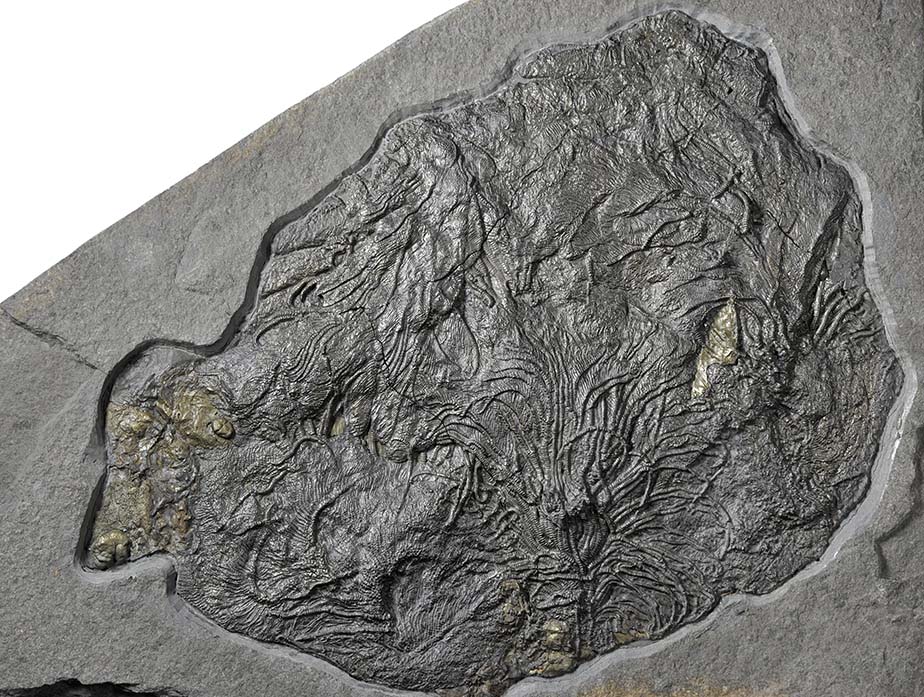
Eocomatula interbrachiatus as found, width = 24 cm

Eocomatula interbrachiatus as found, width = 24 cm

Eocomatula interbrachiatus prepared, height of detail = 12 cm

Eocomatula interbrachiatus prepared, height of detail = 12 cm

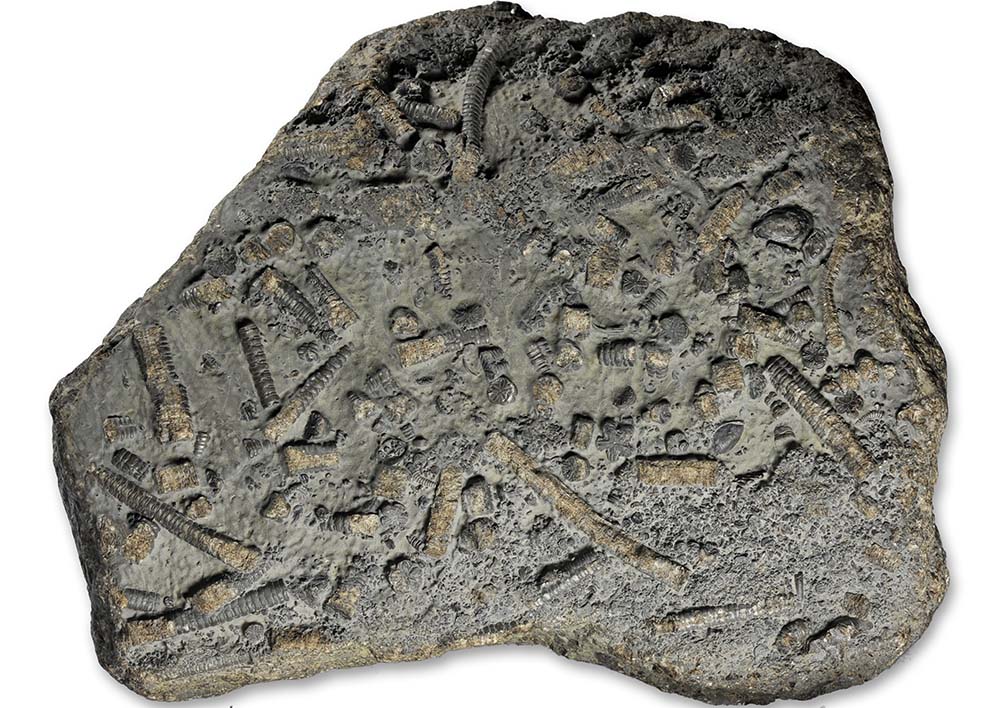
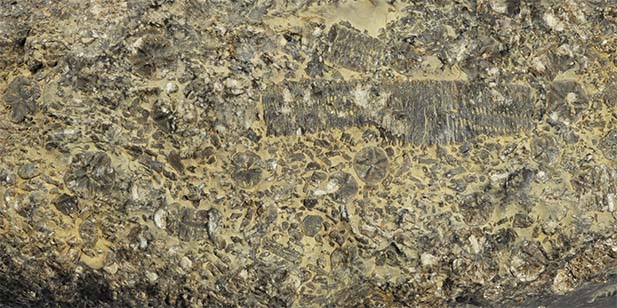
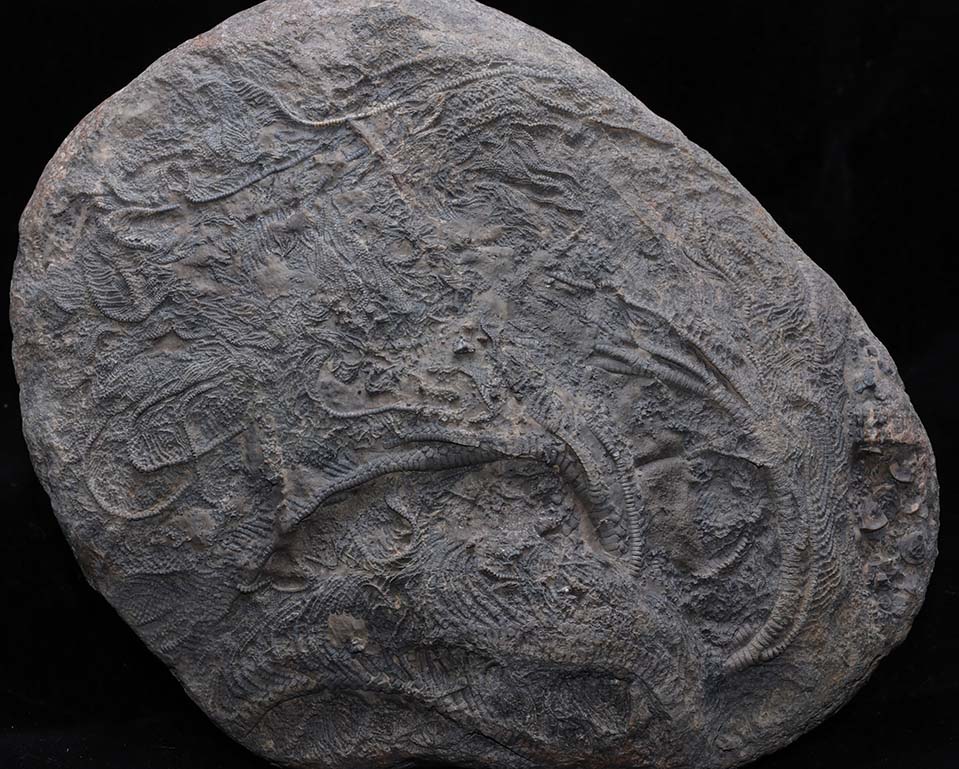
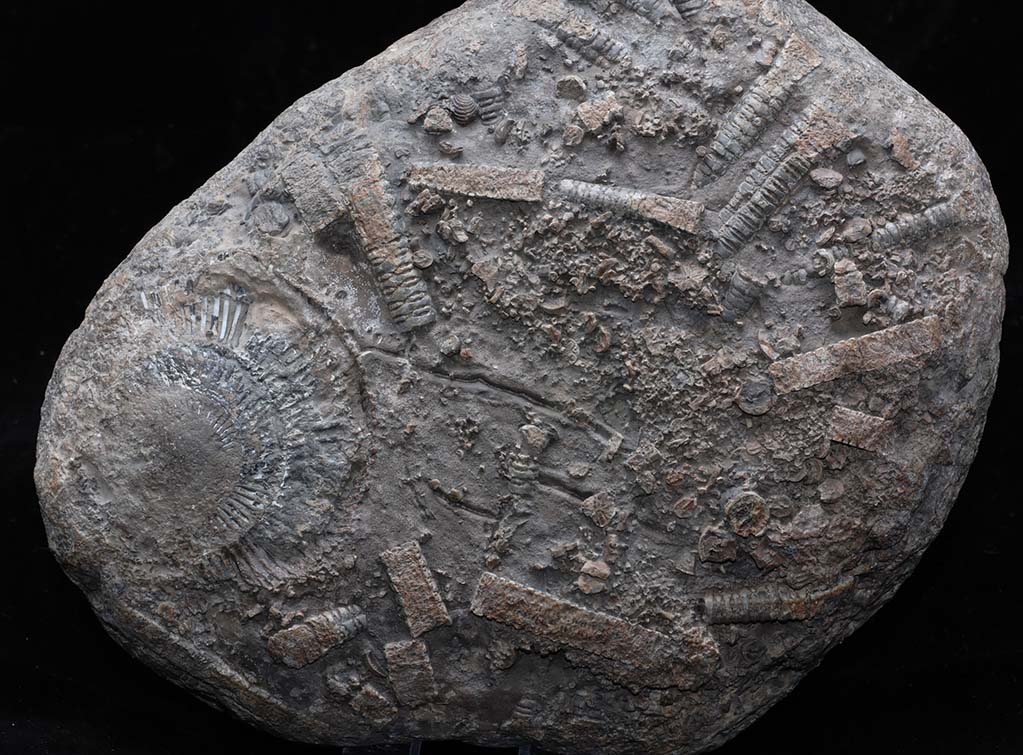
These crinoids only have a very short stem (only a few segments), which I´ve never found preserved so far.

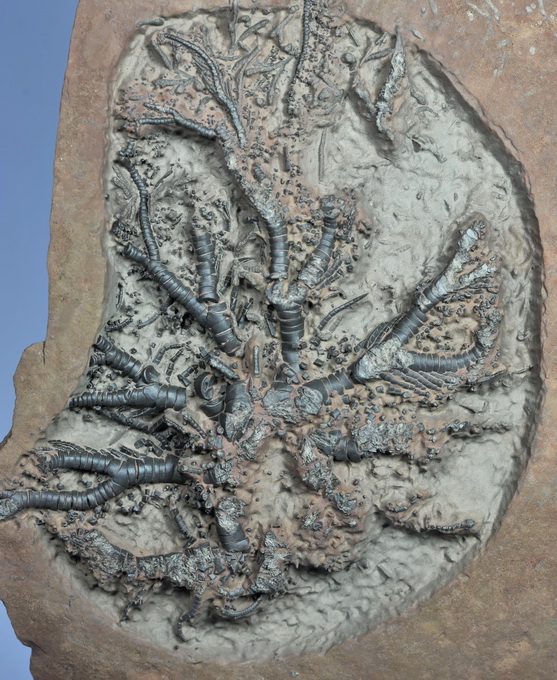
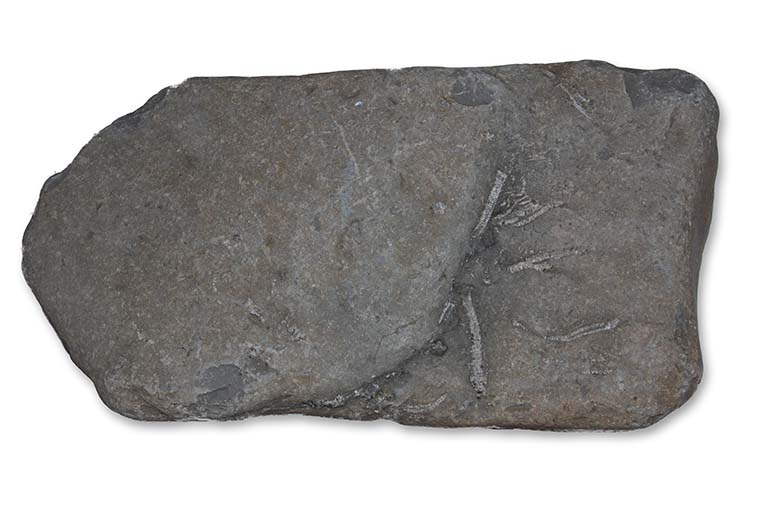
Hispidocrinus scalaris (GOLDFUSS, 1831)

Hispidocrinus scalaris, slab as found, width = 30 cm

Hispidocrinus scalaris, slab as found, width = 30 cm

Hispidocrinus scalaris, prepped, width = 22 cm

Hispidocrinus scalaris, prepped, width = 22 cm

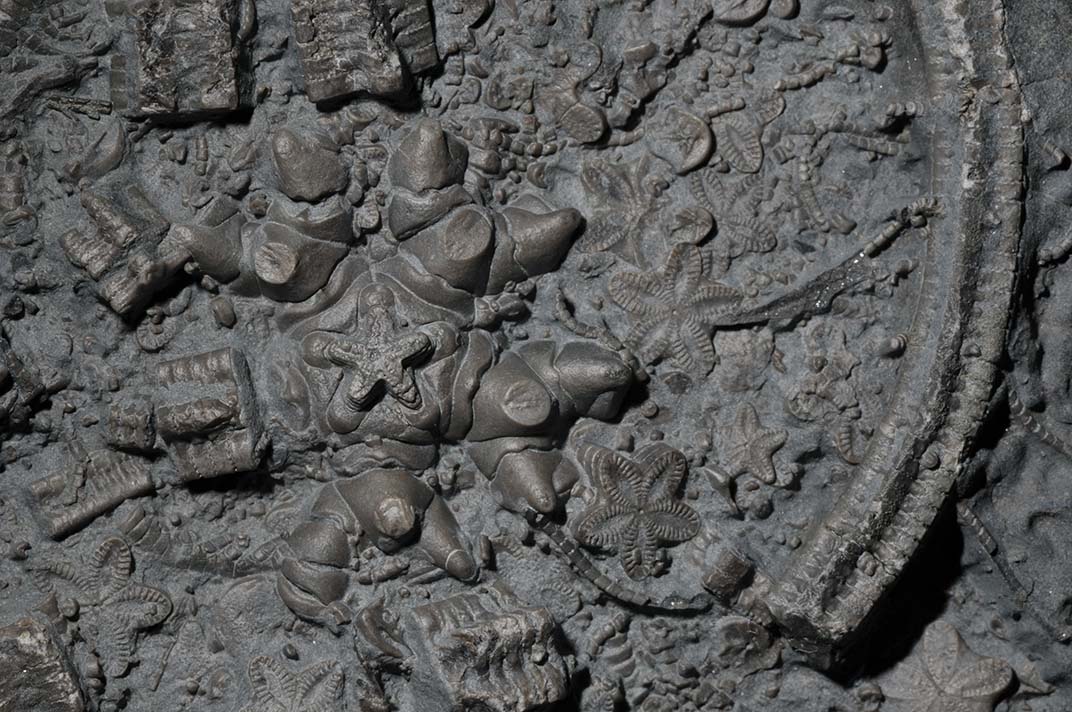
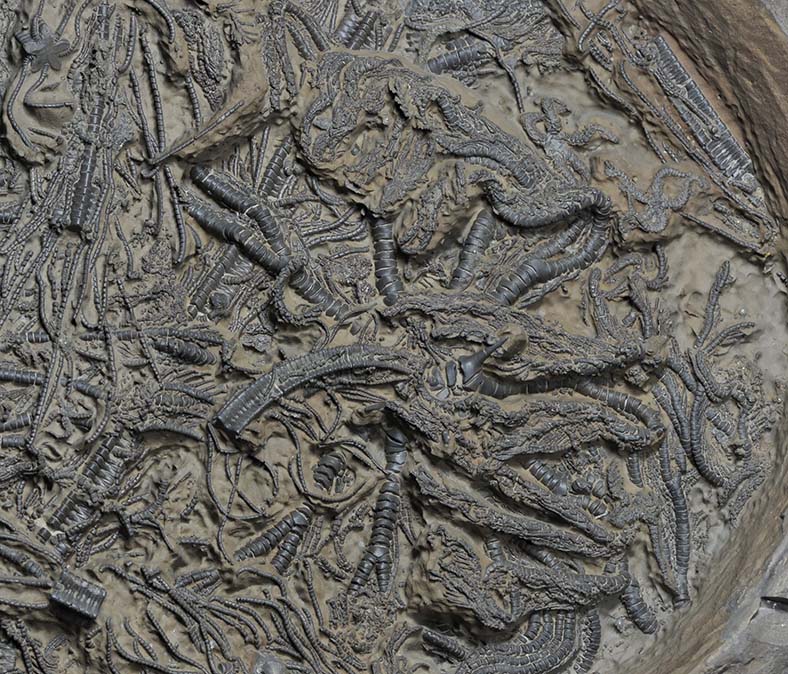
Hispidocrinus scalaris, detail with crown and small brittle stars

Hispidocrinus scalaris, detail with crown and small brittle stars

This is the crinoid specimen that really got me seriously started to try and collect all the known Yorkshire liassic crinoids. It was found on a very warm summers day in July 2007 when I was out collecting with friends and had found nothing at all up to this point – I picked up this 30 x 20 cm slab with some faint crinoid traces and put it in my bag so it at least felt like I had found something… At home I started prepping it with an air abrader (iron powder) and followed the visible arms of the crinoid into the rock. To my amazement more and more stems and arms appeared until after about 60 hours of prep work almost the whole slab showed a deathbed of multiple Hispidocrinus crinoids in an early state of decay. When looking carefully at the slab, you can even notice tiny little brittlestars that have either fed on the decaying crinoid or had used the crinoid to achieve a higher up filter feeding position or even benefit from the crinoids´excretions and got embedded with it.
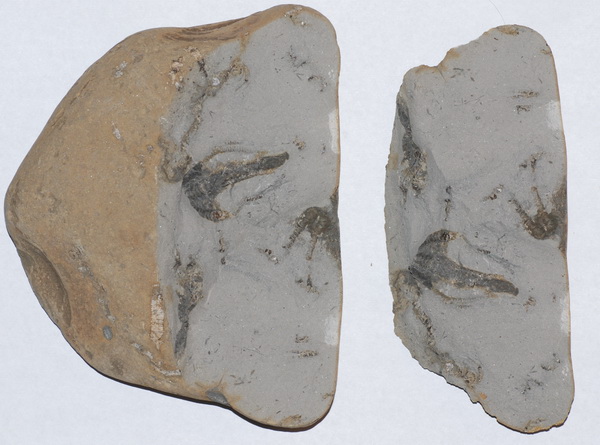
Hispidocrinus scalaris, slab as found, width = 15 cm

Hispidocrinus scalaris, slab as found, width = 15 cm

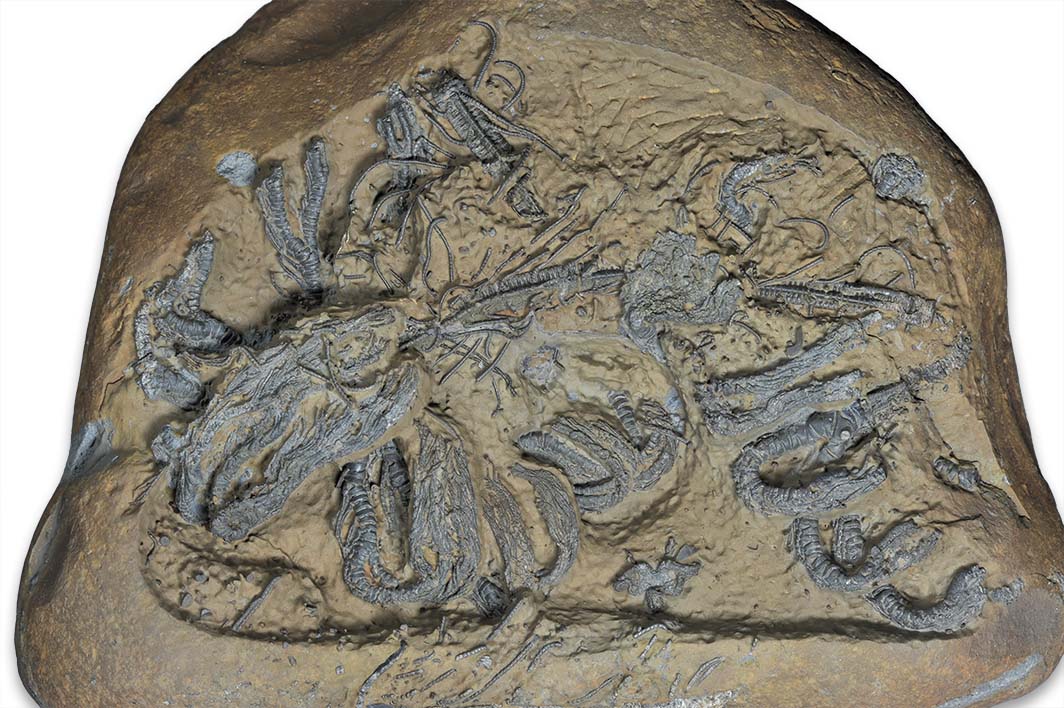
Hispidocrinus scalaris, prepped

Hispidocrinus scalaris, prepped

Another specimen was found in a small 12 x 15 cm which was initially split after finding it since the outside did only show very faint crinoid traces.
As the split showed a crinoid inside, it was glued back together again and air abraded in about 20 hours.
It shows two crowns, with the larger one having all it´s arms folded unto itself. And of course there´s another small brittlestar (5 o´clock position at the bottom) …

Seirocrinus subangularis (MILLER, 1821)

Seirocrinus subangularis lens with ossicles, width = 18 cm

Seirocrinus subangularis lens with ossicles, width = 18 cm

Seirocrinus subangularis, detail of lens cross section

Seirocrinus subangularis, detail of lens cross section

This lens comes from the tenuicostatum zone of the lower Toarcian and shows remains of Seirocrinus subangularis and was prepared using an air abrader.
On the inside, this lens consists of almost 100% of crinoid ossicles amalgamated into a solid calcitic core.
Seirocrinus subangularis, crown on lens, width = 15 cm

Seirocrinus subangularis, crown on lens, width = 15 cm

Other side of lens with ammonite Dactylioceras tenuicostatum, width = 15 cm

Other side of lens with ammonite Dactylioceras tenuicostatum, width = 15 cm

Another specimen showing a beautiful crown of Seirocrinus was found by my friend Klaus, who paintakingly prepared this
specimen using potassium hydroxide pellets over the course of a couple of weeks, the final touchers were again made with an air abrader.
This specimen also handily shows a Dactylioceras tenuicostatum ammonite on the back of the nodule which tremendously helps dating it !

Isocrinus robustus (WRIGHT, 1858)

Isocrinus robustus, oxynotum subzone, 9 cm

Isocrinus robustus, oxynotum subzone, 9 cm

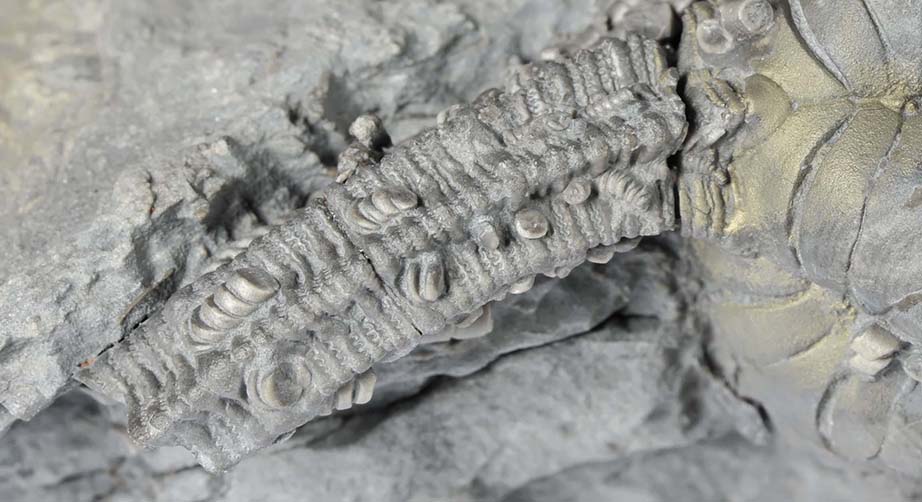
Isocrinus robustus, stem detail

Isocrinus robustus, stem detail

This crinoid was a surprise find on my birthday this year ! It sat neatly on the edge of a fallen rock most likely of oxynotum zone age and when found I had thought it was a Hispidocrinus in an unusual, almost 3D preservation. The surprise came at home when I prepped it using the air abrader and noticed that it did not have the characteristic spines of a Hispidocrinus. Dr Mike Simms kindly identified it as an early Isocrinus robustus.

Pentacrinites dichotomus (MCCOY, 1848)

Pentacrinites dichotomus, width of colony 20 cm

Pentacrinites dichotomus, width of colony 20 cm

This beautiful colony of Pentacrinites dichotomus from the Jet Rock in the Whitby area was found by Mike Marshall who prepared it by stabilizing the exposed weathered side of the thin fragile slab with a layer of epoxy putty and prepared it from the other side using an air abrader. The colony is nicely set into a slab of top jet dogger to stabilize it.

Jet with juvenile ?Pentacrinites

Small juvenile ?Pentacrinites crinoid on jet, width = 6 cm

Small juvenile ?Pentacrinites crinoid on jet, width = 6 cm

This beautiful section of a piece of solid black jet with a juvenile crinoid anchored to it was kindly given to me by a friend. It gives more evidence to the observation that some crinoids have used floating logs for anchoring themselves to during their lifetime and filter fed in the surface waters.

Balanocrinus gracilis (CHARLESWORTH, 1847)

Balanocrinus gracilis, ossicles with juvenile Amaltheus (1 cm diameter) ammonites

Balanocrinus gracilis, ossicles with juvenile Amaltheus (1 cm diameter) ammonites

Have you spotted the crinoid remains on this picture ? – don´t get distracted by the associated juvenile (~1 cm ) Amaltheus ammonites !
Of this one I yet have to find a crown. Disarticulated ossicles are no rarity in the stokesi and maculatum subzones, but sometimes extraction can be impossible.
The second part describing the starfish will be published next.
AndyS
Gagaticeras or “…ribs like rows of jet beads”

Gagaticeras cf. finitimum, 5 cm

Gagaticeras cf. finitimum, 5 cm

Gagaticeras in my mind somehow is more of a coincidental find, casually picked up on the way somewhere else – which of course does not do this fine ammonite genus any justice.Around Robin Hoods Bay it has been reasonably common in the last couple of years (though I´ve noticed a drop in the last 2-3 years), I´ve mostly found them almost eroded free or in nodules that were thrown onto the beach during storms, the beds they occur in are very often sanded over – since most of the coast is a SSSI you´re not really supposed to do any large-scale digging in them anyway.

As you start collecting Gagaticeras ammonites, at first sight they mostly look the same (especially in the field), you put them in the drawer as “Gagaticeras gagateum”.
You collect some more, clean them up as good as you can (they´re not easy to prep well because of their delicate inner whorls), put them in the drawer.

After a while, when looking into the drawer at what you´ve accumulated over the years, you begin to wonder and see little differences, a more pronounced keel here, rursiradiate ribbing there, differences in rib density etc.  A while ago after I acquired an air abrader, a re-preparation helped to work out some more details in the inner whorls.

When starting to document the Gagaticeras species for the book, I was really surprised (and pleased of course 🙂 )to see that I do actually have the four species that HOWARTH mentions in his Robin Hoods Bay / Bairstow collection paper !  I must admit though that it did take me some time to find the most characteristic specimen
for each species, there seem to be many intermediates (like the one pictured above, which has a very high rib density but almost no keel and no rib angle at the venter), which all the authors that have recently written about them (HOWARTH 2002, SCHLEGELMILCH 1976, GETTY 1973,…) have taken as a sign that intra-species variation may make it appear that there are more species than there really are – but that´s always the problem when you do not have a large enough collection to do statistical tests.

Here they are :

Gagaticeras gagateum (YOUNG & BIRD, 1828)


Gagaticeras gagateum, 3.5 cm, with aperture & keel view

Gagaticeras gagateum, 3.5 cm, with aperture & keel view

G. gagateum has a rib density of 20 – 24 ribs / whorl, but there is only the slightest hint of a keel on the venter, sometimes completely invisible.
Whorl section is more compressed than on the other species, i.e. the whorl is thicker than high.

Gagaticeras neglectum (SIMPSON, 1855)


Gagaticeras neglectum, 4 cm

Gagaticeras neglectum, 4 cm

Gagaticeras neglectum, 4 cm, keel view

Gagaticeras neglectum, 4 cm, keel view

G. neglectum has a rib density of about 20 ribs / whorl, but there is a (sometimes strong) keel on the venter. Whorl section compare to G. gagateum
is less depressed, almost round. The expression of the keel seems to be very variable.

Gagaticeras finitimum (BLAKE, 1876)

Gagaticeras finitimum, 3.7 cm, with aperture & keel view

Gagaticeras finitimum, 3.7 cm, with aperture & keel view

G. finitimum has the highest rib density (between 24 and 28 ribs per whorl) and the ribs meet at an angle at the venter.
Similarly to G. neglectum, there is a keel on the venter.

Gagaticeras exortum (SIMPSON, 1855)

Gagaticeras exortum, 3 cm, with keel with

Gagaticeras exortum, 3 cm, with keel with

G. exortum is the easiest to identify : Ribs are quite rursiradiate (leaning backwards), there is just a hint of a keel.
If my collection were considered representative, it would be the rarest species of the four. Rib density on the figured specimen is
23 ribs / whorl at 30 mm diameter, another specimen I´ve seen has 26 ribs/whorl at 50 mm diameter.

In case you´re wondering what this all has to do with jet beads ?
Well, “gagateus” is the greek name for jet and the citation in this post´s title is from YOUNG & BIRD´s original 1828 description of “Ammonites gagateus”
and simply refers to similarity of the black whorls with jet beads…

AndyS