Merry and Happy and A prep project for the days inbetween…

Merry and Happy !

Merry and Happy !

I wish you a Merry Christmas and a Happy New Year…

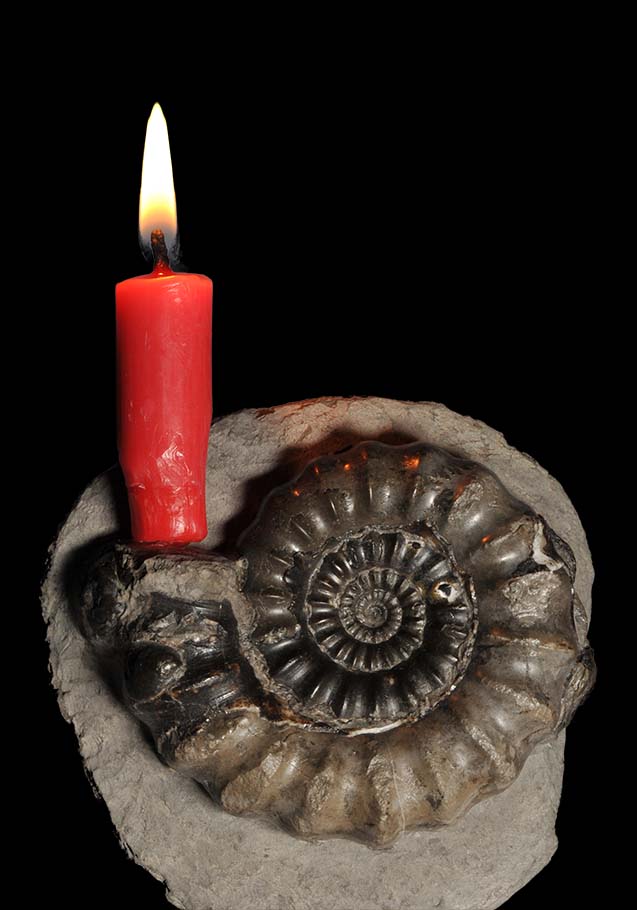
For the days inbetween, I´ve picked myself a prep project that is also leading to the topic of my next post,
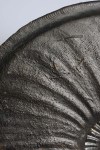
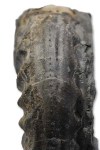
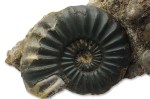
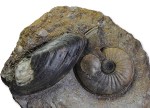
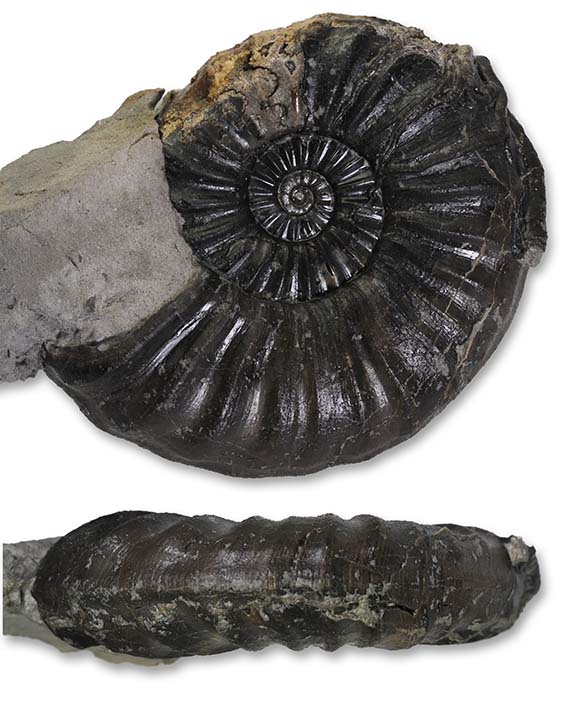
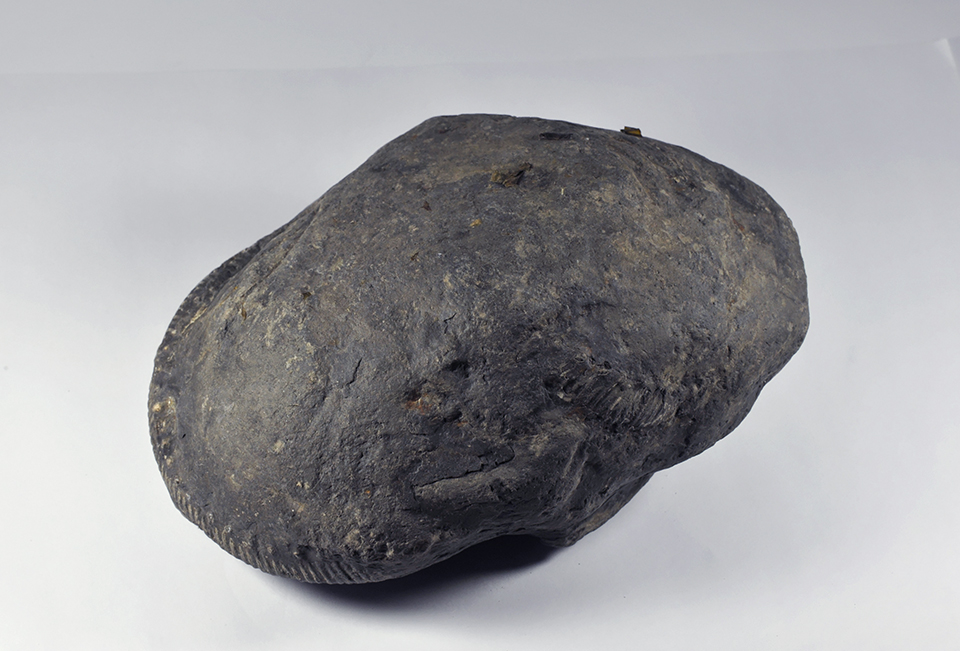
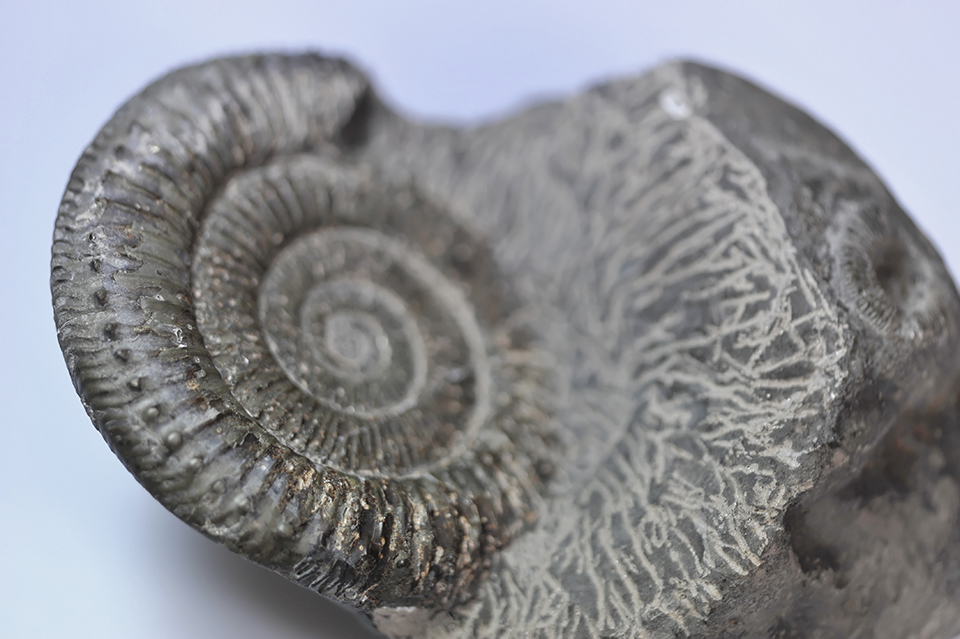
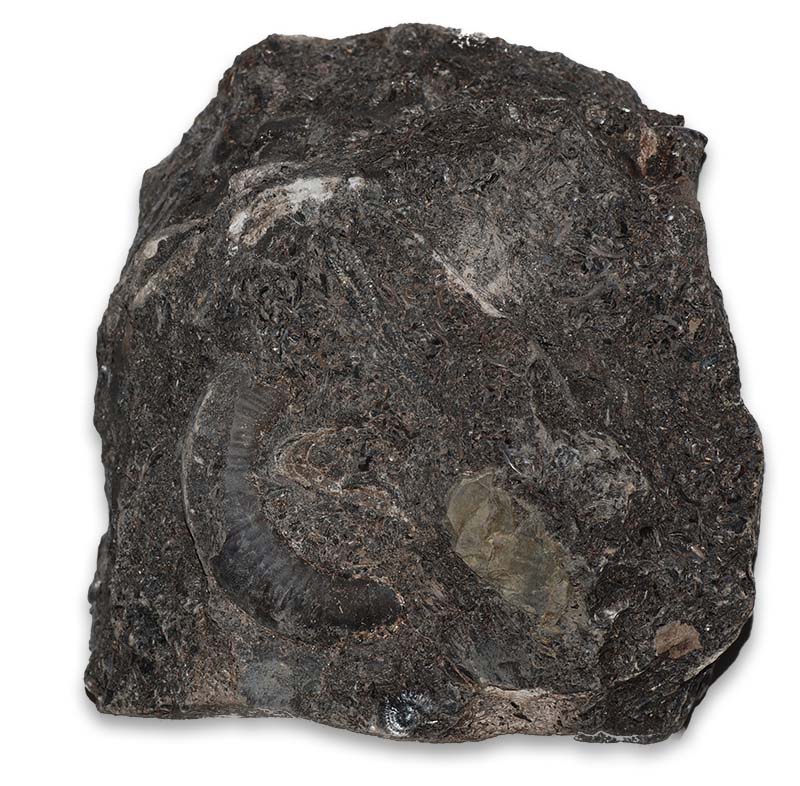
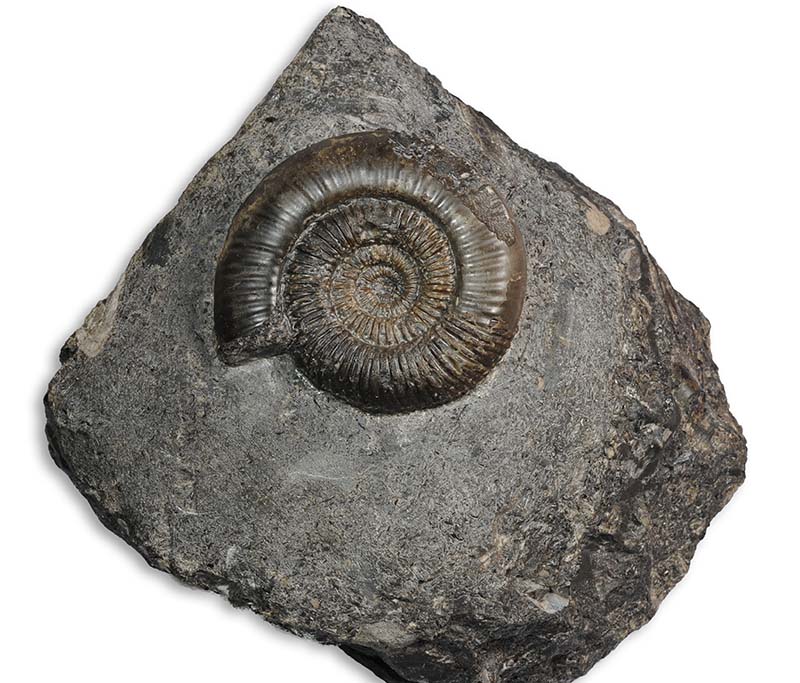
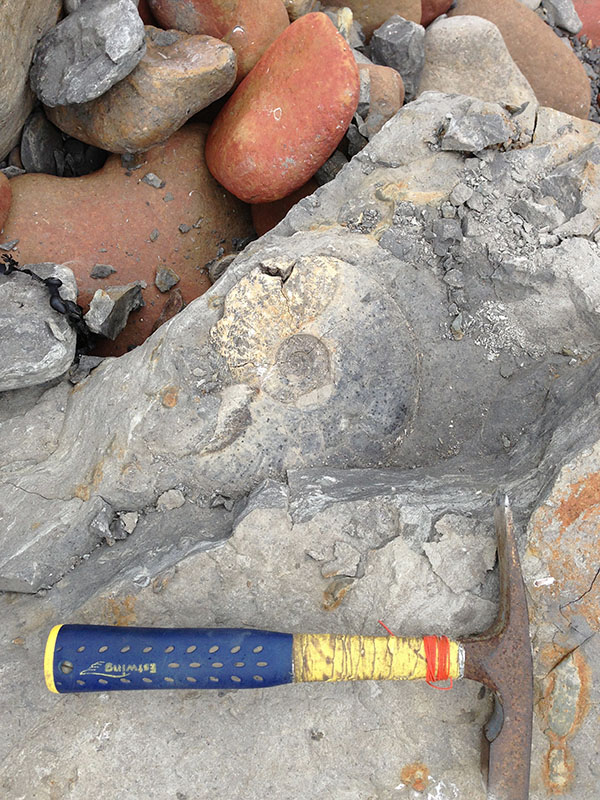
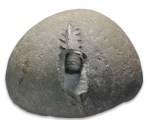
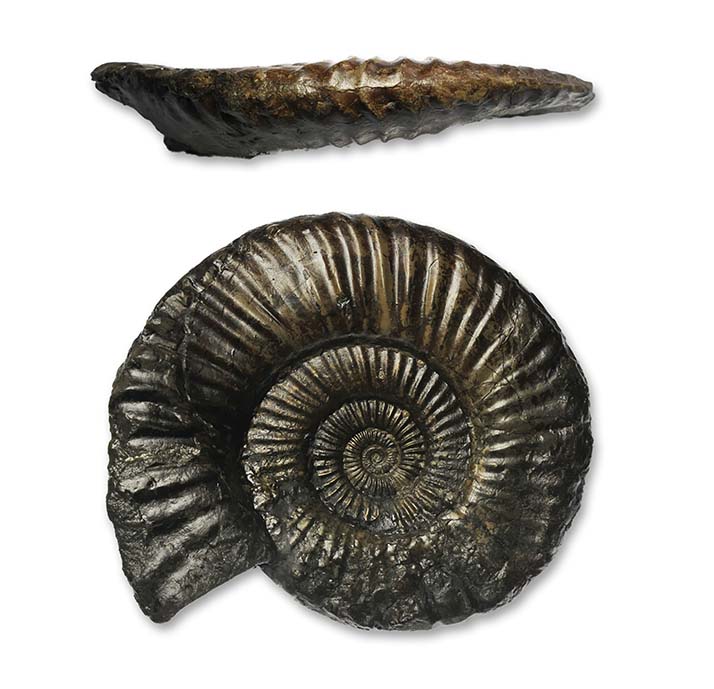
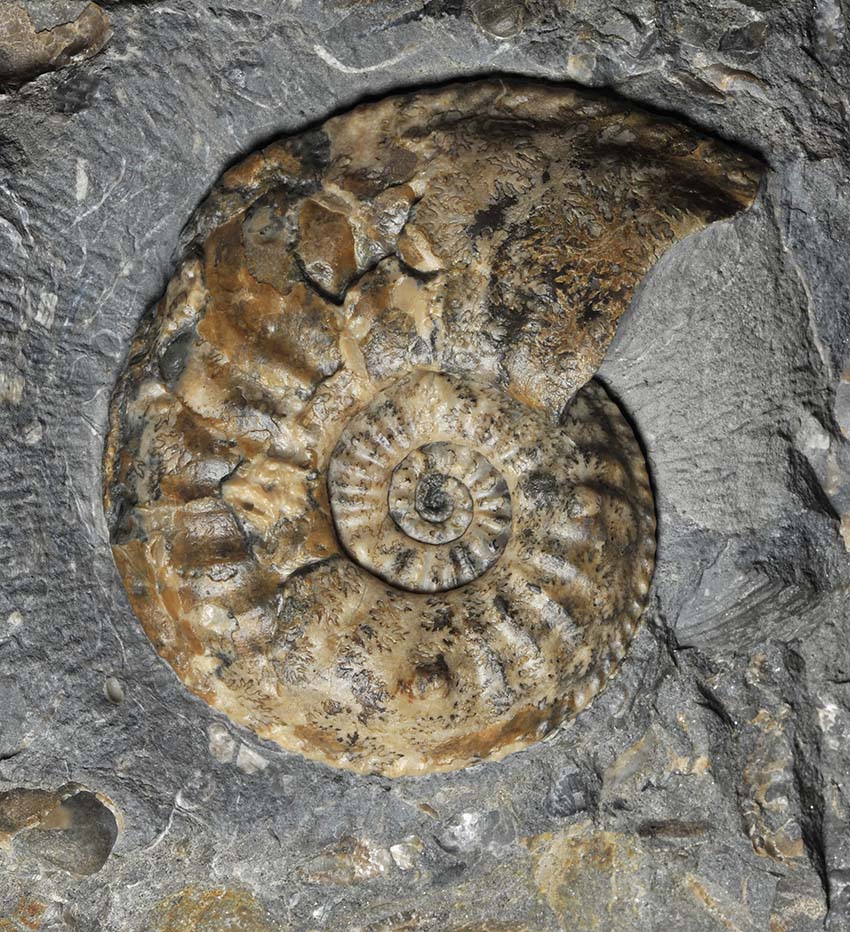
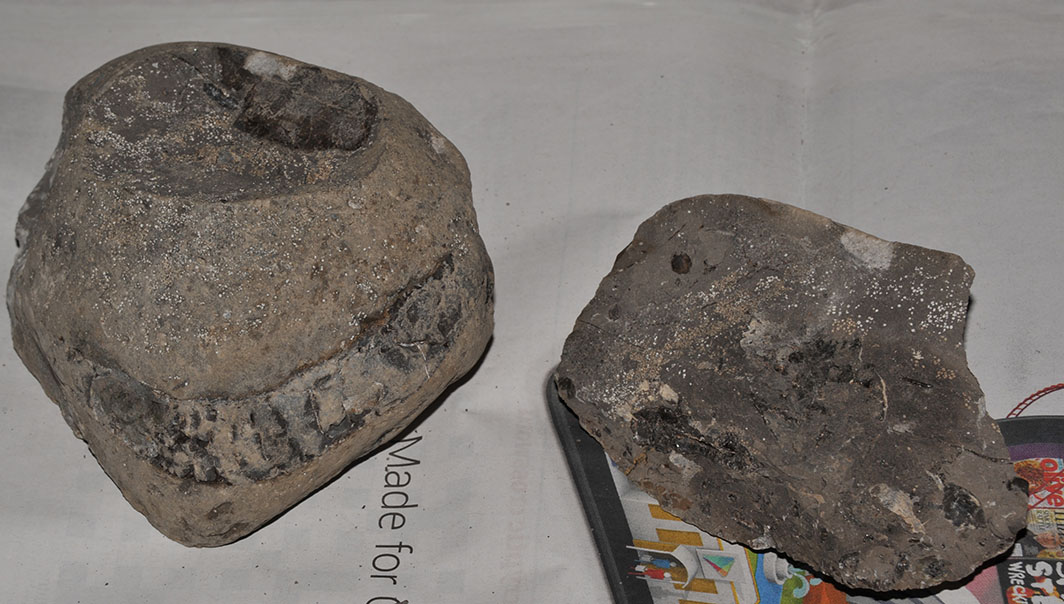
it is an Alums Shale nodule with a large 9 cm Peronoceras turriculatum and another smaller Peronoceras, possibly P. subarmatum.

Alum shale nodule with 2 Peronoceras, found summer 2013

Alum shale nodule with 2 Peronoceras, found summer 2013

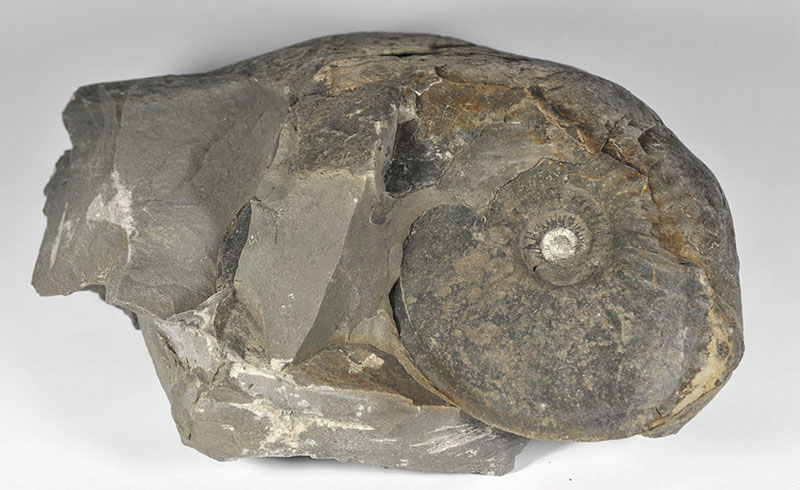
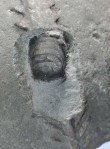
Unsharp picture (just teasing !) of a 9 cm Peronoceras, half prepped (I just could not wait...)

Unsharp picture (just teasing !) of a 9 cm Peronoceras, half prepped (I just could not wait…)

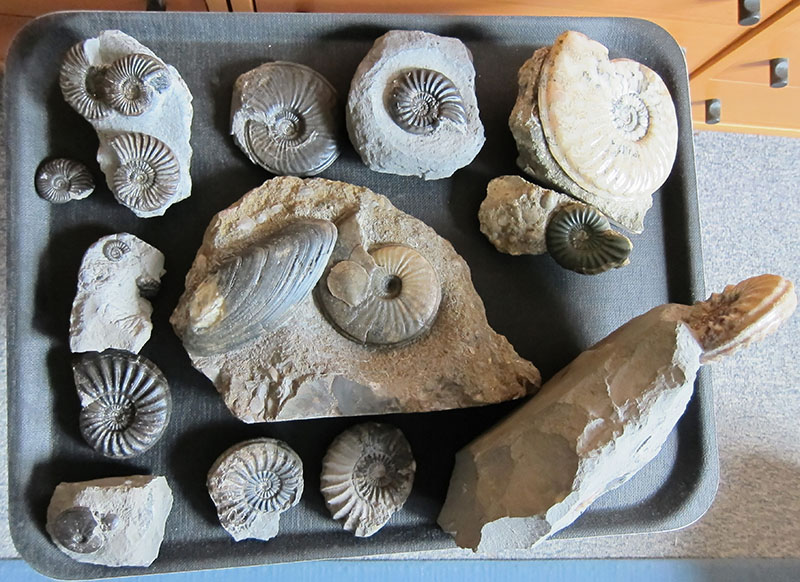
Looking through my collection, I´ve also found some more Peronoceras specimen that need a re-prep to make them presentable,
so you´ll see the next post some time shortly before or after the new year…

Until then, have a great time and be safe.

AndyS

The Whitby Ammonite or a Whole lot of variation…

2 large D. commune adult specimen - both 10 cm - as large as they come !

2 large D. commune adult specimen – both 10 cm – as large as they come !

If there is one ammonite genus that is typical for the Yorkshire coast, more specifically for the coast around Whitby,
it has to be Dactylioceras. Do a search on UK ebay for “Whitby ammonite” and what you get is at least 50 % Dactylioceras, in natural form or sliced and polished…

The Whitby Town coat of arms (fuimus et sumus – we have been and we are – quite fitting)  bears 3 Ammonites, most likely Dactylioceras, with snake heads attached to commemorate the legend of abbess Hilda (see also link).

This all of course is due to its abundance on this stretch of coast, when walking on a beach where the cliff exposes the upper toarcian beds of the lias,
there is almost no way you cannot find a Dactylioceras (fragment), if you keep your eyes open…

A very worn pebble with a Dactylioceras sp. on Robin Hoods Bay beach

A very worn pebble with a Dactylioceras sp. on Robin Hoods Bay beach

In this blog post I´d like to introduce you to the 2 most common species of Dactylioceras : Dactylioceras commune (SOWERBY, 1815) and Dactylioceras athleticum (SIMPSON, 1855).

For the main comparison I´ve chosen two similarily sized, mid size ammonites (each about 7 cm) :

Direct comparison between D. athleticum (left) and D. commune (right), both about 7 cm.

Direct comparison between D. athleticum (left) and D. commune (right), both about 7 cm.

So what differences are there ?

Whorl section : First of all, D.commune has a whorl section that`s as round as a circle, while D. athleticum´s is more oval. I’ve re-prepped these two specimen especially to show this characteristic.

Ribbing : With D. commune the ribs run straight or just slightly convex across the venter, while with D. athleticum the ribs cross in a much more convex way, sometimes almost angled. With D. athleticum, ribbing is much finer on the inner whorls, and the rate of ribs/whorl does not change much on the outer whorls. D. commune has more coarse ribbing on the outer whorls, and finer ribbing on the inner whorls.

Both D. commune and D. athleticum occur in the commune subzone of the upper toarcian, in the Main Alum shale beds, D. commune in the lower part of the subzone (commune biohorizon) down into the Hard Shales (beds 49-54, approx. 15.9 m),  D. athleticum in the upper part (athleticum biohorizon), beds 55-59, approx. 2.8 m.(at Whitby according to K.N.Page in “British Lower Jurassic Stratigraphy”).

The maximum size for these 2 species seems to be around the 9-11 cm mark, with D. athleticum usually a bit smaller, but finding one of this size is quite rare these days. Adult specimen develop a constriction at the mouth border, which is mostly invisible on the surface of the shell, only showing clearly on the internal mold when the shell is removed. As seen on the D. athleticum above, there are some very fine ribs that mark the very end of the adult shell, when preserved.

So far, so good…

Now consider these ammonites :

More ribs, less ribs, round whorl section, oval whorl section, they all do look different from the two above ammonites that I’ve shown you as characteristical for the species, but are they different species or is it just whole lot of variation ?

These were not taken from in-situ off well-defined beds, but collected from the more or less wave rolled cliff debris on the beach, as most of us collectors do, as most of previous centuries’ collectors have done.

The answer probably is : Most of it is just natural variation within a species, with some you can take established species as a reference point and call them e.g. Dactylioceras cf. athleticum (cf : latin confer, compare to) . With some of them, if you don´t really know which bed they come from, it´s sometimes best to just call them Dactylioceras sp. – until you find another one in a defined bed.
Too little work has been done to really identify bed-by-bed variation of the Dactylioceras genus – imagine what could have been done in this regard when the big Yorkshire coast alum quarries were dug in the 18th and 19th century…

Saltwick Bay at low tide - Black Nab at the water line, the disused Alum works in the left background

Saltwick Bay at low tide – Black Nab at the water line, the disused Alum works in the left background

We’ll continue looking at the Dactylioceratidae on the next posts…

AndyS

The colours of the rainbow or Right time, right place…

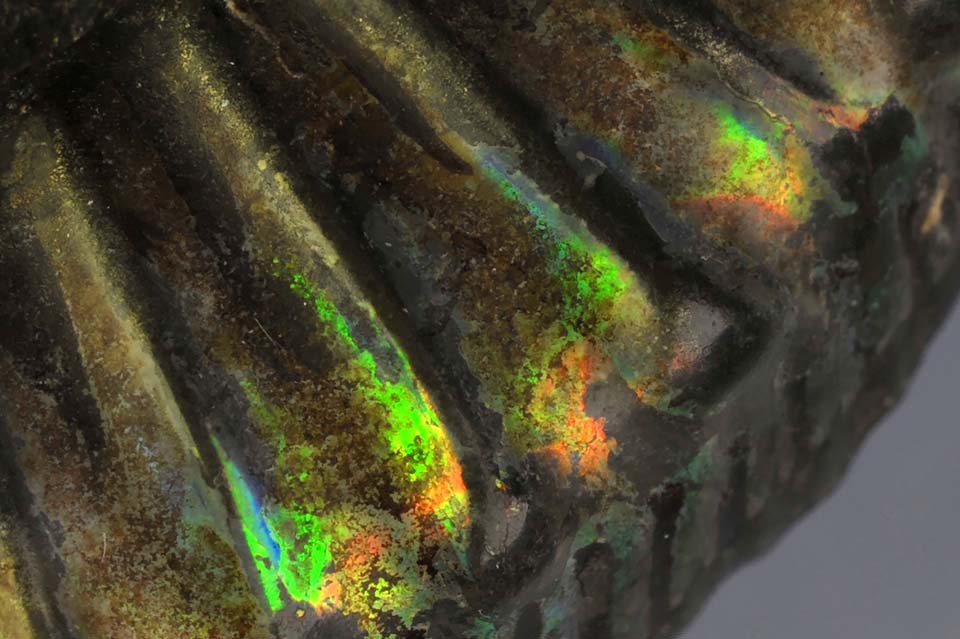
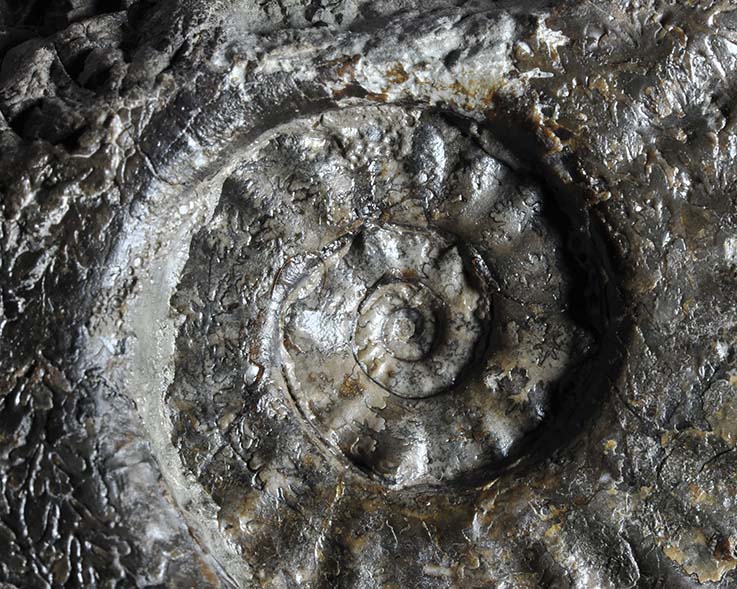
Peronoceras sp., close-up of iridecent shell remnants

Peronoceras sp., close-up of iridecent shell remnants

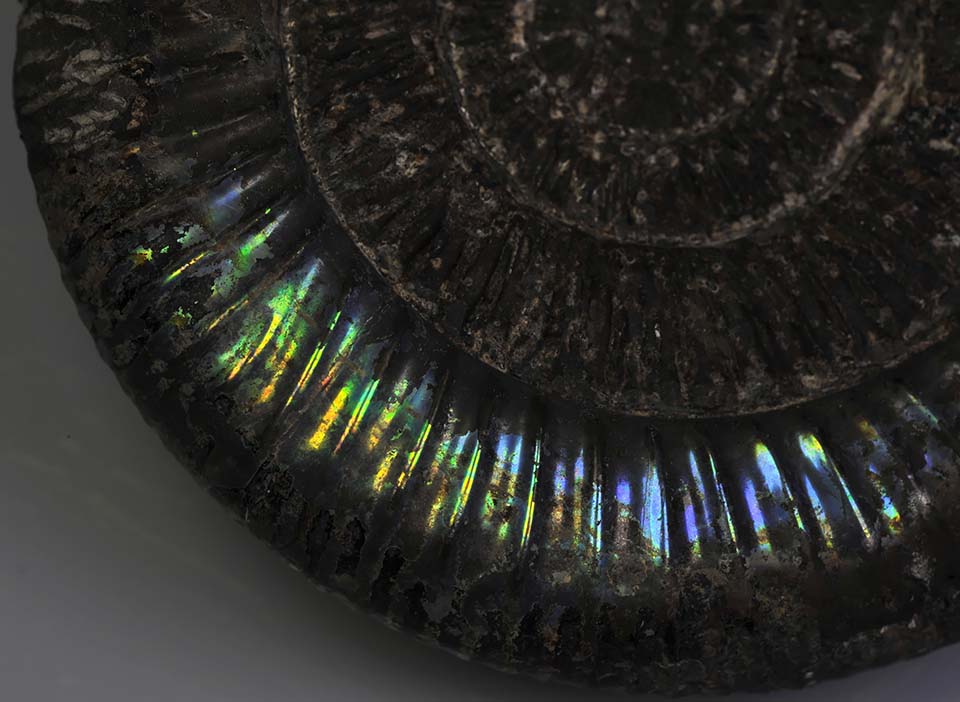
In some rare occasions, a little bit of the original shell of an ammonite is preserved and shows all the colors of the rainbow due to an effect called iridescence, thin film interference on the fine layers of shell material.

On the Yorkshire Coast, this is very rare and mostly seen only on Dactylioceratidae, probably due to certain environmental conditions (e.g. shell structure, lack of oxygen, composition of sediment,…) during the time of fossilization in the upper toarcian that were not prevalent to that extent during any other timeframe.

Dacytlioceras commune, 7 cm, with iridescent shell remnants

Dacytlioceras commune, 7 cm, with iridescent shell remnants

Of course, you have to lucky enough to find the ammonite, before the sea catches it – rolling around in the waves very quickly destroys the fine shell layers.

The sensitive patches on this Dactylioceras commune that I found freshly fallen into a dry heap of cliff debris at Hawsker at low tide some years back would have been destroyed quickly if the  tide had reached it 4 hours later – right time, right place – that mix of luck, experience, right choice of place and more luck that can make a collecting day successful.

Happy hunting,

AndyS

Transitions or A late “straight-fingered” survivor on an upper toarcian bed of belemnites ?

Dactylioceras (Orthodactylites) cf. semiannulatum, as found

Dactylioceras (Orthodactylites) cf. semiannulatum, as found

This 7 cm ammonite sits above (or below ? – I have found no indication like e.g. a fossilized level that would allow this decision) a bed of belemnites and was found
at Hawsker March 13, 2008. The matrix around the ammonite was full of brownish-black glistening fragments of what I assume are belemnite hooks.
I seem to remember that the ammonite was not visible initially, and that I split the rock to make it smaller for the sole purpose of grinding and polishing the beautiful other side of the rock displaying the belemnite sections – the entry in my little red book seems to corroborate that – I found very little else on that day and must have been desperate 😉
It shows again you sometimes need to look in unusual places to find something special…

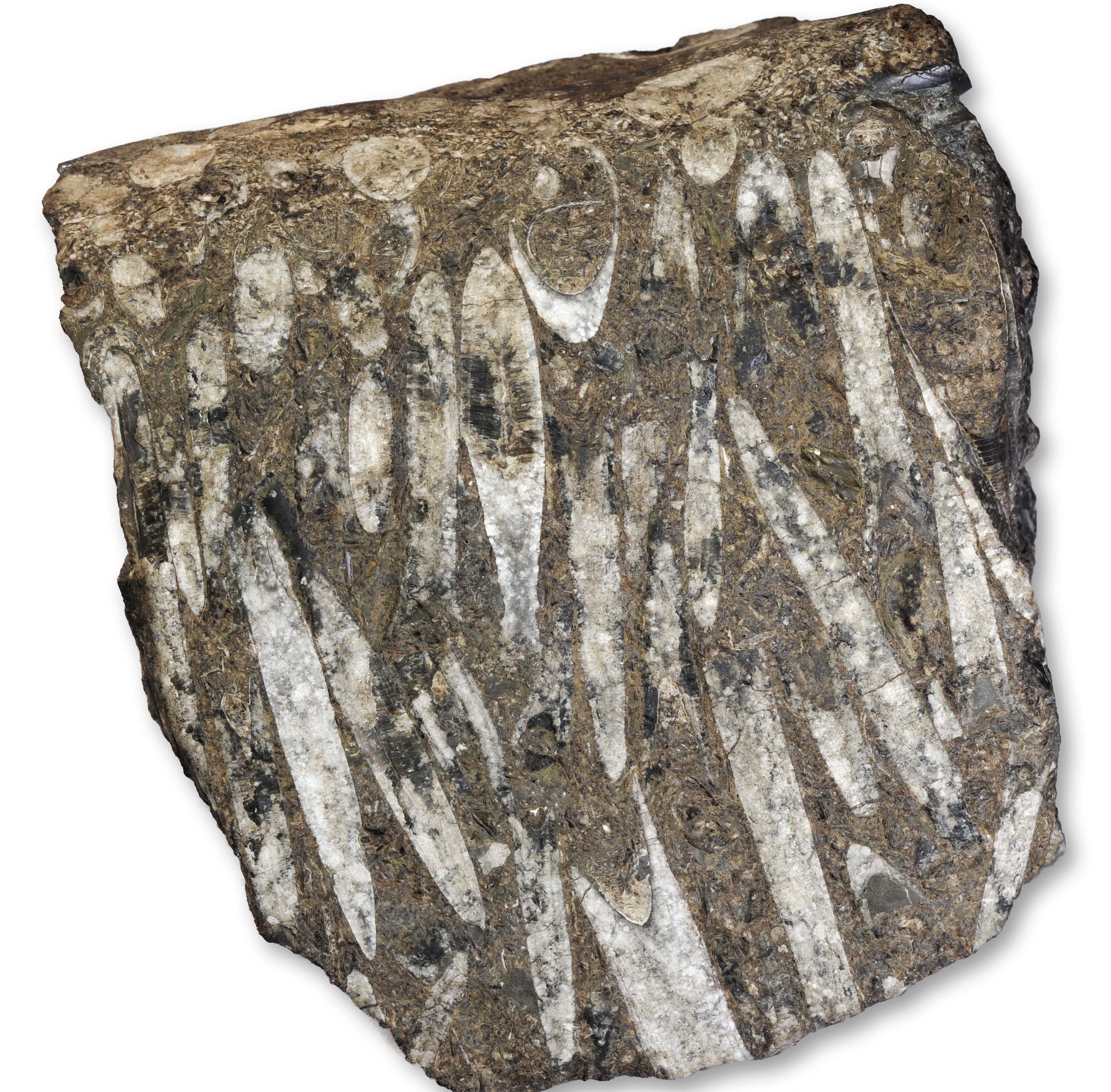
Block with belemnites from other side

Block with belemnites from other side


This matrix almost shouts “falcifer” zone, more specifically this could be from a belemnite accumulation usually associated with the ovatum band of the upper falciferum subzone, although this is only an educated guess, since the matrix block was found ex situ and could also come from a slightly lower bed. It´s composition and appearance, however, matches very well with one given in the paper : DOYLE, MACDONALD, 1993: Belemnite battlefields.

Dactylioceras (Orthodactylites) cf. semiannulatum on belemnite block

Dactylioceras (Orthodactylites) cf. semiannulatum on belemnite block


What makes this ammonite interesting is that it has some of the characteristics of the Orthodactylites (literally translated from the latin as “straight-fingered”) subgenus of Dactylioceras that I described from the lower toarcian in an earlier post (link) which predominantly have straight, single, usually non-bifurcating ribs, including the classical preservation with “capped” ribs that have a kind of predetermined breaking point, as the outer shell stayed in the negative and took the top of the ribs with it.


Howarth described a similar type of ammonite as Dactylioceras (Orthodactylites) semiannulatum in his 1978 paper “The stratigraphy and ammonite fauna of the Upper lias of Northamptonshire”.   It is a late survivor of the Orthodactylites subgenus, in later beds replaced by ammonites with mostly bifurcating ribs of the Dactylioceras genus. I´m hesitant to attribute this specimen to this species, however, since the measurements – apart from the whorl width, which is much smaller – would rather point to Nodicoeloceras. Howarth´s D. semiannulatum specimen were also a bit smaller, though.

There is one other option, which is Dactylioceras consimile (BUCKMAN), of which I´ve got conflicting descriptions/pictures – I need to take a look at one of these in a museum.


The conundrum presenting itself of course is a pattern that applies to most of the Dactylioceratidae, especially the lesser known species :

  • You can’t always rely on morphology alone, you need to know the bed from which the ammonite originates to verify the species
    and this can be surprisingly difficult when you mostly collect from the cliff debris, i.e. ex situ
  • There are transitions between the different species, as this probably is. And mutations, pathologies…
  • There is always variation within a species that can not be fully recognized when you look at a small number of specimen.
  • Early descriptions  (BUCKMAN, WRIGHT, SIMPSON…) often relied on single specimen – see above.


No clear solution this time, then – I will however label this one, to point out my conviction that this ammonite is closer to D. semiannulatum than to Nodicoeloceras :

Dactylioceras (Orthodactylites) cf. semiannulatum HOWARTH.


As promised earlier, the next couple of posts (too much for just one !) will predominantly deal with the upper toarcian Dactylioceratidae – hopefully with less undefined identifications like this one – sorry you had to wait until after the 50th post (which is this one, hurrah !)  – thanks for bearing with me for so long !


AndyS

Yorkshire (and adjacent areas) Asteroceratinae in all shapes & forms

Asteroceras obtusum, 9 cm, Charmouth / Dorset

Asteroceras obtusum, 9 cm, Charmouth / Dorset

(Starting this post with a Dorset Asteroceras – bit cheeky, I know, but it´s going to be the only Dorset specimen in this post, I promise !)

Asteroceratinae is a subfamily of ammonites more usually associated with the Dorset coast, the beautiful, sometimes large, ammonites in all shades of calcite from deep brown to light yellow come to mind. In Yorkshire species like Asteroceras or Eparietites  are less common in such nice a preservation, and I have not seen the beautiful brown & honey colors –  greys & blacks are more prevailing in Yorkshire coast specimen;  body chambers without inner whorls can be seen quite often on the scars, complete specimen can usually only be found in concretions, which are usually soft enough to prep the ammonites completely with shell – carefully done, it reveals shell details that you rarely see from anywhere else.

The green shelled Asteroceratinae from the old, long closed Conersby quarry in Scunthorpe, Lincolnshire are of course a visual highlight; when the shell is removed, predominantly white chambers fillings with additional greens/yellows/pinks & browns and dark chamber walls produce a striking contrast, that is highly sought after (and paid for) these days…
From what I´ve seen, theses so called “Scunnies” belong to species that are basically the same as on the Yorkshire coast.

 Opportunities to find Asteroceratinae ammonites in Robin Hoods Bay have become relatively rare;  more often than not, the beds containing these ammonites are covered by sand or rocks in Robin Hoods Bay.  Larger specimen are particularly rare, but they are there – the picture below was shot on day in March 2012 where a window down to the beds below a boulder field had opened – I was counting 6 large Asteroceras in an area of about 20 x 20 m – all of them were eroded like the one pictured. Two days later, that window had closed. Also remember – this is an SSSI exposure, please collect responsibly !
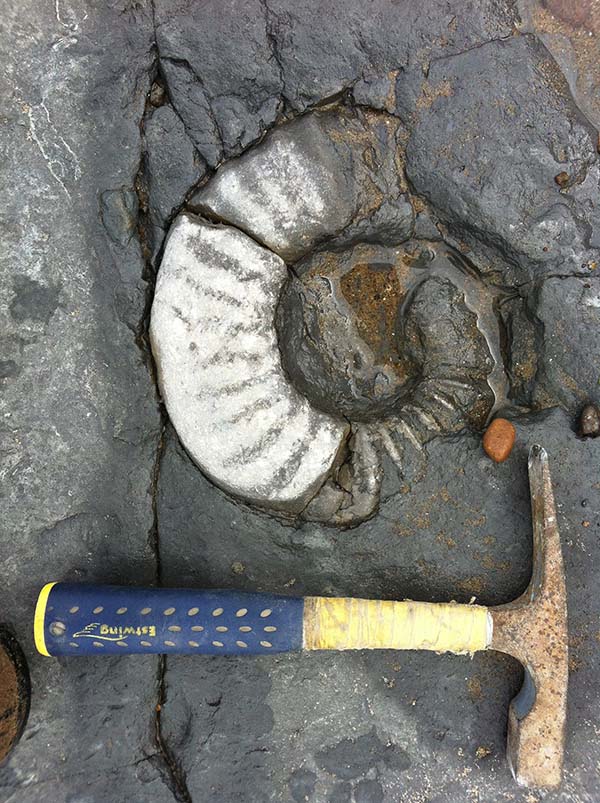
Asteroceras sp. in situ, approx. 20 cm

Asteroceras sp. in situ, approx. 20 cm

HOWARTH lists the following species of the Asteroceratinae subfamily in the Bairstow collection from Robin Hoods Bay:

Asteroceras obtusum         23 ribs / whorl

Asteroceras confusum       30-34 ribs / whorl
Asteroceras stellare          32-40 ribs / whorl
Asteroceras blakei            26-28 ribs / whorl
Aegastoceras crassum        22-26 ribs / whorl
Aegasteroceras sagittarium  22-26 ribs / whorl

Caenisites turneri             42 ribs / whorl
Caenisites brooki              40 ribs / whorl
Eparietites impedens        shallow ribs, keel very prominent, no real keel furrows
Eparietites bairstowi         large specimen with almost no ribbing
Epophioceras landrioti      almost like an Echioceras
As a rule of thumb, the genera can be distinguished in the following manner :Asteroceras – more or less thick whorls with keel
Aegasteroceras – more or less thick whorls without keel
Caenisites – thinner whorls with keel, fine deep ribbing, deep keel furrows, more evolute than Eparietites, umbilical width between 40 and 50 %
Eparietites – thinner whorls with very prominent keel, fine shallow ribbing, more involute than Caenisites, umbilical width between 22 and 35 %
Epophioceras – looks more like a Gagaticeras or an Echioceras, only in this subfamily due to similar suture.

(Numbers  given for ribs/whorl and umbilical width are from SCHLEGELMILCH and GUÉRIN-FRANIATTE, for references see below)

Of course, some of these species can also be found on the Cleveland coast and in the glacial drift at the Holderness coast.

Asteroceras obtusum (SOWERBY, 1817)

Asteroceras obtusum seems to be relatively rare, I have only a few specimen in my collection. It´s whorls are thicker than the ones

from A. blakei and it has the least ribs/whorl of the species.

Asteroceras blakei SPATH, 1925

Asteroceras blakei seems to be the most common species at Robin Hoods Bay, at least in my collection…

I´ve shown you Keeley & Adrian specimen of this species before (link), here is another one :
Asteroceras blakei, 6.5 cm, Robin Hoods Bay

Asteroceras blakei, 6.5 cm, Robin Hoods Bay

Aegasteroceras cf. crassum SPATH, 1925

This is a thicker species of Aegasteroceras which has even less of a keel compared to Aegastoceras saggittarium.
Keel shot here only, the specimen needs a bit of re-prep. It was on my “wants list” before, I “found” it in my drawers while
working on this post…
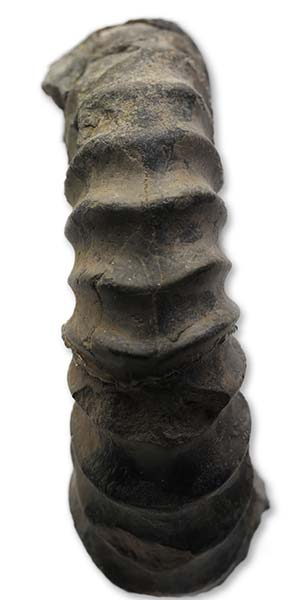
Aegasteroceras cf. crassum, 7.5 cm, keel view

Aegasteroceras cf. crassum, 7.5 cm, keel view

Aegasteroceras sagittarium (BLAKE, 1876)

I have many Aegasteroceras saggittarium in my collection, but none of the are very well preserved.
Here is a keel shot only to show the almost non-existent keel. There are some more that need re-prepping…
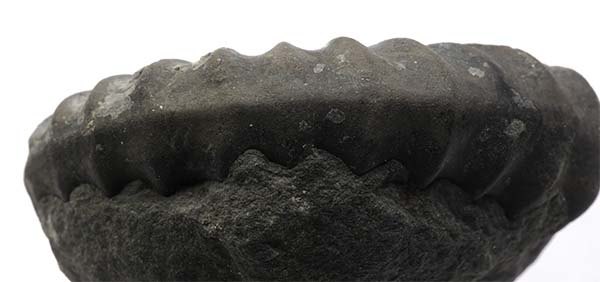
Aegasteroceras sagittarium, 5.5 cm, Robin Hoods Bay, keel view

Aegasteroceras sagittarium, 5.5 cm, Robin Hoods Bay, keel view

Caenisites tuneri (SOWERBY, 1824)

Caenisites turneri seems to be very rare from Robin Hoods Bay, this is the only specimen I have found so far, and it is badly crushed in the inner whorls.
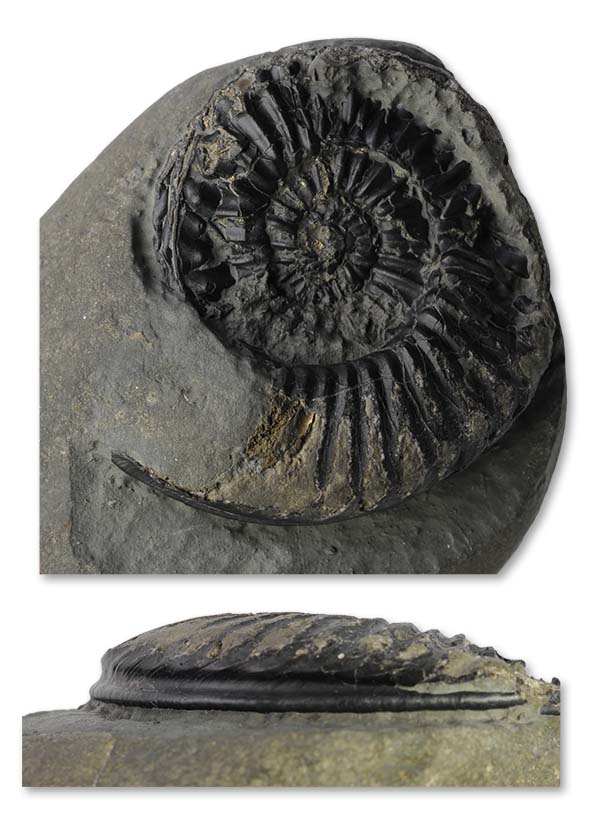
Caenisites turneri, 5 cm, mostly crushed, Robin Hoods Bay

Caenisites turneri, 5 cm, mostly crushed, Robin Hoods Bay

Caenisites brooki (SOWERBY, 1818)

Caenisites brooki is also quite rare and sits in the middle between Eparietites impedens and Caenisites turneri : It´s middle keel rises above the
side keels and it has deeper ribbing than Eparietites. It has deep keel furrows, it´s umbilical width is somewhat variable, I guess there are many intermediates
between the genera.
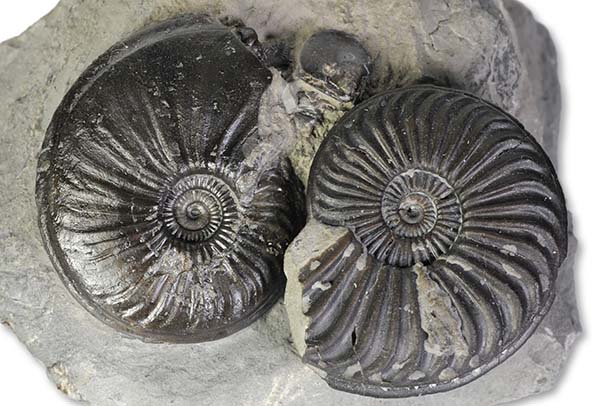
Direkt comparison between Eparietites impedens (left) and Caenisites brooki (right), both 3.5 cm, Robin Hoods Bay
Direkt comparison between Eparietites impedens (left) and Caenisites brooki (right), both 3.5 cm, Robin Hoods Bay

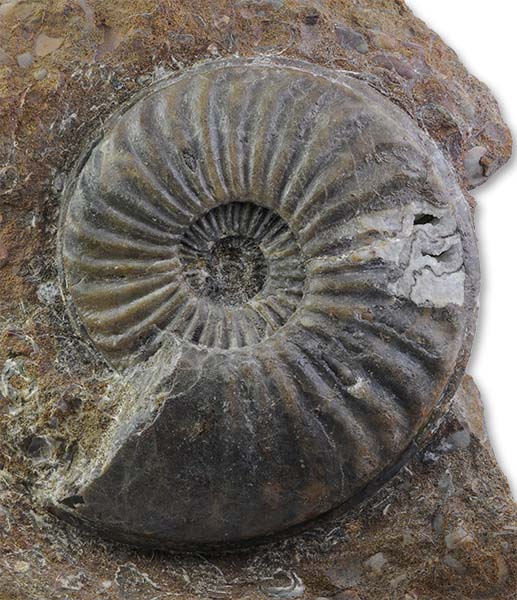
Caenisites brooki, 10 cm, Scunthorpe
Caenisites brooki, 10 cm, Scunthorpe

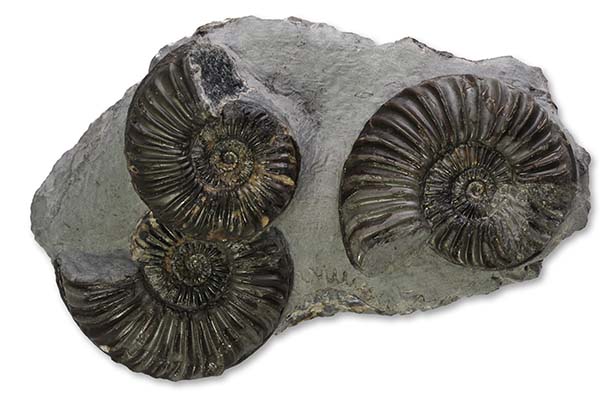
Caenisites cf. brooki, 3 specimen 4-5 cm, Robin Hoods Bay, purchased from B. Blessed

Caenisites cf. brooki, 3 specimen 4-5 cm, Robin Hoods Bay, purchased from B. Blessed

The 3 ammonites in this specimen seem to be intermediates beween C. brooki and C. turneri –
thicker whorls than C. brooki, a bit more evolute, but the keel rises above the side keels.

Eparietites impedens (YOUNG & BIRD, 1828)

The Eparietites shown here is a find from July 2013. It is a beautiful specimen, that is comprised of most of the shelled inner whorls of a larger specimen
shown in the previous post – sadly the outer whorl was mostly eroded. It´s most diagnostic feature is the strong keel that has no real side furrows.
I´m particularly fond of this specimen since it has most of it´s shell preserved, and it has such a nice fine structure…
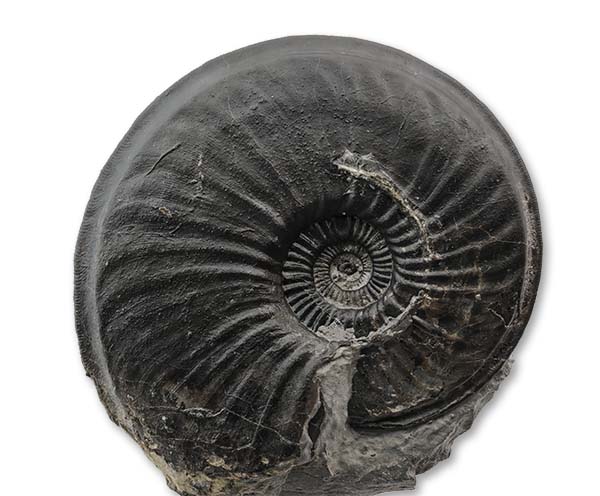
Eparietites impedens, 8 cm, Robin Hoods Bay

Eparietites impedens, 8 cm, Robin Hoods Bay

Species I think I do not currently have in my collection from Yorkshire include :

Eparietites bairstowi HOWARTH 2002 (some doubtful large specimen, mud filled chambers with no inner whorls)
Epophioceras landriotti (D´ORBIGNY, 1849)
Asteroceras confusum SPATH, 1925
Asteroceras stellare (SOWERBY, 1815)

AndyS

Literature :

S. GUÉRIN-FRANIATTE : Ammonites du Lias Inférieur de France, Centre National de la Recherche Scientifique, Paris 1966
R. SCHLEGELMILCH : Die Ammoniten des süddeutschen Lias, Gustav Fischer Verlag, 2. Edition 1992
M.K. HOWARTH : The Lower Lias of Robin Hood´s Bay, Yorkshire, and the work of Leslie Bairstow, Bulletin of The Natural History Museum Geology Series Vol. 58/2, London 2002


Summer 2013 on the Yorkshire Coast

Summer on the Yorkshire Coast

Summer on the Yorkshire Coast

You may have guessed from my long absence from this blog : We spent a very nice 2 1/2 weeks of summer holiday on the Yorkshire Coast…

 On the one hand collecting in summer is very nice : You don´t have to wear thick waterproof clothes and heavy wellies, which easily takes away a few kilograms of weight that you don´t have to carry around with you (you add those again with your supply  of drinking water…), hours you can spend collecting due to available light are longer,
the general feeling is lighter and just – summery.
 On the other hand, there are more people around (allthough I usually hardly meet anyone when I go out collecting alone) – and finds are generally less frequent.

We´ve been meeting a few old friends again, made some new friends and some of them brought some truly, truly gorgeous ammonites for me to photograph.

I will not show them here, they´re for the book, but I can tell you there are some that I have not seen anywhere else in size, rarity and beauty ! (tease, tease…)

Adrian, Tracey & Bernie, David, Andy  : Many many thanks, you´ve earned your copy of the book, this is for you :

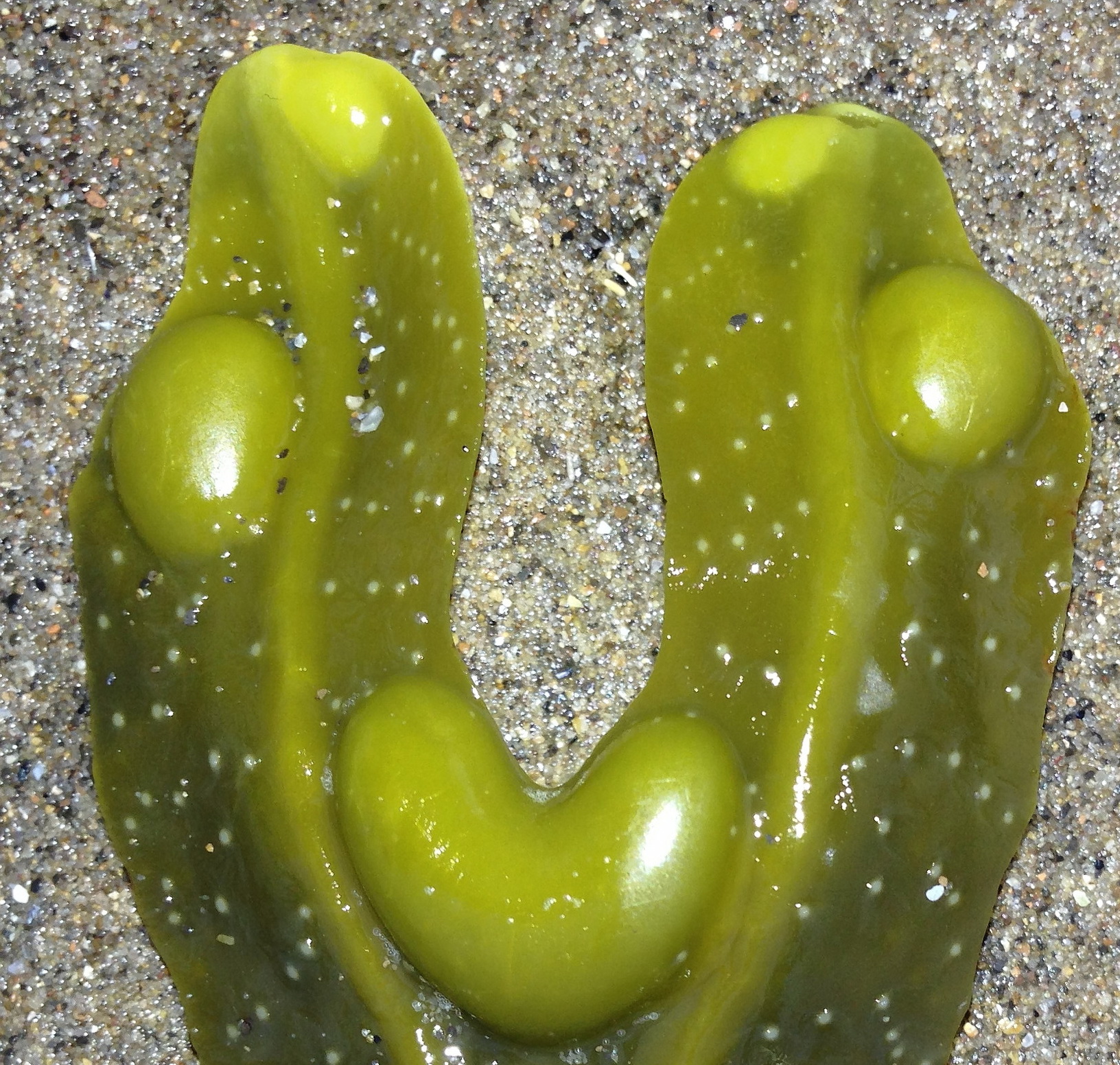
Happy smiling green seamonster !

Happy smiling green seamonster !

On a hot summer´s day I´ve been to Redcar for some collecting for the first time (only 1/2 hour quick search of the reefs : but I´ve found 3 identifiable segments of ammonites in this short timeframe which shows the potential of this place, I´ll be back…) and more photographing of local lias ammonites, but I was informed I could not use the photographs for the book when I had returned home, so this is for you (you know who you are !) :
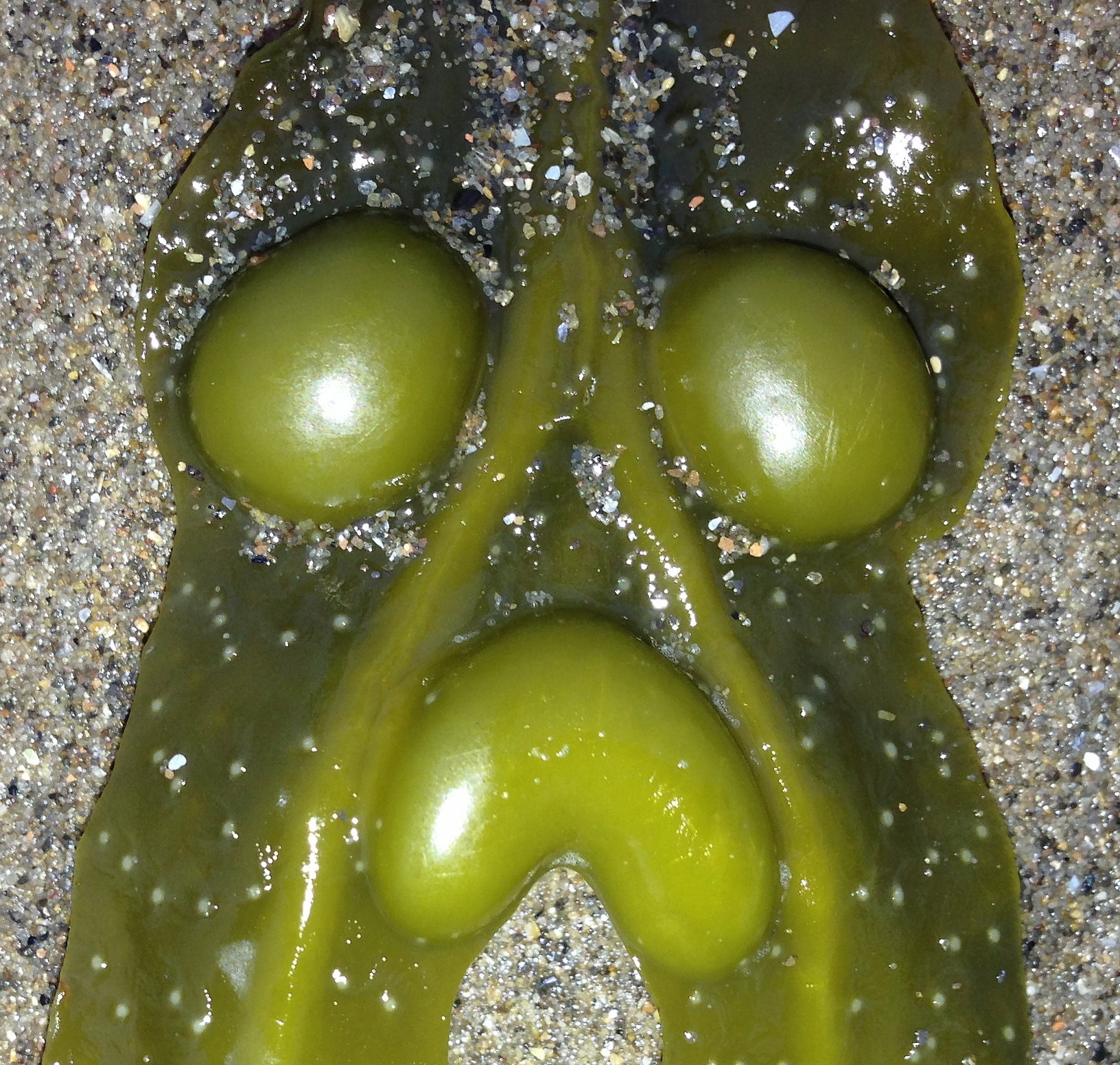
Unhappy green seamonster !

Unhappy green seamonster !

Collecting wise, it`s been a mixed bag :

Flattened D. semicelatum and Tiltoniceras

Flattened D. semicelatum and Tiltoniceras

I´ve found many lower toarcian (unflattened) Dactylioceras tenuicostatum/semicelatum nodules, but a lot of them were disappointing when I opened them at home.
I found a rare D. clevelandicum, that another collector probably tried to beach prep and broke the outer whorl off, but I´m going to rescue the inner whorls.
The paltum subzone at Hawkser Bottoms

The paltum subzone at Hawkser Bottoms

I´ve been looking for the paltum subzone of the lower toarcian for some bedwalking and a chance of finding a Protogrammoceras paltum
(which I have not seen from the Yorkshire coast yet), but no success…
A puzzle of an Amaltheus stokesi...

A puzzle of an Amaltheus stokesi…

I picked up some puzzles like this close to 8″ Amaltheus stokesi…
Eparietites impedens as found

Eparietites impedens as found

One of the better finds this summer certainly is this 8.5 cm / 3.25 ” Eparietites , which nicely leads on to what´s up next :

The stage is set for the Asteroceratinae :
The stage for the Asteroceratinae ist set...

The stage for the Asteroceratinae ist set…

When I returned home from the holiday, temperatures were still very high, so when given the choice of photographing in my litlle study under the roof
at 30+ °C or prepping in the cellar at 20 °C, you know what I did…

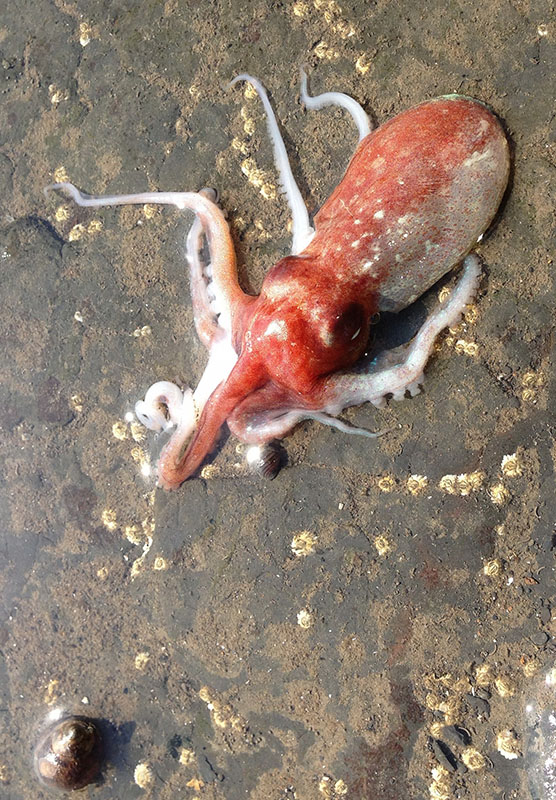
It was just too hot and I guess this little live octupus I “met” sitting in a shallow puddle (the octopus, not I) while hunting for his ancestors felt just the same :

An octupus in a shallow puddle...

An octupus in a shallow puddle…

I tried to re-setlle it to a depper puddle since high tide was out for some more hours, but he stubbornly suckered itself to the ground and shot some ink at me
so I waved him goodbye and hoped the seagulls would not find him…
Temperatures are now back to normal at around 20 °C, so please excuse me, I´ve got some photographing to do…

AndyS

New finds and acquisitions, June 2013

As you might have gathered, I´ve been collecting on the Yorkshire coast again at the end of March, and there are a few finds worth mentioning, that I have prepared now.

Also there are a few new acquisitions, either through generous gifts / trades from friends or purchases from fossil shops or eBay.
Furthermore, I´ve had the chance to photograph a few more ammonites from friend´s collections (you won’t see those now, though, they’re for the book)
But first things first –

New finds

Aegoceras (Beaniceras) luridum (SIMPSON, 1855)

In a recent blog post (link) I was moaning about not having found a Beaniceras yet – I had been intensely “bed walking” the relevant beds in summer last year and had only found a flattened specimen as proof that I was on the right bed and had almost given up hope to ever find one
– but when I picked up this inner whorl of a Lytoceras  this March on the beach and turned the rock around I knew I finally found one !
This small 1 cm beauty is a Beaniceras luridum, the index fossil of the luridum subzone, that got preserved in the same nodule as the Lytoceras. It is not exactly a large example, but better than nothing…

Pleuroceras anaptychus

This one looked up from a puddle at Shaun and I while we were collecting around Hawsker.
I had shown an aptychus (lower jaw) of a Peronoceras before (link), this now is an anaptychus (upper jaw) of a Pleuroceras. They’re exceedingly rare – first one I’ve found. As it happens, there has just been an article in the May issue of the german “Fossilien” magazine by Prof. Keupp describing an even more complete upper and lower jaw set of a Pleuroceras – apparently, judging from the form of the jaws, Pleuroceras was more of a krill (i.e. tiny shrimp) muncher, it did not have much of a bite…

Gifts/trades

Coroniceras deffneri (OPPEL, 1862)

I had found small (1-3 cm) specimen of this ammonite in the glacial drift at Robin Hoods Bay before, but the problem with identifying such small
Coroniceras ammonites is that usually only very large specimen are pictured in literature and inner whorls are rarely pictured / preserved – so I had not had a lot of confidence in my identification.
As part of a trade, Shaun Tymon gave me this larger (6.5 cm) specimen off the Holderness coast, which can now be confidently identified as Coroniceras deffneri – and it makes the list of specimen for the book one entry longer, since it had not originally been on there ! Thanks again, Shaun !

New purchases

Uptonia lata (QUENSTEDT, 1845)

Uptonia lata, 9 cm, Saltburn

Uptonia lata, 9 cm, Saltburn

This Uptonia lata came from Byron Blessed’s shop and had apparently been part of a larger Saltburn collection, that seems to have been sold to a couple of different dealers as lots – I think I have several different items from this collection, all have come with a characteristic small neat typewritten label.
Well preserved Ammonites from these beds are notoriously difficult to come by – you usually only find well weathered fragments…
With this one, the lower lias “wants” list is now one entry shorter and has been updated accordingly.

Harpoceras soloniacense (LISSAJOUS, 1906)

Harpoceras cf. soloniacense, 6.5 cm, Port Mulgrave

Harpoceras cf. soloniacense, 6.5 cm, Port Mulgrave

I regularly check eBay for interesting finds and this one caught my eye since it was labeled as a species that I had not come across from the Yorkshire coast : Harpoceras soloniacense.
Now misidentifications are not uncommon on eBay, but I took the chance…
Howarth’s Harpoceratidae monograph does not list it as occurring on the Yorkshire coast, but there is really no reason why it should not occur in Yorkshire – Zugodactylites braunianus was also
discovered relatively late in Yorkshire.
I’m pretty sure it really is a H. soloniacense : So the list of ammonites for the book just got another entry longer…
 AndyS

A steep learning curve or Artwork for the book

I’m currently on a steeeeep learning curve for producing artwork for the book – I’d like to include some symbolic drawings for every ammonite, so it was time for a graphics program, in this case Adobe Illustrator, to get drawing.
I would call my computer skills “advanced” without having to blush, but this is a hugely powerful and complex program and it took me the better part of a weekend to get into how this thing works in principle (and I’m sure I barely scratched the surface…) and to produce some simple graphics.  I prefer learning a new program this way, I just need a meaningful, yet simple enough project to get started.

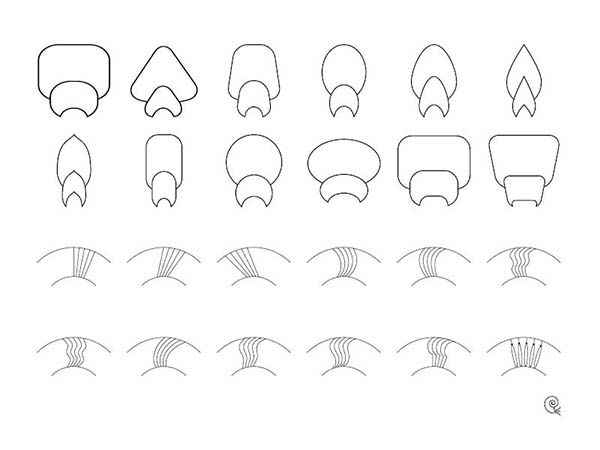
Every ammonite species in the book will have a symbol showing which type of ribbing the ammonite shows and what a whorl section to expect.
These are important diagnostic features that will be shown (apart from on the actual picture of the fossil) in a simplified graphic :


Whorl section and rib diagrams for the book

Whorl section and rib diagrams for the book

If you noticed the little stylized ammonite in the lower right corner – in the book you’ll see a lot more of it – have a guess what for !


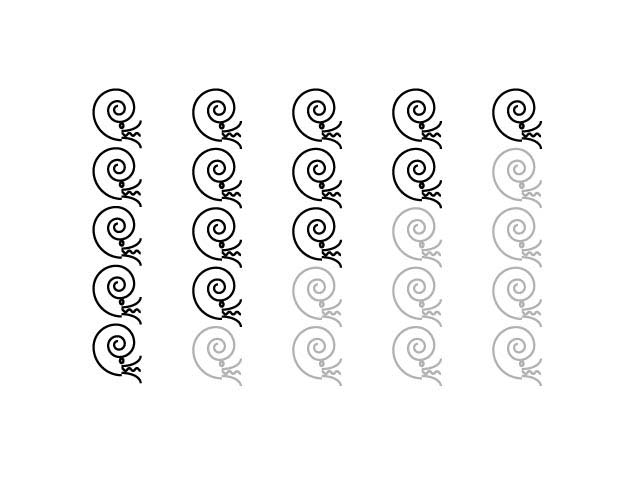
Abundance (or rarity...) indicators for the book

Abundance (or rarity…) indicators for the book


Every species page will show a set of these, indicating the abundance (or rarity) of the species.
This of course can only be an estimation from experience – even after 24 years there can be beds I have not found yet where a seemingly rare ammonite
occurs in abundance…


To keep your withdrawal symptoms at bay, I will shortly post more about “real” ammonites from my spring collecting trip.


AndyS

Happy 1st birthday or I listen to what you search for

Aegoceras (Androgynoceras) maculatum, 7 cm

Aegoceras (Androgynoceras) maculatum, 7 cm

(Disclaimer : No ammonite has been permanently damaged in the process of making this picture)


It does not seem like it, but it´s to the day one year and 44 (including the first) blog posts since I´ve started it…

so Happy 1st Birthday, Blog ! 

The folks from WordPress do provide some nice statistics, and I must admit I do look at it frequently to see who´s looking for what…
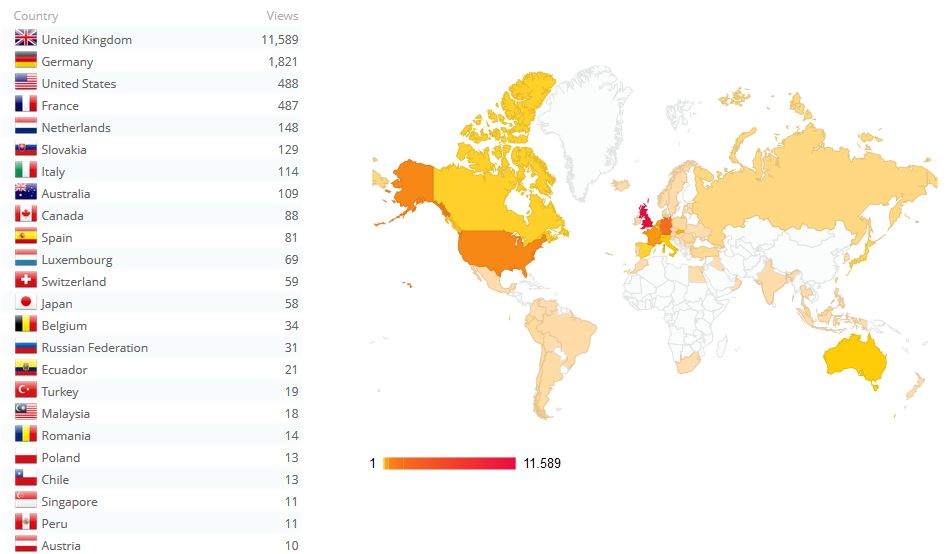
There have been over 15000 views from visitors coming from 65 countries – that´s still some way from world domination 🙂 ,
but I continue to be amazed by the reach of this tool called the internet…


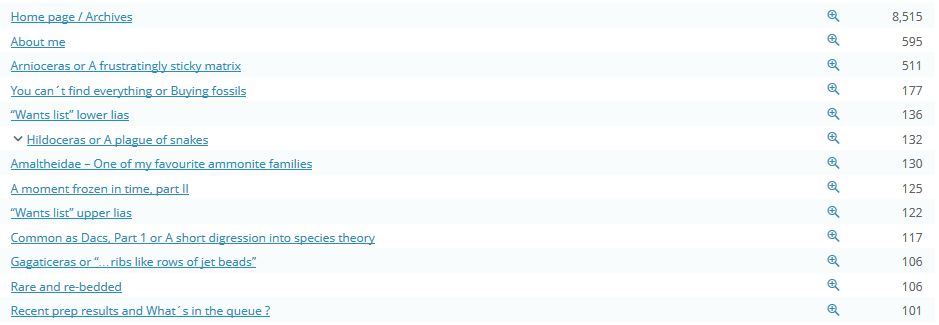
Countries with more than 10 visits

Countries with more than 10 visits


There is some statistics at what people look at when they´ve reached my blog, unsurprisingly the home page is at the top, being the main landing page.
Almost 600 people (or some repeatedly…) wanted to know a little bit about me, but clearly the most visited ammonite post by far is the one about
the Arnioceras species – it is a very popular ammonite, being sold often on auction websites, and I hope I could provide some help in identifying them.


Top visited pages of the blog

Top visited pages of the blog

Of course it does also interest me what people look for when they reach my blog through the use of search engines.
The top 20 list tells me that some people use search engines as a bookmark replacement (it´s andysfossils.com, guys ;-)), but also
that Holderness ammonites and again Arnioceras are very popular topics. Some Amaltheus species, Amauroceras, Gagaticeras also feature highly
and I think I´ve covered these well; Psiloceras, Aegoceras, Pleuroceras are still to be done and I know you´re waiting for those probably just as
much as for the second part of the Dactylioceras post (allthough there most probably will be an intermediate step before I cover the upper liassic Dactylioceratidae).
Somewhat unintentionally (but in hindsight not unwelcome), the wants lists do create some kind of an attraction point for the blog since they provide a search engine
target for all the rare ammonites that I still would like to photograph.


Top searches in search engines that led to my blog

Top searches in search engines that led to my blog


Some people have asked for the estimated completion of the book, I´m hoping to complete it in 2014, coinciding with the 25th anniversary of our first visit
to Robin Hoods Bay. It´s still some way to go, I´m currently working on getting my layout template finished in Adobe Indesign, so that I can truly begin writing pages of the book.


AndyS

Twice bought and three times found or Why finding the fossil yourself is best…

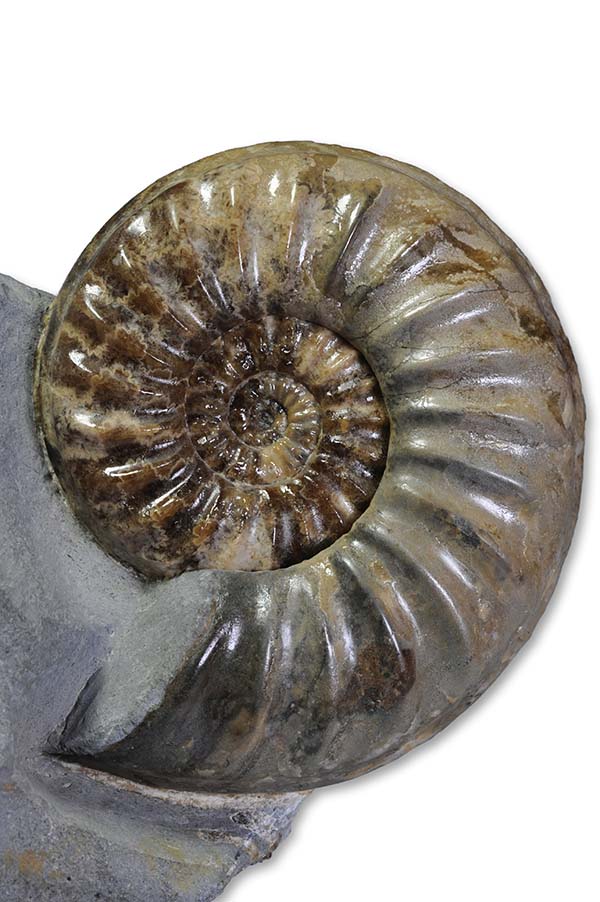
Amaltheus gibbosus (SCHLOTHEIM 1820), Prince Charles Cave, Isle of Skye, 8.5 cm

Amaltheus gibbosus (SCHLOTHEIM 1820), Prince Charles Cave, Isle of Skye, 8.5 cm

In my Amaltheidae post (link) I had shown you a very nice small specimen of Amaltheus gibbosus, that I had purchased from Mike Forster via Mike Marshall´s shop.

Quite recently, I had to succumb to temptation again ;-), when Mike offered a larger calcite preserved Amaltheus gibbosus from Skye – Amaltheus gibbosus according to literature is not common on the Yorkshire coast so I had basically given up finding one myself.
I was grateful to be able to plug that hole in my collection with these beautiful specimen, but why is it just not the same as finding one yourself ?
Some of the better finds start inconspicuous – and it was just like that with the following find I´d like to present you now.
When picked it up as a beach pebble at Hawsker it was then just showing a whorl cross section on the surface, and I usually investigate to see if there´s more of it…
I tried to split the rock at the ammonite, but another piece of rock broke off and showed the cross section of a second ammonite – time to bag all the pieces and take a better look during preparation !
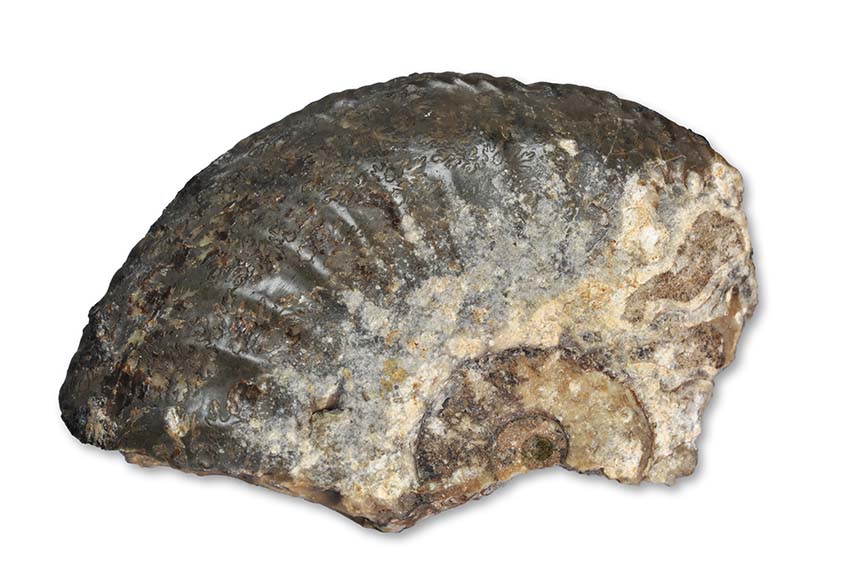
Specimen as found with section of whorls on both pieces, oolitic structure can be seen

Specimen as found with section of whorls on both pieces, oolitic structure can be seen

Now when I removed the matrix plug in the umbilicus  of the first ammonite I knew it was something special:  There are characteristic spines on the inner whorls – It´s an Amaltheus gibbosus !

Amaltheus gibbosus (SCHLOTHEIM 1820), Hawsker Bottoms, inner whorl, width of view ca. 2.5 cm

Amaltheus gibbosus (SCHLOTHEIM 1820), Hawsker Bottoms, inner whorl, width of view ca. 2.5 cm

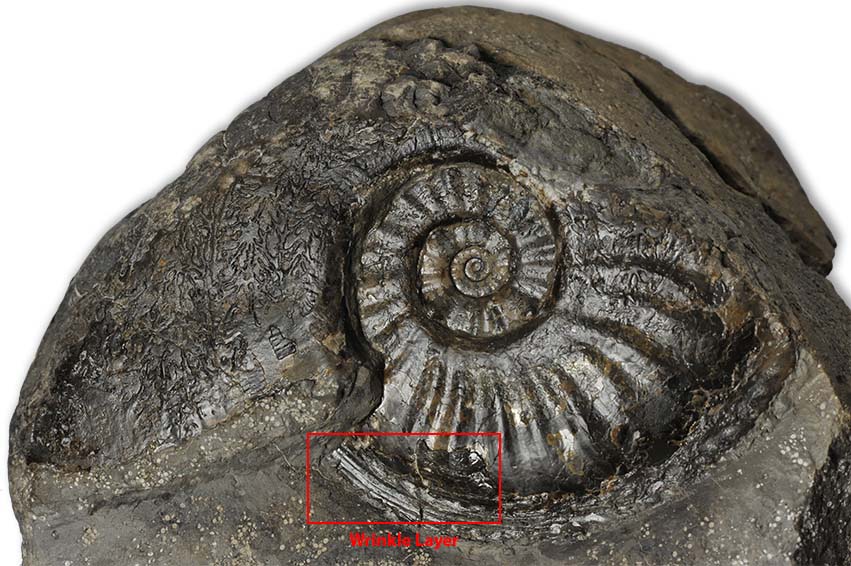
With this one I found after prep (I had to remove some of the remnants of the badly crushed body chamber) that it does show a bit of what is thought to be similar to the black wrinkle layer on a nautilus : A bit of specially formed shell secreted on the outer side of the inner whorl to prepare for buildup of a new bit of body chamber and supposedly helping the animal to get a better “grip” of the mantel on the shell. QUENSTEDT in 1885 called them “Bauchstreifen”  (belly stripes) since with the Amaltheidae they are consisting of spiral stripes in the dorsal overlap of the outermost whorl with the inner whorl.
Amaltheus gibbosus (SCHLOTHEIM 1820), max. width 9 cm, remnanst of wrinkle layer marked

Amaltheus gibbosus (SCHLOTHEIM 1820), max. width 9 cm, remnants of wrinkle layer marked

What would the second one that I had broken in two during my splitting attempt be ?
I quickly glued back together the pieces…
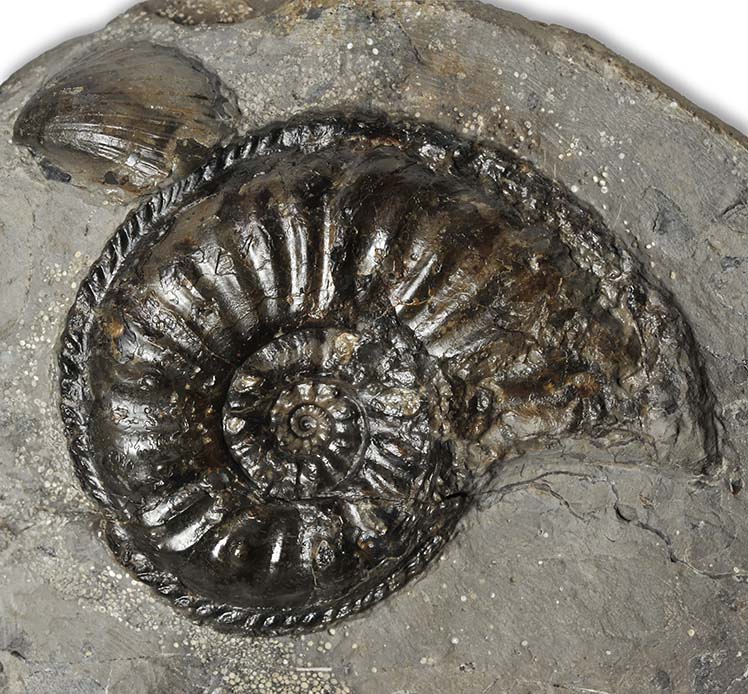
Preparation was not easy, it is never with spiny specimen. Luckily the matrix  was just soft enough so I could air abrade the inner whorl and the keel with high pressure, revealing this second, even nicer specimen of Amaltheus gibbosus.
Amaltheus gibbosus (SCHLOTHEIM 1820), Hawsker Bottoms, 6 cm diameter

Amaltheus gibbosus (SCHLOTHEIM 1820), Hawsker Bottoms, 6 cm diameter

There was something else about this rock that I somehow remembered from an earlier find : The matrix is oolitic, i.e. there are many small calcareous, sphaerical grains made up of thin concentric layers embedded in the rock, characteristic for some of the ironstone seams on the coast, in this case I think it must be the Raisdale seam.
I knew I had seen this before on the underside of an Amaltheus fragment that I had found at Staithes in 1994 and labeled as Amaltheus margaritatus. When I looked at it again in the drawer now, I realized it is also an Amatheus gibbosus, the spiny inner whorls had just been badly eroded which had made recognition difficult ! I  must have subconciously known it was something special though, since I held on to it for such a long time even though it´s just a fragment…
Amaltheus gibbosus (SCHLOTHEIM 1820), Staithes, width of fragment 5 cm

Amaltheus gibbosus (SCHLOTHEIM 1820), Staithes, width of fragment 5 cm

These 3 specimen really show that you learn so much more when you try to find an ammonite species yourself : First of all PATIENCE but secondly a lot more about the lithology of the beds you´re likely to find the ammonite in…

And then there´s the story behind the find, the memories and the “relationship” (I put this in quotes – it somehow sounds so nerdy) you build up when prepping the fossil.

I´m sure both Mike Marshall and Mike Forster did have the same sort of feelings when finding and prepping the fossils they´ve sold to me, since it shows in the quality of their prepwork. But this does not translate in any other way – memories can´t be sold – that´s why finding the fossil yourself is best, you just look at it differently, because you know it´s history from  when it just was a pebble on the beach to the final state when you put it in your drawer or display (or your blog…).

AndyS